
What can the world learn from South Korea’s world-leading performance in plastics circularity?

In a rush? Click here to read a short summary of this report
Introduction
South Korea has rapidly transformed from one of the world’s top plastic waste generators into a global frontrunner in recycling and resource recovery. This report, published ahead of INC-5 in Busan, explores how the country achieved such impressive results through a mix of bold policy, public engagement, and technological innovation.
Key Takeaways
- Strict waste segregation and enforcement: The 1995 Volume-Based Waste Fee system made households and businesses financially accountable for unsorted waste, driving widespread adoption of source separation. Noncompliance is met with steep fines.
- Recyclability labelling and mandates: Korea enforces detailed labelling on packaging to inform consumers of recyclability and introduced mandatory recycled content quotas (e.g., 3% rPET in bottles by 2023).
- Tech-driven sorting and incentives: AI-powered systems like ACI’s “Dr. B” and Nephron’s “SuperBin” are modernizing sorting and incentivizing public participation through rewards and real-time monitoring.
- Extended producer responsibility (EPR): Korea’s EPR scheme penalizes difficult-to-recycle materials and makes producers responsible for waste throughout a product’s lifecycle—raising the bar for packaging design.
- Growing focus on reuse and bioplastics: While still emerging, initiatives like refill stations and startups like Oysterable show momentum in reuse models. Bioplastics R&D is advancing, particularly around PHA and PLA.
Conclusion
South Korea’s circular economy push offers a blueprint for other nations, combining government leadership, consumer engagement, and private sector innovation. With international cooperation intensifying around the Global Plastics Treaty, South Korea is well-positioned to shape future policy—but it must now double down on reuse and reduce dependency on exports to maintain its leadership.
How has South Korea achieved such high recycling and recovery rates in recent decades? In our latest report, published ahead of INC-5 in Busan, we take an in-depth look at the country’s progress in several key areas.
1: Background
Earlier this year, we published a lengthy report looking at the global regulatory response to the plastics circularity challenge, continent by continent. Many European countries – Sweden, The Netherlands or Finland, for example – perform strongly in areas such as waste management, recycled content and so on. In Asia itself, China is stepping up its efforts, but it was clear that one country to have been particularly successful in addressing this was South Korea. In 2022, it achieved the highest recycling rate in the Yale Environmental Performance Index (EPI).
Against this, it’s worth bearing in mind that according to Statista, the country was the world’s third-highest generator of plastic waste in 2016. This situation, followed by China’s announcement that it would be banning waste imports, prompted a strong governmental response.
Since then, it has put in place a series of measures to, among other things, achieve a target of 70% recycling rate by 2030. Furthermore, Korea’s 2050 Carbon Neutral Strategy, which was developed in 2020, promotes circularity through the maximization of resource efficiency and the minimization of resource inputs.
This covers a product’s entire lifespan from the extraction of resources to make the product, through its production, distribution, and consumption, to its recycling and disposal.
Most recently, the government unveiled a strategy to promote a circular economy across nine major industries, aimed at reducing carbon emissions and stabilizing the domestic supply chain of key resources.
Given all this, we wanted to take a closer look at the mechanisms South Korea has put in place (as well, of course, as areas that still need to be addressed). We will cover, among other things, the strict regulatory frameworks and institutional support it has implemented, and how it has managed to increase consumer participation in the system.
To give an overview of the institutional framework: The agencies that are responsible for encouraging innovative solutions for plastic circularity are led by the Ministry of Environment (MOE); Ministry of Trade, Industry, and Energy (MOTIE); and Ministry of SMEs and Startups (MOSS).
These three ministries support the work of the Korea Environmental Industry and Technology Institute (KEITI); Korea Institute for Advancement of Technology (KIAT); Korea SMEs and Startups Agency (KOSME); and Korea Technology and Information Promotion Agency for SMEs (TIPA).
To provide context, we also spoke with Grace Kim, Head of Global Packaging R&D at one of Korea’s largest food producers, CJ CheilJedang.
2: How is the country responding?
Collection and sorting
In the 1980s, according to a World Bank report, Korea’s waste management efforts were concentrated mainly downstream. In the 1990s, however, the focus shifted to recycling and circularity. The 1995 introduction of the Volume Based Waste Fee policy has made a significant contribution to household waste reduction and recycling, partly through introducing waste segregation at source, which has resulted in the higher availability of uncontaminated recyclate.
One common issue for all nations is sorting, and ensuring consumers play their part in this. The government also recognizes the need to encourage consumer buy-in through education and easily accessible guidance. As Grace Kim says, “Consumers are aware of the need for separate recycling, but many do not know the correct separation method.
Korean consumers are environmentally aware and increasingly concerned about the environment, especially the young generations. The government is educating and providing easy-to-follow guides for consumers through various media such as websites, blogs, and YouTube.
“But there has been a lack of infrastructure for recycling packaging waste, and many packaging materials are composites (multilayer), making it difficult to sort them during the recycling process, resulting in low recycling rates. This problem can be solved by establishing a legal basis and infrastructure for the separation, collection, and sorting of mono materials to induce a change from composite materials to mono materials and increase recycling.”
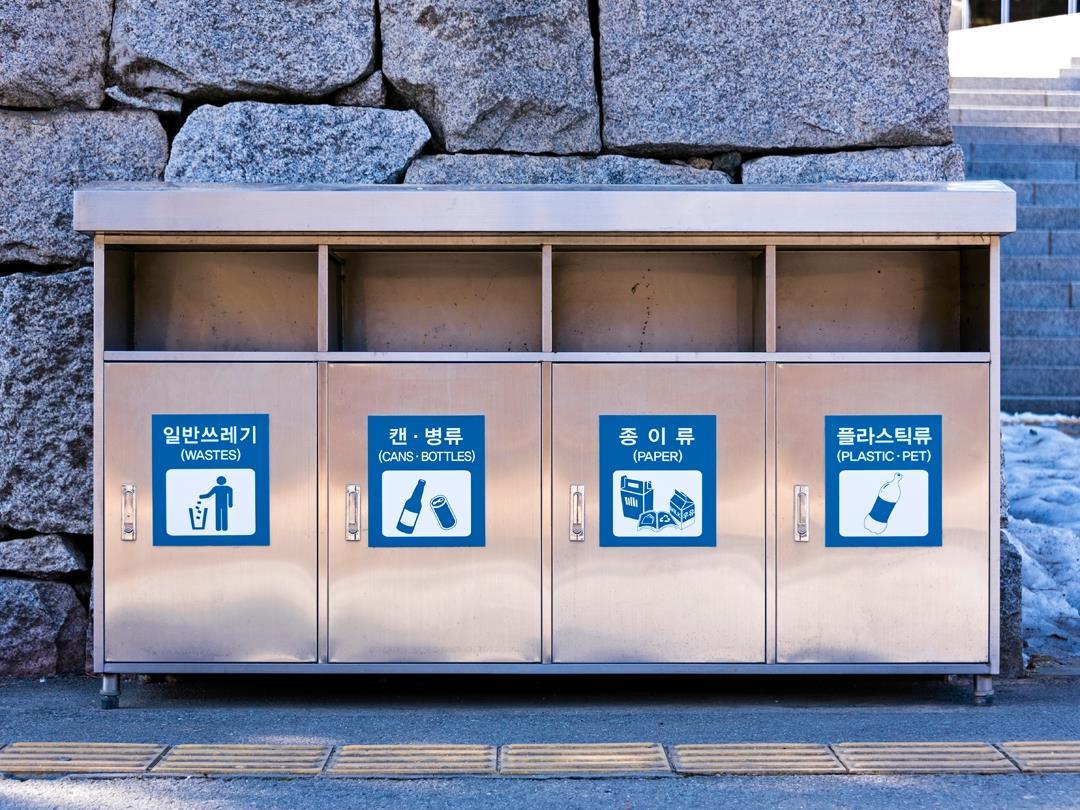
The Korean government has implemented a raft of measures in response to these challenges. Its waste management system, known as jongnyangje, calls for food, garbage, recyclables and bulky items to be separated into colour-coded bags. The policy is strict, and there are penalties for noncompliance (up to 1,000,000 Korean won, or about $785).
Under the Volume Based Waste Fee (VBWF) system, waste is paid for based on volume; for companies, there are penalties for difficult-to-recycle materials. For the individual consumer, VBWFs have been waived for recyclable materials if the packaging is sorted correctly.
In 2023 Korea enforced its recycled content mandate, meaning securing good feedstock has become critical for bottle producers so that they can continue operating. In 2020, to promote the recovery of clean, single-source feedstock during the waste discharge and collection phases, the Korean government piloted the segregation of transparent PET bottles.
This initiative was scaled up in low-rise housing areas in 2021. The public now recognize that transparent PET bottles are a valuable resource, which has contributed to the development of innovative recycling SMEs.
We also know that labelling systems are vital when it comes to collection and sorting. South Korea has implemented a Separate Discharge Mark System, under which all packaging must include the separate discharge mark (comprised of three chasing arrows with the material type in Korean text) by printing, engraving or adhesives labels.
For further clarity, packaging that contains ‘difficult’ materials – such as multilayer laminates – must display South Korea’s ‘unable to recycle’ symbol. This lets consumers know that the product they’re buying will contribute to landfill. This allows consumers to separate the wastes and be better informed on the materials they are using.
Under the Act on the Promotion of Saving and Recycling Resources, companies are also required to grade the recyclability of packaging materials used, from “best to recycle”; “good to recycle”; “normal to recycle”; to “difficult to recycle”.
Recyclability labelling has become more detailed with consumer instructions inside and outside the triangle symbols to enhance the efficiency of sorting and recycling. The minimum font size has been altered from 8mm to 12mm.
Technologies to improve collection and sorting
Even with the above separation efforts, plastic waste can still become mixed at the around 200 materials recovery facilities (MRFs) across South Korea. Up to recently, almost all waste has been sorted manually using a conveyor belt by workers – some of whom may be less skilled than others at identifying and manually sorting types of plastic. Only a few facilities use technologies such as magnetic separation or NIR sorting.
In future, to address this, it is expected that there will be increasing reliance on robotics and AI technology – indeed, we are already seeing examples of this. For instance, the Korean company ACI, which specializes in petrochemical and environmental engineering, has created an AI sorting system called Dr. B that it says can identify 67 different types of items, and uses robotic arms to sort the targeted plastic waste based on its material, colour, and even the particular brand.
According to the company, the system provides real-time monitoring capabilities, including operational data such as the system’s running time, waste characteristics, motor performance, and the status of the different receptacles that contain sorted waste.
Dr. B also has an automated data reporting system to analyze types of waste and trends, and generate regular reports. Some individual sorting facilities – such as that of Dobong-gu District in Seoul – have incorporated the SCI ‘reclamation package’, which includes gravity separation and a compression device, but many are yet to follow suit, perhaps owing to budgetary considerations.
Another example of an AI solution that has been developed in and deployed across South Korea is Nephron’s SuperBin, a reverse vending machine that collects beverage cans and PET bottles in the ‘world’s first’ AI-based recyclable waste recovery machine. The SuperBin encourages compliance in the system by providing financial rewards to individuals who return their recyclable waste.
The final example we’ll share here is Seoul-based Ecube Labs, whose smart bins offer a ‘comprehensive, smart waste management solution’ using cloud-based software connected to IoT fill-level sensors, alongside solar-powered waste compacting bins, a waste analytics platform and a fleet management solution.
Improving the quality of recyclate
Alongside its advanced collection and sorting systems, South Korea has also implemented policies to improve the quality of recyclate and ultimately ensure a higher level of plastics circularity in the region. For example, to prevent contamination, the use of PVC materials and coloured PVC bottles has been banned in the country since 2019.
Also aimed at increasing the quality of recyclate was the prohibition in 2021 of the use of compression vehicles to collect and transport recyclables. While using such vehicles does reduce the volume of overall waste transported, compressing waste before separation can contaminate the materials and hence is a barrier to the production of clean recyclate.
Given that in 2023 it was announced that polyethylene terephthalate (PET) bottles must be manufactured with at least 3% of their plastic coming from recovered PET, such moves are necessary to support these targets.
And like elsewhere in the world, there is also growing interest in the potential benefits of advanced recycling technologies in Korea – although these fall mainly under the remit of of large corporations, says Grace. “There are multiple giant petroleum-based companies like SKGC, LG and Lotte Chemical leading the efforts in advanced recycling, not limited to chemical recycling but also solvent-based advanced recycling.”
Promoting reuse
Moving from single-use to reusable packaging models where possible and appropriate is a key part of the world’s efforts to tackle the plastic waste problem – and while progress is slowly but surely accelerating, it is by no means as widespread, or widely discussed, as the traditional make, use, recycle model.
This also applies to South Korea: although we are seeing increasing instances of reuse/refill solutions, policy and technology development are still weighted towards sorting and recycling. Areas in which reuse are most often employed include containers for food delivery (with test operation in a few areas using delivery apps); or reusable cooling bags instead of single-use EPS for e-commerce delivery.
Since 2021, Korea’s MOE and the Ministry of Food and Drug Safety (MFDS) have been working to incentivize the development of refill shops that provide four types of hygiene products (shampoo, conditioner, body cleanser, and liquid soap). Consumers who use refill stores are also rewarded with a point system. As a result, according to a World Bank Group report, the number of refill stores increased from 10 in July 2021 to more than 200 in February 2023.
In-store refill stations, according to Grace Kim, are mostly developed by FMCG companies that pilot projects through agreements with government agencies. An example of this would be the beauty products company Amorepacific, which a few years ago launched its own in-store refill stations.
There are also examples of startups developing innovation reuse systems. Oysterable, for instance, operates an Internet-of-Things (IoT) resource recovery system called Lalaloop that provides resource recovery devices, a compensation app called Today’s Recycle that is used for resource recirculation, a console that analyzes and manages resource recovery data, and an ID system that tracks and manages goods.
With regards to single-use plastics in cafes and restaurants, the situation is more complex. For example, while SUP cups are banned in cafes and restaurants, a ban on plastic straws and stirrers in food service establishment was withdrawn in 2023 owing to concerns about the financial burden on small businesses. A ban on disposable shopping bags at convenience stores has also been lifted.
Grace Kim sees this as a real missed chance. “By withdrawing the policy of banning the use of paper cups, plastic straws, and stirrers in food service establishments and group catering facilities, which were promoted as a disposable regulation policy, the opportunity to reduce disposable packaging waste was missed. It is thought that this can be resolved through the regulation of disposable product use and the development of effective deposit systems for single-use cups.”
Extended Producer Responsibility (EPR)
The 2003 Extended Producer Responsibility (EPR) Act obliges producers in South Korea to take full financial responsibility for treating the waste from their products and packaging over their entire lifespan. And with the popularity of food delivery and ready-made meals in South Korea, large food manufacturers, such as CJ CheilJedang, have become closely linked to the overuse of SUP in the region.
“The South Korea government first introduced EPR in 2000, covering various packaging materials and products (paper, glass bottles, metal cans and plastic packaging),” says Grace Kim.
“It strengthened from the production stage up to the collection and recycling by introducing the Material and Structure Evaluation System for Packaging Materials. The contribution and recycling obligation rates are more stringent for materials that are difficult to recycle, with an increased contribution for packaging materials rated as difficult to recycle.”
Biobased and compostable packaging
The biobased and bioplastics market is not yet highly developed in South Korea with no strong regulatory mandates, but there has still been progress in this area which could ultimately help support the Korean government’s carbon neutral framework. According to Statista, there were 142 patent applications for biodegradable plastics made in South Korea in 2021, and the number of biodegradable plastic patent applications in the country nearly doubled from 2016 to 2020.
CJ Biomaterials is the leading biomaterials manufacturer in Korea, developing Polyhydroxyalkanoates (PHA)-based solutions for packaging, straws, cutlery and more.
We also learned last year that a partnership between TotalEnergies Corbion, POSCO International, and ESOL is aiming to develop South Korea’s recycling infrastructure and technology for polylactic acid (PLA)-based materials. Within this, TotalEnergies Corbion is contributing its own knowledge and experience of advanced PLA recycling, and ESOL – already producing PLA-based products in South Korea – is sourcing the PLA waste from post-consumer recycling and working towards advancing the technology to collect, sort, clean, purify, and reuse the PLA.
The companies hope to promote the use of PLA in various foodservice and packaging products, such as bottles and containers, through the mechanical and advanced recycling of TotalEnergies Corbion’s Luminy PLA.
3: The global context
It’s clear from the above that South Korea is performing well compared to the rest of the world when it comes to plastic circularity and resource use, with particularly impressive growth over the past three decades.
Yet of course, despite the many measures it has put in place, we know that the scale of the problem will only increase. And like all countries, in future it will need to reduce its plastic exports. While plastic waste exports from South Korea have declined considerably since China banned plastic waste imports, over 44,000 metric tons of plastic waste were still exported from the country in 2023.
South Korea is working with the rest of the world to coordinate efforts on plastics through the Global Plastic Treaty (indeed the latest round of negotiations in which INC-5 is set to take place in Busan).
Grace Kim concludes: “South Korea is actively participating in global treaties and adapting its regulations to meet international standards, preparing policies to respond to global regulatory changes.
- Domestically: South Korea has enacted laws such as the Circular Economy Transition Promotion Act and the Resource Circulation Promotion Act for Plastic (Plastic-Free Act) to respond to changing global regulations.
- Internationally: South Korea is actively involved in the Global Plastics Treaty negotiations under the United Nations, aiming to establish a legally binding international framework addressing plastic pollution across its entire lifecycle.”
If you liked this story, you might also enjoy:
The ultimate guide to the Packaging and Packaging Waste Regulation in 2024
How are the top brands progressing on packaging sustainability?
Sustainable Innovation Report 2024: Current trends and future priorities
Everything you need to know about global plastic sustainability regulation
Sponsored stories

How ATS-Tanner’s banding solutions align with the new PPWR
ATS-Tanner’s banding solutions aim to reduce packaging waste, provide a practical alternative to plastic and improve recyclability. In

How Rollon’s linear systems provide reliability for tertiary packaging
Rollon believes tertiary packaging machinery must perform without fail, showcased by its recent partnership with AMP Automation to develop palletizing

Discover what’s new at London Packaging Week
Packaging has never carried greater commercial responsibility. It influences how consumers perceive brands, how products perform in increasingly competitive markets

Paperworld Middle East partners with FSC to champion responsible sourcing across the region’s paper and stationery industry
Paperworld Middle East, the region’s leading trade show for paper and stationery products, taking place from 13–15 October

Made for Life: How Sappi reveals what trees make possible
What connects an experienced papermaker, the creators of cactus-based leather, the people conserving forests for future generations, and a

The advantages of all-electric adhesive dispensing in modern packaging
Packaging manufacturers are under constant pressure to increase output, reduce operating costs, improve sustainability, and maintain consistent product quality. One

YUTO won 12 international packaging design awards across three global competitions
Driven by the global sustainability trend, the EU PPWR mandates packaging reduction, recyclable design, and restrictions on single-use packaging.

How rPS Food aims to bring circularity to polystyrene packaging
In this edition of the Spotlight, Coexpan (part of Grupo Lantero) details how its rPS Food enables up to 100%
Read next

Your chance to decide the winner of our 2026 Readers’ Award
The nomination period for Packaging Europe’s 2026 Readers’ Award has ended, the finalists have been selected, and now it’

Nemera launches bi-dose nasal spray solution
Drug delivery device company Nemera has announced its DuoSpray bi-dose nasal spray platform, a ‘non-invasive, needle free’ administration

Coveris develops mono-material sleeve with 30% less material for Dr Beckmann
Coveris has unveiled its mono-material sleeve solution developed for Dr Beckmann, said to use around 30% less material than