

In a rush? Click here to read a summary of this article
Introduction
This report examines the impact of the Labubu toy’s packaging and the factors in its success, how its sense of fun could be utilised within the sustainable packaging market, and considers the concerns around Labubu’s contribution to single-use packaging waste.
Key takeaways
- A LinkedIn post by Julia Vol, founder of Make A Splash, highlighted the hype and play in the toy’s marketing while drawing attention to the lack of fun in the sustainability sphere, with nearly $8bn in 2025 alone spent on the dolls. Vol argues that to scale sustainable and climate solutions, spending needs to seem “desirable, exciting, or fun.”
- A Sky News article highlighted Pop Mart’s reported “near 400% increase” in profits in the first half of this year, after demand grew.
- Brand agency N2O believes the blind box packaging was a key selling point, as ‘the thrill of not knowing what you’ll unwrap keeps people coming back for more’. Writer Himani Gupta argues “Labubu’s growth didn’t come from ads — it came from fans”, with unboxing videos shared on TikTok, Instagram, and Xiaohongshu.
- Single-use packaging impact: a letter from Nirbhay Rana, assistant professor at IILM University, India was published in the South China Morning Post, examining the impact of the product’s packaging waste. Made from 36% polyester, 35% polyvinyl chloride (PVC) and 29% acrylonitrile butadiene styrene (ABS), a single model means “today’s joy becomes tomorrow’s microplastic, destined to outlive most of us.”
- Shorr’s 2025 Sustainable Packaging Consumer Report indicates a majority of consumers (90%) are more likely to buy from brands with sustainable packaging and nearly half of Gen Z (49%) and Millennials (47%) say they would be willing to spend more for eco-friendly packaging – but higher costs (39%) and limited availability (36%) often prevent consumers from buying products with more sustainable packaging.
Conclusion
While there is clearly a strong incentive for consumers to purchase products in sustainable packaging, there also seems to be a lack of fun that encourages a consumer to make a purchase, beyond moral or price point reasons. Any of these reasons are important when it comes to marketing a product and its packaging as sustainable, with environmental benefits being the most significant - however, it is worth considering the impact the thrill of a product’s packaging can have on consumer engagement, as evidenced by the Labubu craze – and while the amount of success the toys have had may not be typical, it will be interesting to see whether more packaging companies utilize the thrill of its blind box packaging in future.
In recent months the Labubu toy - designed by artist Kasing Lung and sold by Chinese toy maker Pop Mart - has become a global sensation, with its blind box packaging a key selling point for consumers. In this Brief, we examine how Labubu’s packaging has contributed to its success, how this could be utilised within the sustainable packaging space, and the concerns around its contribution to single-use packaging waste.
Making sustainability ‘fun’
Earlier this month, a LinkedIn post by Julia Vol, founder of Make A Splash marketing, highlighted the “hype” and “play” in the toy’s marketing while drawing attention to the lack of fun in the sustainability sphere. Vol questioned how people worldwide have been convinced to spend “nearly $8bn in 2025 alone” on the “ugly” doll, while simultaneously claiming that investing in climate solutions, alternative proteins, or goods made under fair conditions is ‘too expensive for consumers to afford’.
The reason lies in sustainability professionals’ failure to make spending on climate and fair products “desirable, exciting, or fun”, Vol states, adding that “we keep marketing sustainability as guilt, sacrifice, and boring moral duty.”
Vol concludes: “If we want sustainable and climate solutions to scale, we need to stop acting like schoolteachers wagging fingers and start acting like Pop Mart.
We must find the stories, the emotions, and build the hype that makes people want in. Because if Pop Mart can sell ugly monsters for billions, why can’t we sell a better world?”
According to Sky News, Pop Mart recently reported a near 400% increase in profits in the first half of this year, after demand for the “ugly-cute” toys grew. Shares in the company have apparently risen more than 230% since the beginning of 2025, with around 40% of the sales said to have come from outside China.
The impact of blind box packaging on the consumer
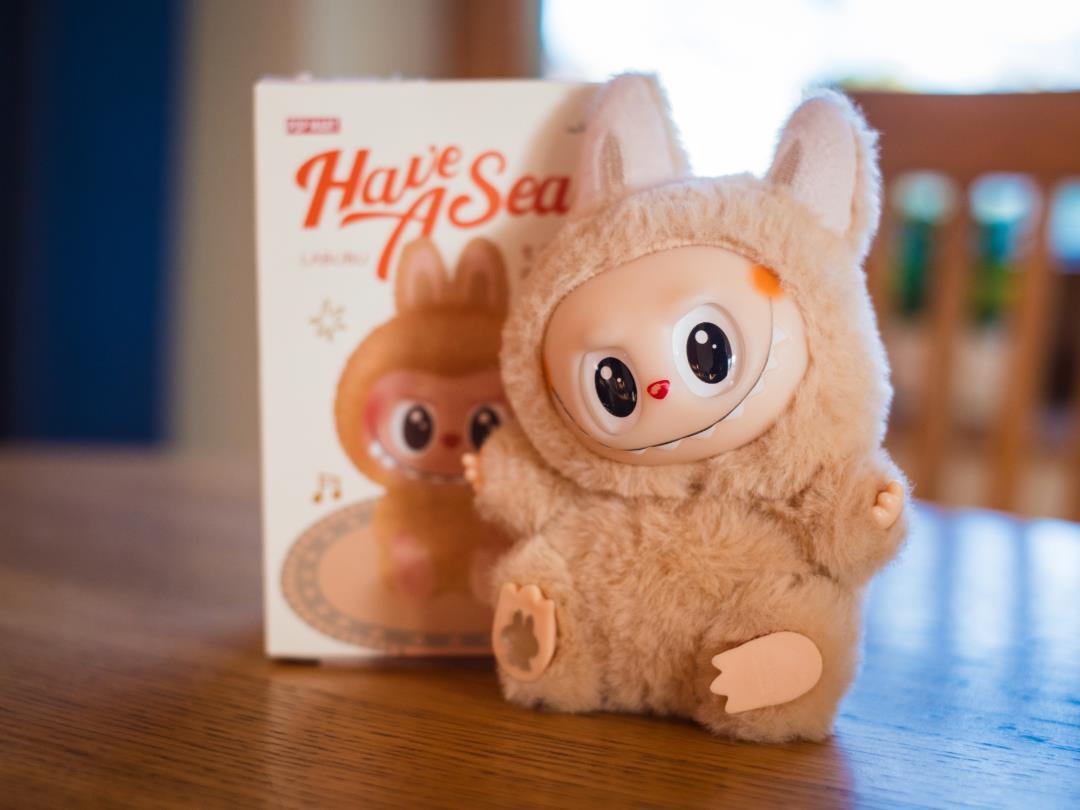
In a recent article from brand agency N2O, the company outlined what brands can learn from Labubus’ popularity. One of its key selling points is the blind box packaging, with consumers unable to know which character they have until after opening. N2O says the thrill of not knowing what you’ll unwrap keeps people coming back for more - and combined with the scarcity of rare editions, buying becomes a game.
The company draws comparisons with the 1990s collection trends of Pokémon cards, Beanie Babies and baseball cards, arguing that Labubu is simply the latest surge in cyclical consumer behaviour, “updated for the TikTok age, where every reveal is content.” N2O adds that teasing product drops, staggering reveals or gamifying loyalty schemes can transform purchases into entertainment.
’People want more than the physical product; they want the anticipation that comes before it.’
Building on the discussion around blind box culture, writer Himani Gupta published an article examining the Labubu’s success. Gupta states that unboxing is addictive for consumers, which each purchase feeling like a lottery, giving a thrill of chance. Rare pieces also create hype, with scarce editions turning collectors into hunters. In addition, Gupta says repeat purchases are natural - fans don’t stop at one; they keep buying until they ‘complete the set’.
Gupta adds that “Labubu’s growth didn’t come from ads — it came from fans”, with unboxing videos shared on TikTok, Instagram, and Xiaohongshu. The company also explored multiple formats, developed from blind box packaging to plushies and accessories, providing new entry points for different buyers. Gupta asserts that “products succeed when they deliver an experience, not just utility.”
Single-use waste concerns
However, discussions around the toys’ success haven’t always been positive. There have been concerns raised around the amount of single-use waste generated by the toys’ packaging. In June, a letter from Nirbhay Rana, assistant professor at IILM University, India was published in the South China Morning Post, examining the impact of the product’s packaging waste.
Rana opens with the words: “They’re palm-sized, wide-eyed and irresistibly cute. Yet every time a fan opens a Pop Mart blind box to reveal a Labubu, three things hit the planet: a glossy cardboard cube, a foil pouch and a figurine made from non-biodegradable materials.”
Rana states that at least one model is 36% polyester, 35% polyvinyl chloride (PVC) and 29% acrylonitrile butadiene styrene (ABS), meaning “today’s joy becomes tomorrow’s microplastic, destined to outlive most of us”. He claims that thrill of the toys is engineered: pay first, discover later and keep buying until the set is complete, fuelling compulsive consumption and excessive packaging.
Rana adds that while some people argue these toys are too small to matter, around half of global plastic waste comes from single-use packaging. He argues that in blind-box culture, packaging “isn’t just protection - it’s part of the experience, compounding the waste.”
What’s preventing consumers from purchasing more products with sustainable packaging?
Circling back to Julia’s Vol comments on sustainable products being seen as too expensive for consumers to afford, a 2024 article by Allpack seems to contradict this. It cites a study by IBM and the National Retail Federation which found that “nearly 70% of consumers” in the UK and Ireland consider sustainability when making a purchase – and of this 70%, a significant portion of consumers are “willing to pay a premium” for products that come in sustainable packaging.
The 2025 Sustainable Packaging Consumer Report from Shorr appears to support the data cited by Allpack. According to the report, a majority of consumers (90%) are more likely to buy from brands with sustainable packaging, and more than half of Millennials (59%) and Gen Z (56%) consciously purchased products with sustainable packaging in the last six months. Shorr says that nearly half of Gen Z (49%) and Millennials (47%) say they would be willing to spend more for eco-friendly packaging, followed by 41% of Gen X and 37% of Boomers.
In contrast, though, the company notes that the main reasons preventing consumers from purchasing more products with sustainable packaging are higher costs (39%) and limited availability (36%). Considering the limited availability of the Labubu dolls, this does raise questions around the marketing of sustainably packaged products, and whether there is a missing piece when it comes to making these products more appealing to consumers.
Utilizing the ‘thrill’ of blind box packaging
While there is clearly a strong incentive for consumers to purchase products in sustainable packaging, as shown by the data above, there also seems to be a lack of “fun” that encourages a consumer to make a purchase, beyond moral or price point reasons.
Perhaps this could be due to increasing demand for sustainable packaging creating a fatigue in consumer’s minds - where their incentive for buying is centred more on it being the right thing to do, or the satisfaction of knowing that their purchase is has environmental benefits – rather than for any sense of joy from the product itself.
Of course, any of the reasons listed above are important when it comes to marketing a product and its packaging as sustainable with environmental benefits being the most significant. However, it is worth considering the impact the “thrill” of a product’s packaging can have on consumer engagement, as evidenced by the Labubu craze – and while the amount of success the toys have had may not be typical, it will be interesting to see whether more packaging companies utilize the “thrill” of its blind box packaging in future.
If you liked this story, you might also enjoy:
The ultimate guide to the Packaging and Packaging Waste Regulation in 2025
How are the top brands progressing on packaging sustainability?
Everything you need to know about global packaging sustainability regulation in 2025
The key to increasing the use of reusable packaging in supermarkets
Sponsored stories

How ATS-Tanner’s banding solutions align with the new PPWR
ATS-Tanner’s banding solutions aim to reduce packaging waste, provide a practical alternative to plastic and improve recyclability. In

How Rollon’s linear systems provide reliability for tertiary packaging
Rollon believes tertiary packaging machinery must perform without fail, showcased by its recent partnership with AMP Automation to develop palletizing

Discover what’s new at London Packaging Week
Packaging has never carried greater commercial responsibility. It influences how consumers perceive brands, how products perform in increasingly competitive markets

Paperworld Middle East partners with FSC to champion responsible sourcing across the region’s paper and stationery industry
Paperworld Middle East, the region’s leading trade show for paper and stationery products, taking place from 13–15 October

Made for Life: How Sappi reveals what trees make possible
What connects an experienced papermaker, the creators of cactus-based leather, the people conserving forests for future generations, and a

The advantages of all-electric adhesive dispensing in modern packaging
Packaging manufacturers are under constant pressure to increase output, reduce operating costs, improve sustainability, and maintain consistent product quality. One

YUTO won 12 international packaging design awards across three global competitions
Driven by the global sustainability trend, the EU PPWR mandates packaging reduction, recyclable design, and restrictions on single-use packaging.

How rPS Food aims to bring circularity to polystyrene packaging
In this edition of the Spotlight, Coexpan (part of Grupo Lantero) details how its rPS Food enables up to 100%
Read next

Your chance to decide the winner of our 2026 Readers’ Award
The nomination period for Packaging Europe’s 2026 Readers’ Award has ended, the finalists have been selected, and now it’

Nemera launches bi-dose nasal spray solution
Drug delivery device company Nemera has announced its DuoSpray bi-dose nasal spray platform, a ‘non-invasive, needle free’ administration

Coveris develops mono-material sleeve with 30% less material for Dr Beckmann
Coveris has unveiled its mono-material sleeve solution developed for Dr Beckmann, said to use around 30% less material than