

In a rush? Click here to read a short summary of this report
Introduction
This report examines the most impactful sustainability-driven innovations shaping the packaging industry today, drawing on insights from Sustainability Awards judges and real-world commercial examples. Regulatory pressure, cost volatility, and infrastructure gaps are forcing brands and investors to rethink materials, systems, and scalability. Key areas of innovation we highlighted include:
Key takeaways
- Fibre-based packaging: Innovation is shifting towards extending the performance of paper and fibre, from plastic-free barriers and closures to fibre bottles and secondary packaging, driven by regulation and consumer pressure.
- Alternative fibre feedstocks: Agri-waste sources such as banana stems, onion waste, coffee waste, and even collagen are gaining traction, offering decentralized supply, reduced deforestation risk, and new value chains.
- Solutions for e-commerce: Right-sizing, reusable formats, fibre-based protection, and low-impact adhesives are responding directly to PPWR requirements on empty space and waste reduction.
- Reuse: While interest remains high, progress in reuse is constrained by operational complexity; solutions that improve traceability, logistics, and asset management are now critical.
- Boosting PCR: Advances in purification, AI sorting, machinery, and pricing transparency aim to unlock higher-quality recyclate and make recycled content a viable, bankable proposition.
- Compostable and biodegradable materials: High-barrier, home-compostable and microplastic-free solutions are slowly moving beyond niche use cases, particularly where recycling is unlikely.
Conclusion
This report provides a snapshot of some of the most impressive projects over the past year in the area of packaging sustainability. But material innovation alone is no longer enough: progress now depends on alignment and collaboration across value chains, alongside enabling policy. For executives and investors, the opportunity lies in backing solutions that combine technical performance with scale, infrastructure readiness, and regulatory alignment.
Welcome to our annual innovation report, in which we review the entries to our 2025 Sustainability Awards with an eye to identifying current trends within sustainable packaging. We consider it our chance to stop and reflect on the progress the industry has made over the past year to meet, among other things, the challenges presented by Europe’s Packaging and Packaging Waste Regulation (PPWR) along with broader principles such as EPR.
Each year, we ask our Sustainability Awards judges to tell us which areas of innovation among the awards entrants they have been most impressed by. This time, extending the possibilities for fibre-based packaging scored highest, with 63% of respondents mentioning this, followed by design for recyclability at 56.3%, use of novel feedstocks at 44.4%, development of renewables at 25.9% and incorporation of recycled content at 22.2%.
From the above, one thing readers may note is that, compared to previous years, we are beginning to see more focus on increasing the possibilities for fibre-based packaging and much less on circular plastics solutions.
There is of course no suggestion from ourselves or anywhere else that the need to build a circular economy for plastics is any less acute. The reduction in recyclable plastic packs or related solutions entering the awards in the past year may be down not to an increasingly negative attitude to plastic packaging so much as the fact that the challenges around circular plastics are today less around innovation in the materials themselves and more around building efficient recycling and collection infrastructures. Indeed, one of our Sustainability Awards judges noted explicitly that it is the ‘lack of focus on end-of-life (collection, deposits, infrastructure) that has given plastics a bad name’. As a publication we do not advocate for any individual material over another, but it’s important to have these conversations.
Preamble over, what follows is a selection of some of the bigger trends we have identified and a few of the innovations that particularly exemplify these, with some inevitable overlaps between categories; and these are not, we hasten to add, in order of importance. We encourage our audience to use this as a starting point to explore for themselves the many other exciting projects, whether commercialized or in the development phase, in the areas below and others besides.
Increasing the possibilities for paper
Consumer enthusiasm and regulatory pressure on plastics are pushing global brands to migrate from plastic to paper packaging materials across many product categories. We all know the challenges when it comes to developing paper packaging for more complex applications such as cosmetics, food or drink – more sophisticated barrier properties and increased strength being the most significant.
Water-based barriers can replace rigid plastic films in certain applications, but paper-plastic laminates are still often required to guarantee shelf-life and ensure food protection. There is much innovation that is challenging the long-held perception that paper cannot compete with plastics in terms of its physical properties, and paper producers are working to reduce or even eliminate the plastics needed in barriers.
Take UPM, with its paper chocolate packaging for the Panda brand, produced in collaboration with Orkla Suomi and nominated in the Commercialized Renewable Materials category of last year’s Sustainability Awards. According to UPM, the recyclable paper wrapper does not contain an additional plastic layer.
“Thanks to the in-built barrier protection provided by UPM Asendo Pro packaging paper, no additional plastic layer is required. UPM Asendo Pro has been validated as recyclable (PTS method RH 021/97, cat II) in existing fibre recycling streams, which are widely available to consumers in Europe.”
Let’s also bear in mind it is not just the barrier coatings themselves – it can also be challenging to apply them in a cost-effective and scalable manner. (And when it comes to effecting any industry-wide change, we all know it’s mainly about scalability.) With this in mind, Heidelberg and Solenis have collaborated on a process said to enable the ‘industrial, partial and cost-effective’ application of barrier coatings to paper packaging.
Heidelberg has integrated Solenis’ technology into its flexographic web printing process with the Boardmaster. During the ongoing process, the barriers are transferred to the paper web with precise registration only at the necessary points. The companies say the main challenge was finding suitable materials that act as a barrier to water, water vapour, hot and cold liquids, oils, and fats, while also fulfilling sustainability requirements.
Moving from barriers, the difficulties in recycling the huge volumes of plastic closures produced annually are well understood, as they can be challenging to process and often slip through the net entirely. Blue Ocean Closures was the winner of the Recyclable Packaging category with its fibre-based screw cap which is recyclable in the paper stream.
The company explained why this solution represents a significant shift. “The fibre-based closure for nutraceuticals, NutraCap, that is now on the market and commercially available, is the first of its kind in the closure and caps packaging category. Until now, the vast majority of packaging closures with advanced shapes, properties and the functionality required have been made of plastics. Never before have consumers and consumer product brands had the choice of replacing caps with a solution made of biobased materials, especially not in the volumes needed to make such a shift.”
Another topic of major interest in recent years is the evolution of fibre-based bottles. In fact, it’s fair to say that few paper packaging innovations have generated more column inches in the last decade than paper bottles.
We have seen several examples of these now, perhaps most famously the early adopters, Paboco and Pulpex, but these were only the beginning of an innovation journey. As a more recent example of where we are at today in terms of application possibilities, PAPACKS has developed its moulded Fiber-Bottle which is, it says, “a fully recyclable, plastic-free moulded fibre bottle with an integrated screw thread and optional plant-based barrier coating (OTR/WVTR).
“Suitable for liquids and non-liquids like dietary supplements, it offers a scalable, patented alternative to plastic bottles for global mass production. The Fiber-Bottle eliminates plastic entirely, including the closure, without compromising on product protection. Its single-piece moulded fibre design, recyclability, and optional plant-based barrier coating make it suitable for both liquid and non-liquid products.”
Finally, we move on to the question of secondary packaging, where it is strength, recyclability and light weighting, as opposed to barriers, which are key. Furthermore, by 2030, the PPWR will no longer allow shrink film for multipacks (although an exemption was made in late 2025 for pallet wrapping films and strapping from the 100% reuse targets set under Articles 29(2) and (3)).
We spoke to Patricia Oddshammar, design and innovation director at DS Smith, about the company’s recyclable multipack for PET bottles, produced in collaboration with Krones.
“DS Smith Lift Up is a fibre-based recyclable alternative to plastic shrink film for PET bottles comprised of a corrugated clip with integrated carrier handle and a paper band and is recyclable, reduces single use plastic, carbon emissions and energy consumption. The product was extensively tested in real-life lab conditions. It is proven to be strong enough to withstand both existing manual and automated retail supply chains.”
Diversifying fibre sources
Still in the arena of fibre-based packaging but worth looking at separately, this is a sub-topic that has received attention in recent years as the forestry industry struggles to keep up with increased demand for feedstocks for paper packaging.
An exciting area of research is therefore focused on the most viable alternative feedstocks for fibre packaging and the technologies that can be utilized to create robust, scalable packaging using these, where possible (there will probably always be limitations for certain challenging applications). The industry is still in the relatively early stages in most cases but it’s a space that we should be keeping a close eye on.
First, we give two examples of common, untapped sources that may have been overlooked and are readily available: banana waste and onion waste. An additional bonus of such feedstocks, as well as the potential to take the pressure off the forestry sector, is that their global means it may be possible to create a decentralized production model that can provide income for packers and growers whilst providing supply chain resilience.
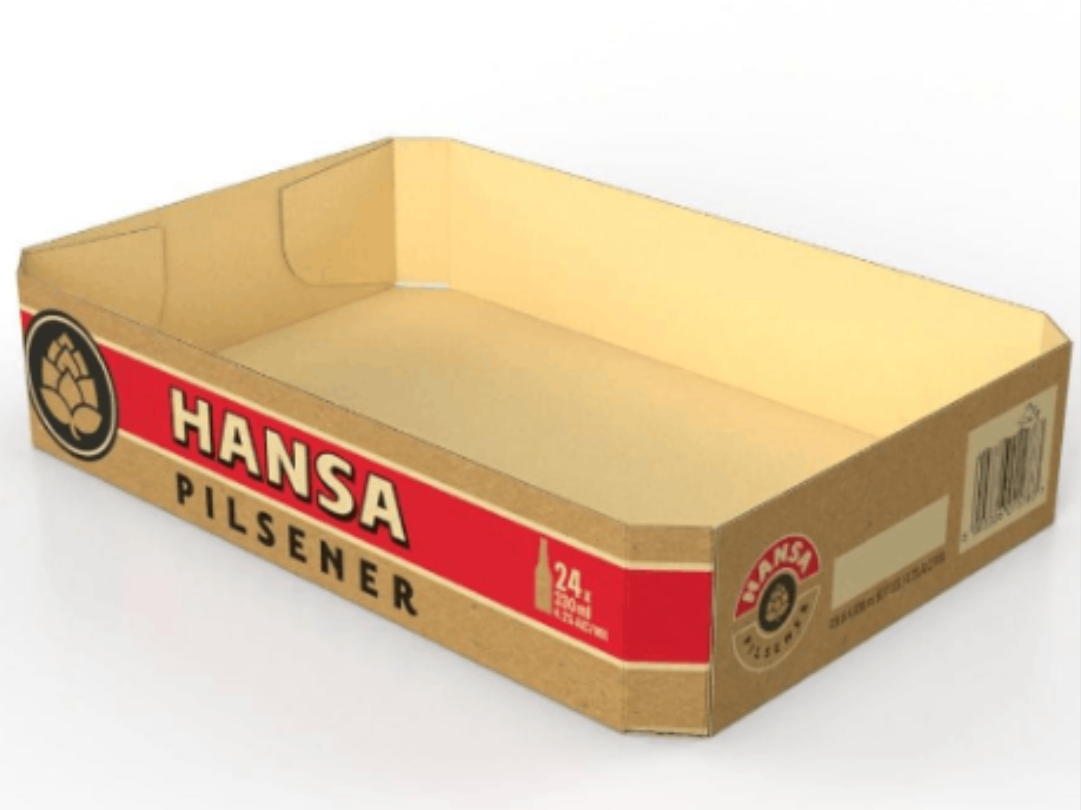
The 100+ Accelerator programme and Zafree Papers were big winners at the 2025 Sustainability Awards, taking home the Commercialized Renewable Materials prize and also being name the Overall Winner. Their entry converts banana farm waste into corrugated cartons for beer packaging.
According to 100+ Accelerator partner Ab InBev, “Zafree Papers transforms banana farm waste from over 20,000 Ethiopian farmers into 100% tree-free corrugated cartons. Partnering with AB InBev through the 100+ Accelerator, Zafree is piloting Ethiopia’s first sustainable beer packaging - reducing deforestation, cutting emissions, and strengthening local supply chains.”
HUID, meanwhile, utilizes onion waste to create ‘strong, lightweight fibres using an ultra-fast and gentle proprietary processing method’ for paper-based packaging such as moulded fibre and board products. The company was nominated in the Pre-Commercialized Renewables category.
Agri-waste can even be used to address the question of barriers. Copar’s recyclable flow wrap for sausages combines Copar’s agri-waste or FSC-certified papers with Smart Planet Technologies’ proprietary nano-composite coatings to deliver recyclable high-barrier packaging.
According to Copar, “By replacing costly multi-layer structures with a single coating layer, it makes what was once technically challenging now commercially achievable. It delivers superior moisture, oxygen and grease protection while remaining affordable, scalable and sustainable for diverse commercial food packaging applications.”
Another, perhaps less obvious use for common agricultural or food byproducts is printing ink. Natural Indigo Finland, in partnership with Tampere University of Applied Sciences (TAMK), has developed a water-based ink using biocolorant extracted from coffee waste supplied by Finnish coffee roastery and spice producer Meira Oy.
The project has progressed from laboratory research to industrial proof-of-concept, with Cabassi Oy successfully printing the ink on the Paptic® material – a ‘durable, recyclable at scale, fibre-based solution designed to replace plastic’.
Lastly, and even more left-of-centre, what about the notion of packaging fibres that can be transformed into trees? Sustainability Awards finalist Ambipar has designed a range of ‘bio-stimulating’ biocapsule packaging designed to transform collagen and cellulose waste into trees. According to Ambipar, this technology has helped restore one of Brazil’s greatest climate disasters and it is now expanding to other countries.
Solutions for e-commerce
Sharp-eyed readers with longish memories will recall that we had dedicated e-commerce categories in our innovation reports both last year and the year before – but the number of innovations specifically targeted to this has not yet abated and given the nature of today’s retail environment will surely only increase. But this year there is a slight variation in that – yes, again – we have observed an uptick in paper / fibre-based e-commerce solutions in particular.
The usual challenges when it comes to develop e-commerce packaging apply. To recap: product protection; user-friendly design to encourage consumer buy-in; right sizing to avoid ‘empty space; strength and durability. More importantly, there are the regulatory pressures: under the PPWR, unnecessary transport and e-commerce packaging will be reduced through setting a maximum empty space of 50%.
We have already talked about barriers, but when it comes to fibre-based takeaway boxes in particular it is of considerable benefit if these barriers are biodegradable. Another Sustainability Awards finalist, Xampla, has developed the ‘world’s first’ corrugated takeaway box using Xampla’s plastic-free barrier coating, which it says is biodegradable and home compostable.
According to the company this represents a genuine industry first; the world’s first corrugated takeaway box using Xampla’s Morro Coating, made from plants. But also makes this innovation groundbreaking is “the seamless collaboration across the entire value chain.
“Morro Coating works as a drop-in solution, enabling rapid scale-up through established manufacturing processes. Unlike conventional coatings containing hidden plastics and harmful forever chemicals that complicate recycling, Morro Coating is compatible with existing recycling processes.”
When it comes to the drive towards right-sizing and decreasing overall paper use, we highlight Henkel’s bio-based hot melt adhesive for e-commerce packaging.
The company told us what makes this innovation stand out: “TECHNOMELT E-COM G5 ECO COOL is a bio-based, low-temperature hot melt adhesive enabling automated, right-sized e-commerce packaging. It provides reduced CO2 emissions and energy use (vs. conventional hot melt), packaging costs and waste while ensuring recycling compatibility, safety, and shipping efficiency - a scalable, sustainable solution for the growing e-commerce industry.”
Another solution geared towards right-sizing but also product protection during transport – and with a biomimetic slant for good measure – is P&G’s recyclable honeycomb structure for e-commerce packaging, Versafill.
According to inventor Li Kun, “Versafill leverages the principles of biomimicry. The 100% recyclable paper-based honeycomb-like structure adapts to a product’s shape by pressing the product against the packaging, protecting around the product for safe transportation. Versafill solves several key challenges in e-commerce packaging: safeguarding goods during shipping, reducing high costs and enhancing sustainability.
“Notably, our team drew inspiration from honeybees. Honeycombs in nature are strong, lightweight and space efficient. Since nature already has a proven solution, the team employed these design principles into Versafill to create this innovative packaging.”
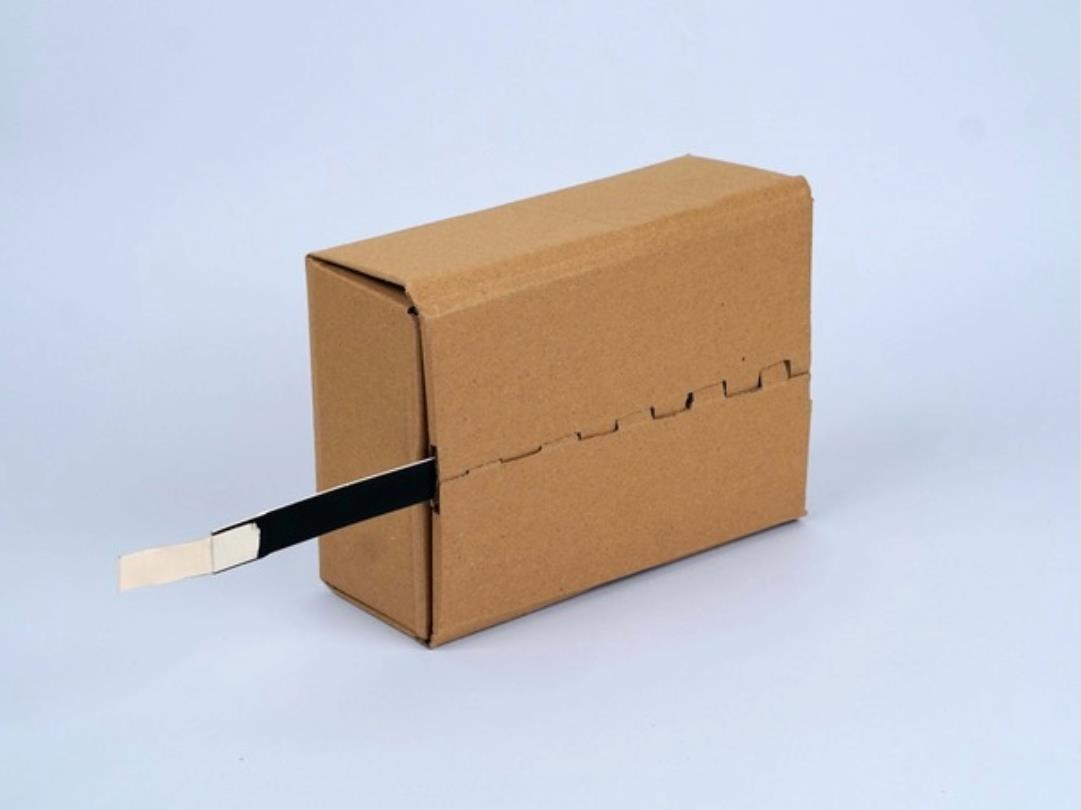
Last but certainly not least is the winner of our pre-commercialized Driving the Circular Economy award, Klingenberg, who has developed a reusable tape-free e-commerce box, Nomadbox, that also addresses the problems of material waste and user-friendliness.
A company spokesperson explained why this product represents a step forward in reusable e-commerce packaging. “Thanks to its patented Monozip, the Nomadbox is completely tape-free and scores high in user-friendliness: it opens in less than a second and closes in 5. Since it is tape-free, it is also easy to recycle in the paper waste stream at the end of its lifetime.
“What also sets the Nomadbox apart is that it sidesteps the ongoing debate between the pro-recycling and pro-reuse camps. Nomadbox shows that a solution can be both reusable and recyclable. The future of packaging lies not in choosing sides, but in moving forward with innovations that combine the best of both worlds.”
Scaling reuse
The above slides us elegantly into our next category: innovations to scale reusable and refillable packaging. One thing we feel bound to note immediately is that, while there have certainly been some standout solutions (as we will see), our Sustainability Awards judges felt that when looking at the quality of submissions as a whole, reuse and refill had dropped from around 50% of judges being impressed by the overall amount and standard of entries in this area, to 14.8%.
This may be a reflection of the general slow-down in industry-wide progress in this area. The most recent Ellen MacArthur Foundation Progress Report notes that, while there has been considerable strides in metrics such as reduced virgin plastic use, there are systemic barriers related to scaling which continue to hold back further progress in reuse models. Despite many impressive projects, much of today’s activity is still confined to pilots and niche applications. As with plastics, perhaps the issue is not so much lack of innovation but that innovation alone is not what will create the scale necessary.
If the packaging industry wants to support systemic change towards a reuse economy, boosting efficiency is key. The companies that made the list of Sustainability Awards finalists certainly support this viewpoint. One such company is Sykell, whose ‘Circular ERP’ product has been designed to revolutionize how companies manage and judge the performance of reuse projects.
According to co-founder Michael Kappler: “The CIRCULAR ERP offers an Operating System to companies in the circular economy to efficiently manage their inventories of reusable assets. Sykell has developed a reusable packaging system that enables retailers and partners in the food, beverage, cosmetic and drugstore sectors to shift from disposable to reusable packaging and towards a circular economy.
“In addition to the primary functionalities of an ERP solution, including clearing and deposit processing, CIRCULAR ERP also unlocks synergies within return logistics and washing. The CIRCULAR ERP accompanies an asset from production, through usage, washing and deposit clearing to the end of life.”
Traceability is an important element of a successful reuse economy, and one that the industry still has not perfected. Beontag has developed a smart solution to help address this need with its microwave- and dishwasher-compliant UHF RFID food packaging tag. According to the company the tag “enhances traceability and boosts supply chain efficiency while delivering strong performance and read range via its compact antenna”.
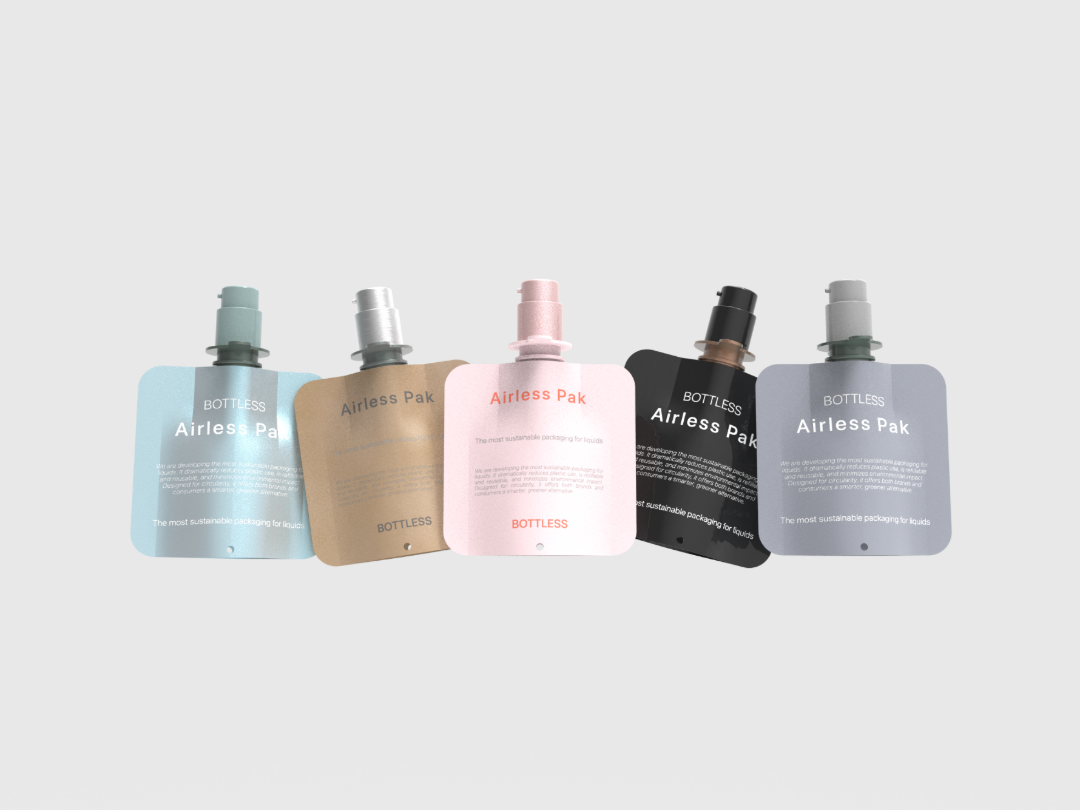
Moving on from smart solutions to pack design, refillable solutions for personal care are proving to be a key area for reuse. One innovation that caught the judges’ eyes, Airless Pak from BOTTLESS, comes in the form of a flexible pouch rather than a rigid bottle.
CEO and founder Chiwon Yi told us: “Airless Pak is a refillable airless packaging solution combining flexible pouches and reusable dispensers. It significantly reduces plastic consumption by 95%, offers over 20 refills, eliminates product waste, and fully aligns with circular economy goals and EU sustainability regulations (PPWR). Its combination of refillable pouches and airless technology provides an immediately applicable, scalable solution across cosmetics, personal care, and food industries.”
When it comes to reusable packaging solutions, secondary transport packaging is not generally the first thing people consider but it’s an area where real savings can be made considering the volumes of goods transported each day. DHL says it has successfully implemented reusable pallet wrap within its operations and with customers, apparently saving around 300 grams of plastic per pallet.
According to a company spokesperson, this solution is no less trailblazing for its relative simplicity. “We are pioneering a reusable pallet wrap solution at scale, making us the first logistics company to replace single-use plastic wraps.”
Innovation to boost PCR
In Europe alone, the PPWR has set challenging targets for recycling levels and PCR content, but the circular economy is currently falling well short of the volumes required to meet them. As a reminder: minimum mandatory recycled content for plastic packaging by 2030 will be 30% for contact-sensitive packaging made from PET; 10% for contact-sensitive packaging made from other plastic materials; 30% for single-use plastic beverage bottles and 35% for other plastic packaging. These figures will all increase for 2040.
This is made all the more problematic by the fact that there have been a concerning number of recycling facilities shutting down across Europe. Furthermore, the cost of recycled materials in Europe – with all the accompanying collection and sorting operations that go along with these – continues to be much higher than virgin. The much-needed Global Plastics Treaty is also still failing to get over the line, so the impetus must come from industry itself.
It is not surprising, then, that we are beginning to see an increase in focus on projects to both generate a greater supply of PCR and make it easier to incorporate recycled content into packaging.
It is widely understood that it is not enough, of course, to merely increase the amount of recyclate available – it must also be of sufficient quality to make it viable for further processing. Procter & Gamble has sought to address this need with VersoVita – a process developed by its R&D teams to remove ‘nearly all’ imperfections from recycled polypropylene resin. In turn, this is set to restore the plastic to near-virgin quality and unlock further recycling and reuse.
In future, the company says it hopes to improve recycled resin quality, help meet increasing demand for high-quality recyclate, and reduce plastic waste by making VersoVita Circular Polymer Purification available license to plastic manufacturers worldwide.
Another angle to consider is the cost of PCR and how this can impact on demand. The task is to make demand bankable even when virgin material is cheaper, and for brand owners in particular to create value using PCR. Members of the panel felt it is important for the industry to treat virgin and recycled materials as separate business models with different streams, rather than focusing solely on cost. Recyclers are a business and they have to have supply and demand. Rather than talk about cost, we should perhaps be talking about value creation (Edit).
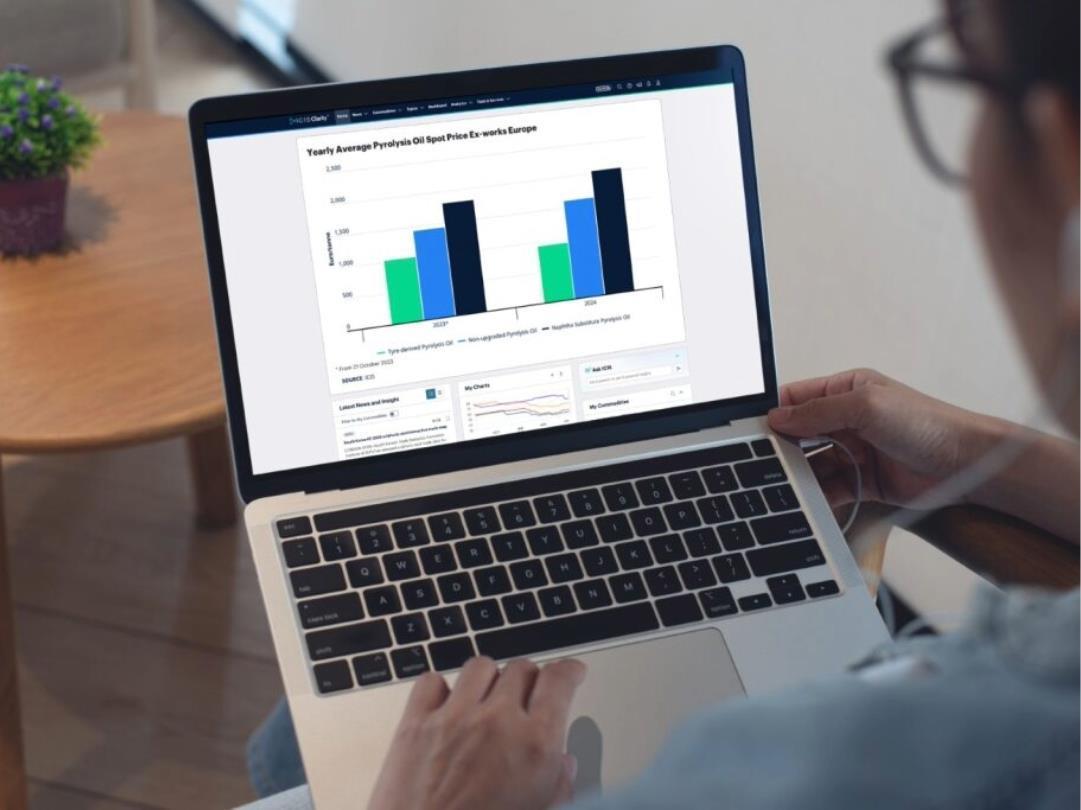
One of the Sustainability Awards entries last year is an example of one of the many areas of innovation that can help to address this. Independent Commodity Intelligence Services’ (ICIS) Pyrolysis Oil Pricing Index has been developed to provide transparent pricing data, commentary, and analysis for chemical recycling, which in turn could create a more solid, bankable market for PCR.
According to the company, “It facilitates market growth, investments, and transition to a circular plastics economy by offering benchmarks for both plastic-derived and tyre-derived pyrolysis oil pricing.”
Next, as we have discovered from our ongoing work with the HolyGrail project over the past decade, intelligent sorting and recovery technologies combined with other tech such as digital watermarking will form a cornerstone of the strategy for increasing PCR availability. Just one recent example in this area is Glacier and AB InBev’s AI robotics solution for identifying and recovering recyclables from kerbside streams, a finalist in the Commercialized Driving the Circular Economy category.
Glacier’s AI-enabled robots are capable of identifying and recovering over 90% of common recyclables from kerbside streams while providing real-time, item-level circularity data. Glacier is transforming recycling into a smarter, more efficient, and data-driven process that accelerates the transition to a circular economy.
And let’s not forget that we can’t talk about the need for a steady supply of PCR without also discussing the equal importance of innovation to incorporate said PCR into major packaging streams in a scalable and cost-efficient manner.
There are many aspects to this, a major one being the need for machinery tailored to these new demands. With that in mind, it’s worth mentioning SIPA’s XFORM RENEW technology for rPET preforming, which converts washed PET flakes directly into high-quality preforms, eliminating pelletizing.
Important, according to the company, this is both an efficient and scalable solution: “Unlike traditional PET recycling, which involves multiple energy-intensive steps – melting, cooling, cutting, drying, and remelting – XFORM Renew eliminates the entire pelletizing stage. Looking ahead to the next steps in commercialization and product development, we are focused on the installation of industrial systems. These will be deployed at the facilities of our customer, who will utilize them for the large-scale production of preforms for the beverage market.”
Biodegradable / compostable innovations
Compostable packaging may not be set to take over the industry entirely any time soon, but it is slowly moving beyond niche as part of a more sustainable, less resource-intensive industry. This is an area covered by the PPWR: compostable packaging will be mandatory for items such as tea/coffee bags and capsules, and sticky labels attached to fruit and vegetables.
One of our jury members put it succinctly: “The importance of biobased plastics that are mechanically, chemically, and organically recyclable (without leaving persistent microplastics) is still greatly underestimated.”
Microplastics are a much talked-about concern, from both an environmental and a health perspective. (Although the latter may be a more contentious question than we might have assumed if one reads this Guardian article that has been doing the rounds here at Packaging Europe Towers. It by no means suggests microplastics are not a huge problem for the industry to address, and now, but in health terms it does at least give the fleeting hope that we can all hang on to our brain function a little longer.)
One awards finalist focused specifically on this issue is RAWS Americas partner Camilo Ferro with its biodegradation formula.
“RAWS is a breakthrough formula for PE, PP, and PET that enables full biodegradation in aerobic and anaerobic conditions, leaving no microplastics,” said a company spokesperson. “Backed by ISO-certified third-party testing, RAWS offers a practical solution for plastics that will never be recycled, advancing packaging sustainability at scale without infrastructure changes.”
It’s important to note that this is pegged as a drop-in solution, meaning little to no heavy investment for producers in new equipment. “RAWS doesn’t just promise a future solution, it delivers a practical one today. It stands apart because it is a drop-in formula, used at just 1% with no changes to existing equipment or supply chains.”
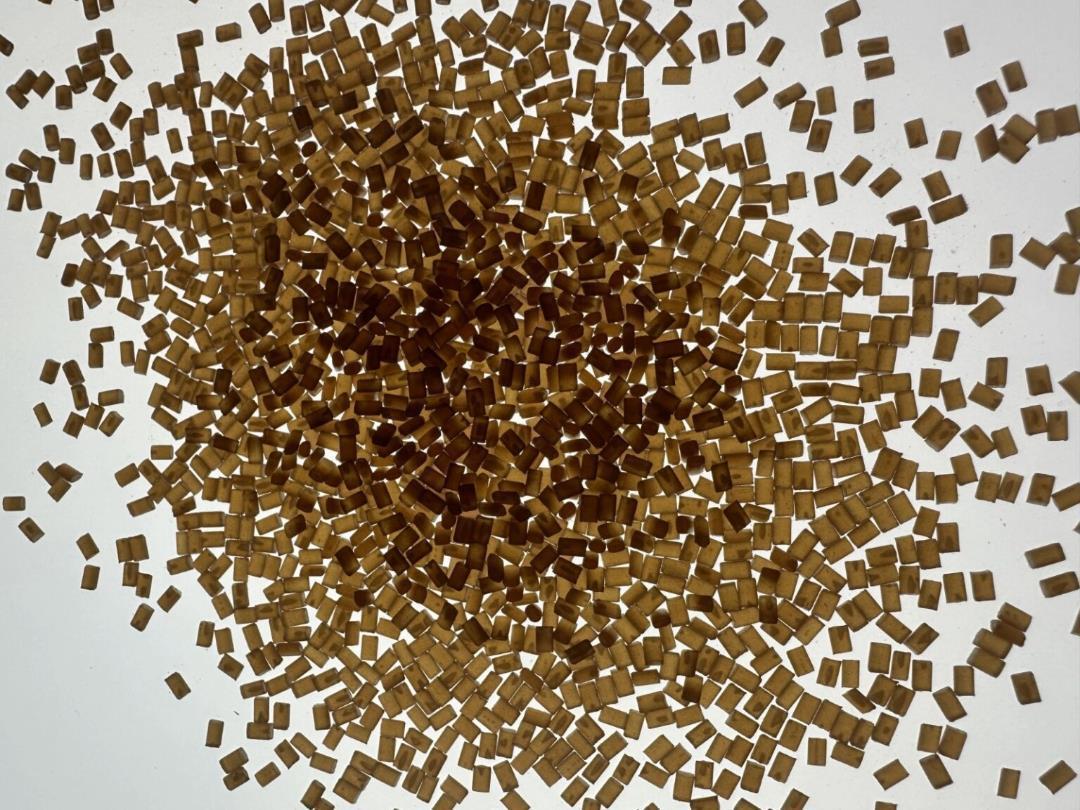
The next entry to be discussed is in the area of flexibles. Given that flexibles are still the least likely form of packaging waste to be sorted and collected, a potential biodegradable solution is well worth our time. This is particularly so if, like Paramount Planet Product’s flat sheets made from fibrillated cellulose, they are entirely non-synthetic and, it is claimed, generate no microplastics.
“This is a flexible, biodegradable flat sheet composed entirely of nano-cellulose formed without synthetic binders. The material offers high strength and scalability, making it suitable for sustainable applications in packaging, barrier films, and coatings while remaining fully compostable in soil and marine environments.
“Unlike traditional biodegradable materials that incorporate synthetic additives or binders, this sheet is composed entirely of fibrillated cellulose, enabling complete environmental decomposition without generating microplastics.
Our judges were also impressed by a solution that uses bio-waste and plant-based materials as feedstock to create bioplastics.
“BUYO provides a 100% nature-based and biodegradable bioplastic solution, using our advanced proprietary technology to convert bio-waste and plant-based materials into plastics. Our products are fully degradable in the natural environment, offer desirable properties and generate minimal carbon footprints. We utilize discarded bio-waste that is abundantly available in Vietnam, hence creating value-added for the circular economy.
Finally, it is not just fibre-based packaging in which we have been seeing progress in barrier properties to increase the possibilities for end-use applications. Pack2Earth offers “the first biobased materials which compost at ambient temperature (home compostable), yet are suitable for packaging long-life dry, semi-liquid and liquid products, including food products, as well as for making re-usable items.
“Pack2Earth’s materials are home compostable and high barrier; two terms which don’t usually go together. This is what makes our materials unique.”
Conclusion
We’ve now seen examples of some of the best work that has been done by the industry in the past year. But while it’s important to celebrate this progress we always prefer to end on the question of ‘What next?’
We turn again to the perspective from our Sustainability Awards judges, asking them where they felt innovation is most needed now. Unsurprisingly, given the infrastructural gaps we have mentioned, 85.2% felt that waste sorting and recycling technology needs to step up considerably. (They felt more-of-less the same last year, with 87.5% citing this problem.) Again, unsurprisingly, over half – 55.6% – felt that reuse needs more attention.
Other key areas they highlighted included extending the properties of fibre-based packaging (44.4% of respondents) design for recyclability (33.3%) and incorporation of recycled content (33.3%). (The latter two had dropped in importance by around 10% each, perhaps suggesting, as we have discussed above, that the focus may gradually be shifting very slightly away from design to more high-level considerations.) Less urgent, though still significant priorities included use of novel feedstocks and developments in renewables.
We also asked judges to comment more generally on the current state of sustainable innovation in packaging technology and packaging materials. There were a wide range of responses, including:
- Reuse/refill: “Reuse / refill has not been as developed enough to encourage a dramatic behavioural change. However, this field is maybe something that should be developed by a combination of R&D and marketing field work. These areas are usually not very well connected.”
- A caveat around paper solutions: “I am impressed with the innovations occurring with paper-based solutions, but wonder if we will see any issues with food waste since it’s hard to get paper to function well for many food categories.”
- Wider geographical spread needed: “Geographically, Latin America and India were underrepresented – but there is plenty of innovation going on in these areas.”
- Possible investment bottleneck? “There’s a lot of great innovation taking place. My concern is about the willingness of business to invest at this time.”
- Lack of global alignment on plastics: “The Plastics Waste Treaty is going nowhere, and this may have a depressing effect on innovation. I do see strong commitment from several global brands and suppliers but the playing field is getting more tilted against them.”
Finally, and as is now traditional, we asked our judges about the relative importance of innovation vs other factors in making progress toward sustainability in packaging. What did they feel were the most important barriers to progress we must address moving forward?
- 51.9% felt there needs to be more investment in end-of-life infrastructure;
- 37% felt it was important to change consumer behaviour;
- 37% called for investment in scaling up new materials and technologies;
- 33.3% identified the need to align regulation more effectively with sustainable outcomes;
- 18.5% said we need to reduce the complexity of supply chains.
If you want to be part of this vital discussion next year, the 2026 Sustainability Awards are now open for entries and we can’t wait to see what the industry’s top innovators have been working on.
Click here to enter the 2026 edition of the Sustainability Awards!
If you liked this story, you might also enjoy:
The ‘complex reality’ of reusable packaging in Europe
Single-use packaging versus reusable packaging: Which is more sustainable?
The ultimate guide to global packaging sustainability regulation
Sponsored stories

How ATS-Tanner’s banding solutions align with the new PPWR
ATS-Tanner’s banding solutions aim to reduce packaging waste, provide a practical alternative to plastic and improve recyclability. In

How Rollon’s linear systems provide reliability for tertiary packaging
Rollon believes tertiary packaging machinery must perform without fail, showcased by its recent partnership with AMP Automation to develop palletizing

Discover what’s new at London Packaging Week
Packaging has never carried greater commercial responsibility. It influences how consumers perceive brands, how products perform in increasingly competitive markets

Paperworld Middle East partners with FSC to champion responsible sourcing across the region’s paper and stationery industry
Paperworld Middle East, the region’s leading trade show for paper and stationery products, taking place from 13–15 October

Made for Life: How Sappi reveals what trees make possible
What connects an experienced papermaker, the creators of cactus-based leather, the people conserving forests for future generations, and a

The advantages of all-electric adhesive dispensing in modern packaging
Packaging manufacturers are under constant pressure to increase output, reduce operating costs, improve sustainability, and maintain consistent product quality. One

YUTO won 12 international packaging design awards across three global competitions
Driven by the global sustainability trend, the EU PPWR mandates packaging reduction, recyclable design, and restrictions on single-use packaging.

How rPS Food aims to bring circularity to polystyrene packaging
In this edition of the Spotlight, Coexpan (part of Grupo Lantero) details how its rPS Food enables up to 100%
Read next

Your chance to decide the winner of our 2026 Readers’ Award
The nomination period for Packaging Europe’s 2026 Readers’ Award has ended, the finalists have been selected, and now it’

Nemera launches bi-dose nasal spray solution
Drug delivery device company Nemera has announced its DuoSpray bi-dose nasal spray platform, a ‘non-invasive, needle free’ administration

Coveris develops mono-material sleeve with 30% less material for Dr Beckmann
Coveris has unveiled its mono-material sleeve solution developed for Dr Beckmann, said to use around 30% less material than