

In a rush? Click here to read a short summary of this article
Introduction
This report dives into the environmental impact of plastic water bottles supplied by the tourism industry. It considers the necessity of bottled water in different travel locations and underlines how tourists and industry players alike can contribute to, but also help overcome, the plastic waste crisis.
Key Takeaways
- Tourists are responsible for discarding over 1.2 billion plastic bottles and emitting 99,782 tonnes of CO2 equivalent worldwide, according to Business Waste. Airline and cruise ship catering, hotel amenities, and tourist events and activities are some of the biggest generators of plastic waste.
- Bottled water is recommended as a sterile solution in countries where safely managed drinking water is less accessible. However, post-COVID anxieties about health and sterilisation may lead tourists to consume bottles unnecessarily, especially in countries with safe drinking water – and spoiling the landscapes of popular destinations can drive tourists away, affecting local economies.
- Attitudes of breaking routine and relaxing on holiday can lead tourists to abandon their sustainability values, but tourist destinations themselves contribute to the problem by providing single-use plastic bottles. Research has found that providing water dispensers and reusable cups in hotels leads to a 68.9% reduction in single-use bottles by item.
- Transitioning away from single-use plastics can be complicated. The single-use plastic ban in Fiji does not apply to plastic bottles, in part because Fiji Water is a main source of employment and revenue for the country. Meanwhile, the World Travel & Tourism Council warns that selling reusable bottles as merchandise can contribute to pollution if the bottles go unused.
- Replacing single-use water bottles with filtration systems or water refill stations requires upfront investment and consumer participation, but this could save costs in the long run and reduce plastic waste. Tourists might forget to bring their own water filters and revert to single-use bottles, but it is also their responsibility to accommodate for local water management when travelling.
- Companies and coalitions are working to phase out single-use plastics in the travel industry, but regulation and infrastructure are equally important. As global initiatives like the Global Plastics Treaty fail to materialize, the report encourages tourists to research the water supply at their destination, bring the relevant equipment, and consider bringing plastic bottles home to recycle.
Conclusion
Single-use plastic bottles contribute to pollution rates and have quantifiable consequences for the environment and travel industry alike. Until global legislation catches up, the private sector and travellers must both do their part to filter unsafe water, replace disposable bottles with reusable alternatives, and make sure single-use plastics are recycled wherever the infrastructure exists.
As our summer vacations draw to a close, have we left mountains of single-use water bottles in our wake? In this edition of the Brief, we weigh up the necessity of plastic bottles at tourist destinations, factoring in both safety and convenience, and consider best practices for our future holidays.
One million plastic bottles are produced around the world every minute, according to WWF. The United Nations University’s Institute for Water, Environment and Health (INWEH) cites an annual figure of around 600 billion plastic bottles produced globally, which reportedly equates to around 25 million tonnes of plastic waste in landfill.
Although the figures seem startling, there is no easy fix. Bottled water is an unfortunate necessity in some global regions; the World Health Organization and UNICEF suggest that 2.1 billion people, or one in four people worldwide, currently lack access to safely managed drinking water – defined as water ‘from an improved source that is accessible on premises, available when needed and free from faecal and priority chemical contamination’.
Residents of least developed countries are thought to be over twice as likely to lack basic drinking water. In the Environmental Performance Index’s Sanitation & Drinking Water issue category, which ranks 180 countries by the number of age-standardized, disability-adjusted life years lost per 100,000 persons, 77 countries scored less than 50 out of 100. Forty-four of them are located in Africa, thirteen span across Asia, and eight are in Oceania.
This is not to blame disadvantaged populations for prioritizing their health, nor to hold them solely responsible for the buildup of pollution. Business Waste points at tourists for discarding over 1.2 billion plastic bottles worldwide, resulting in 99,782 tonnes of CO2 equivalent emissions. Their prevalence at every stage of travel, from airlines and cruise ships to on-site events and activities, place them among the tourism industry’s most common forms of plastic waste.
At least some of this consumption could be unavoidable, since visitors to countries with unsafe drinking water are often urged to only drink from sealed bottles. On the other hand, last year’s top ten tourist destinations as per the UN Tourism database – France, Spain, the United States, Turkey, Italy, Mexico, Germany, Japan, Greece, and Thailand – generate a mean average score of 82.4 for sanitation and drinking water.
Citing UNICEF’s assertion that 89 countries had access to basic drinking water services last year (and that thirty-one had reached universal access), Business Waste estimates that 93 million of the world’s plastic bottles are consumed unnecessarily – and that 40,828 tonnes of CO2 equivalent could be saved by avoiding these purchases.
As local waste management systems buckle under the strain of excessive plastic waste (especially during peak tourism seasons, in which visitors are thought to drive a 40% increase in the Mediterranean region’s marine litter), the obvious environmental hazards are not the only concern.
One in ten jobs was attributed to the international tourism industry last year, and the travel industry is believed to have represented 10% of the global economy. Spoiled landscapes risk deterring tourists – such was the case on South Korea’s Geoje Island when heavy rainfall scattered waste across the coastlines and prompted a 63% decrease in patronage – and threatening economies that rely on travel-related income.
Is it all the tourists’ fault?
If not for hygiene purposes, why are so many bottles consumed? One reason may be the widespread encouragement for travellers to avoid water that they can’t be certain is safe to drink, which could easily be misjudged. Post-pandemic health concerns have exacerbated the tendency for consumers to err on the side of caution and opt for single-use, as emphasized by the World Travel & Tourism Council.
Altered routines and the desire to relax on vacation could potentially lead tourists to disengage from pro-environmentalist mindsets, even if they value sustainability at home. Consumer perceptions of bottled water in the Global North as a healthier, tastier luxury good, underlined in an INWEH report, may even play a role as holidaymakers seek to enjoy their downtime.
Yet it is also apparent that tourist locations increase consumption simply by providing single-use bottles. Professors Nicole Koenig-Lewis and Lorraine Whitmarsh MBE from Cardiff University’s Centre for Climate Change and Social Transformations point out that a lack of control over the destination’s practices pushes consumers into less sustainable behaviours, as does the inclination to optimize time, costs, and convenience while abroad.
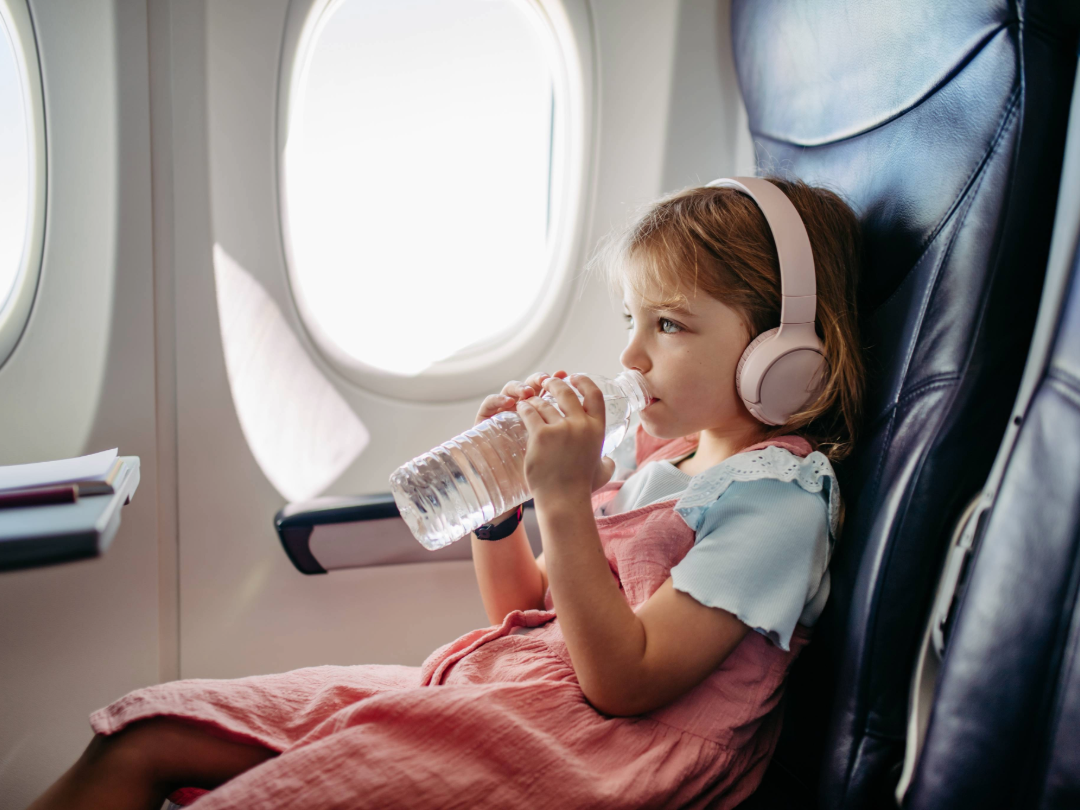
For example, the global hotel industry is held responsible for 150 million tonnes of single-use plastic every year. The World Travel & Tourism Council previously examined procurement data from 69 hotels in tourist destinations across Europe, the Caribbean, the Americas, the Middle East, and South-East Asia. Its findings suggested that water bottles constituted 32% of their single-use plastic consumption by weight.
Conversely, a pilot project conducted by The Travel Foundation among participating hotels in Cyprus replaced bottled water with dispensers and reusable cups. Simply making other options available reportedly led to a 68.9% reduction in single-use bottles by item and a 67.4% decline in volume.
Straightforward phase-outs like this sound ideal in theory, but they may be more complicated in practice. Writing for Time, Aryn Baker notes that Fiji’s ban on single-use plastics exempts water bottles – partially due to restricted access to clean water beyond the country’s main cities, but also because Fiji Water is a prominent source of employment and income nationwide.
Switching to reusables also has its consequences. The World Economic Forum raises the example of EcoDrop, a company supplying refillable bottles at the UNESCO World Heritage site Victoria Falls, as well as the surrounding town, hotels, and airport. While the Environmental Performance Index ranks Zimbabwe 163rd out of 180 countries for its drinking water, EcoDrop’s solution is anticipated to double as a tourist souvenir and a means of reducing single-use bottle waste.
Yet the World Travel & Tourism Council cautions against producing unnecessary merchandise like reusable bottles, since they can go unused and generate more pollution. EcoDrop circumvents the issue by providing a tag that allows tourists to access refill machines with their own bottles, but more conventional reuse solutions might not be so thorough.
The next destination
Rethinking water-related infrastructure would be an obvious benefit. While not every country operates on an equal playing field, so large-scale investments and regulatory developments may not be a feasible reality for all, the transition away from single-use can be approached step-by-step; and, as the World Travel & Tourism Council states, “it is important that processes are given priority over products, so as to drive a reduction in overall consumption rather than a switch in material use.”
Filtering an unsafe water supply would negate the need for single-use plastic bottles. On-site filtration systems require an initial investment, but avoiding the transportation, refrigeration, and storage capacity associated with individual bottles is anticipated to result in long-term savings.
Arguably, this would be more effective than asking consumers to bring their own water filters. Doing so requires active thought, willingness, and additional financial investment that a holidaymaker may resist; and visitors from countries with safe drinking water may struggle to form a new habit and remember to carry their filter, especially over the course of a short-term stay. The risk of going thirsty may drive them back towards sterile, disposable bottles.
At the same time, travellers should take individual responsibility and prepare for the reality of their trips. Just as they invest time into sourcing the necessary clothes, weather protection, and travel documents, they are accountable for bringing the necessary tools to stay hydrated, be it a water filter or a reusable bottle.
Indeed, various sources recommend that airports, hotels, vehicles, and tourist destinations introduce water refill stations. As Oceana rightly points out, this requires clear and effective awareness campaigns among staff and consumers alike; the Pacific Asia Travel Association suggests that tour operators should encourage tourists to bring their own bottles. Visitors are more likely to adjust to and participate in the system if they are not offered single-use as an alternative, but it may still be necessary for establishments to stock water bottles in case of emergencies.
Where disposable bottles are completely unavoidable, countries with separate waste collection systems should clearly signpost their points of disposal. Recycling symbols can differ from country to country, and visitors may not be fluent in the local language. Ensuring that tourists are clear on where their single-use waste can and can’t go helps ensure that it is appropriately processed in the correct stream.
Looking at the bigger picture, the travel industry is setting its sights on a transition away from single-use plastics. The Global Tourism Plastics Initiative lays out a series of commitments for its members, including a complete phase-out of ‘problematic’ and unnecessary plastic packaging; a shift into 100% reusable, recyclable, or compostable plastic packaging, or else reusable alternatives; an uptick in recycled content across all plastic packaging; and improvements in recycling and composting rates.
Travel companies are also setting internal goals. For instance, The Walt Disney Company claims to have reduced guest-facing single-use plastics on its cruise line by 80% in 2022, prompting a new target to eliminate single-use plastics on its ships by 2025 (the outcome is pending). As 80% of the world’s plastic bottles end up in landfill, it is also worth noting the company’s goal to achieve zero waste to landfill – defined as 90% operational waste diversion, including thermal waste-to-energy – by 2030.
The industry is moving in the right direction, but as the World Travel & Tourism Council highlights, the private sector is currently spearheading change. These efforts must be underpinned by structural progress, and as worldwide initiatives like the Global Plastics Treaty continue to fall through, our governments must work harder to facilitate the right conditions for meaningful progress.
Until then, we can monitor our own conduct. Next time you take to the skies or sea, make sure to Google your destination’s water supply before you leave. Consider rearranging your luggage to fit a refillable bottle into your suitcase. Avoid the temptation to slacken your sustainability efforts in the name of relaxation, and if you’re caught short with a single-use bottle and no appropriate disposal, perhaps it could become a souvenir for your home recycling bin.
If you liked this story, you might also enjoy:
The ultimate guide to the Packaging and Packaging Waste Regulation in 2025
How are the top brands progressing on packaging sustainability?
Everything you need to know about global packaging sustainability regulation in 2025
The key to increasing the use of reusable packaging in supermarkets
Sponsored stories

How ATS-Tanner’s banding solutions align with the new PPWR
ATS-Tanner’s banding solutions aim to reduce packaging waste, provide a practical alternative to plastic and improve recyclability. In

How Rollon’s linear systems provide reliability for tertiary packaging
Rollon believes tertiary packaging machinery must perform without fail, showcased by its recent partnership with AMP Automation to develop palletizing

Discover what’s new at London Packaging Week
Packaging has never carried greater commercial responsibility. It influences how consumers perceive brands, how products perform in increasingly competitive markets

Paperworld Middle East partners with FSC to champion responsible sourcing across the region’s paper and stationery industry
Paperworld Middle East, the region’s leading trade show for paper and stationery products, taking place from 13–15 October

Made for Life: How Sappi reveals what trees make possible
What connects an experienced papermaker, the creators of cactus-based leather, the people conserving forests for future generations, and a

The advantages of all-electric adhesive dispensing in modern packaging
Packaging manufacturers are under constant pressure to increase output, reduce operating costs, improve sustainability, and maintain consistent product quality. One

YUTO won 12 international packaging design awards across three global competitions
Driven by the global sustainability trend, the EU PPWR mandates packaging reduction, recyclable design, and restrictions on single-use packaging.

How rPS Food aims to bring circularity to polystyrene packaging
In this edition of the Spotlight, Coexpan (part of Grupo Lantero) details how its rPS Food enables up to 100%
Read next

Your chance to decide the winner of our 2026 Readers’ Award
The nomination period for Packaging Europe’s 2026 Readers’ Award has ended, the finalists have been selected, and now it’

Südpack unveils mono-PP pouch solution for yoghurt drink market
Südpack has launched a recyclable, mono-material polypropylene (PP) flexible pouch aimed at the drinkable yoghurt market. The company identifies

Nemera launches bi-dose nasal spray solution
Drug delivery device company Nemera has announced its DuoSpray bi-dose nasal spray platform, a ‘non-invasive, needle free’ administration