

In a rush? Click here to read a short summary of this story
This report takes a deep dive into the history of packaging, tracing its evolution from ancient containers to modern innovations. By examining early materials, methods, and motivations, it reveals how packaging has always balanced utility, culture, and environmental impact, offering lessons that remain highly relevant today.
- Packaging is older than we thought: Recent archaeological finds suggest humans have used containers like baskets for at least 9,500 years, well before the Neolithic period.
- Form and function evolved together: From Mesolithic funeral baskets to Roman amphorae and medieval barrels, historical packaging served practical, symbolic, and commercial roles – much like today’s packaging.
- Innovation was often driven by necessity: The development of tin cans, cardboard boxes, and paper bags was frequently prompted by military needs, trade expansion, or accidents turned breakthroughs.
- Material choice reflects society: Throughout history, the cheapest available materials – clay, wood, esparto grass, or plastic – have been the foundation of packaging, mirroring societal values and resources.
- Even ancient packaging had environmental costs: Durable materials like ceramics and quartz have lasted millennia, while wooden barrels and esparto products remind us of renewable, if still resource-intensive, alternatives.
- The past can inform the future: As the industry seeks sustainable solutions, revisiting older techniques and materials could offer insights, especially in biobased or circular economy models.
Packaging has always been shaped by a mix of innovation, necessity, and environmental trade-offs. By understanding where we’ve come from, the industry can make smarter decisions about where to go next. Looking backward may be one of the most forward-thinking moves we make in the pursuit of sustainable packaging.
In the packaging industry, we’re often looking to the future, pursuing the next innovations in line with evolving demands. But we had to start somewhere; how did our predecessors pack their goods? How does it compare to today’s packaging landscape, and what can we learn from the past? We explore it all in the latest edition of The Brief.
Compared to most other materials, plastics are very new. Belgian chemist Leo Hendrik Baekeland developed Bakelite, a thermosetting plastic combining carbolic acid and formaldehyde, and brought it to market in 1910. Marketed as an unbreakable, chemical- and fire-resistant material, it is credited as the first synthetic plastic to be commercialized.
Many of the plastics we utilize today – polyethylene, polystyrene, PVC, polyurethanes, nylon, and Plexiglas, to name a few – were invented between 1930 and 1960, with polyethylene terephthalate (PET), polyimides, and polycarbonates reaching the market in the next twenty years. By the latter half of the period, hydrocarbon feedstocks were widely available to manufacturers at low cost.
As we all know, the modern packaging industry has become widely reliant on plastics. They are cheap, protective, durable, lightweight, and versatile, and so they are applicable to most products.
Yet we are coming to learn that their links to fossil fuels, their potential to leach chemicals if treated in particular ways, and their centuries-long degradation processes are causes for serious environmental concern, and the push to combat these issues ranges in scale from internal company policies to international legislation.
Some industry players are looking forward and developing completely new solutions to the problem; plastic-eating enzymes, edible packaging, biobased coatings, and the like. Others are replacing their plastics with materials already in use long before the advent of plastics. But how far back can we go, and what can our ancestors’ uses of packaging and containers teach us today?
Ancient containers and what they tell us
Organic materials break down under a range of conditions (extreme heat, dry climates, or flooding, to name a few), so our collective understanding of the earliest forms of packaging – perhaps better described as containers – is limited.
There are exceptions to the rule; Spanish researchers made a breakthrough last October when they dated baskets discovered in the Cueva de las Murciélagos near Granada to the Mesolithic Stone Age. This would make the oldest specimens approximately 9,500 years old, according to carbon-14 dating.
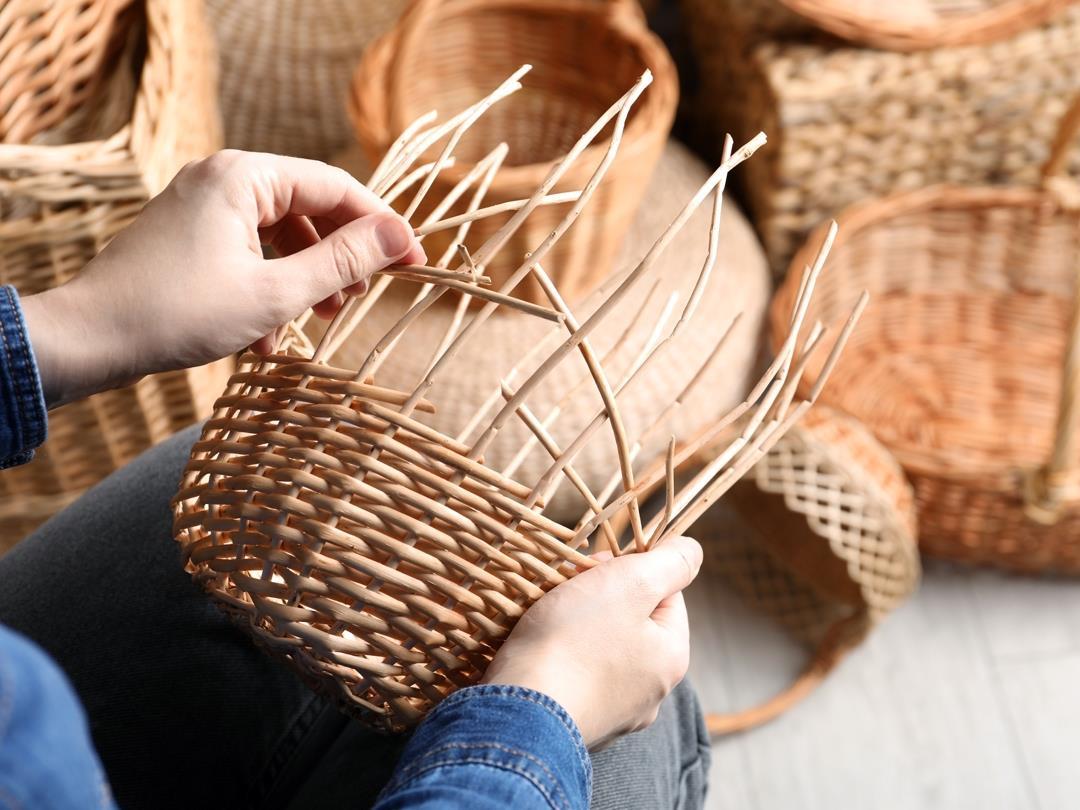
The baskets are made from wood, reed, and esparto, a type of grass native to Spain and North Africa. Due to their decorative geometric motifs made with dyed fibres and the incorporation of human hair, previous archaeologists had not imagined that the hunter-gatherers and early farmers living in the Mesolithic period would have produced the oldest findings.
Instead, they were attributed to the settling human communities of the Neolithic period 2,000 years later. The corrected timeline gives us an idea of just how long humans have produced and relied on containers.
Most of the baskets had been produced using a braiding technique, in which bundles of fibre were knotted together. The Mesolithic specimens are believed to have been used in funerary practices, while fragments of their Neolithic counterparts – found to vary in shape and size, as well as offer greater flexibility – are thought to have been used for transport, perhaps even storage once the destination had been reached. This makes the later samples more comparable to our modern concept of packaging.
It is worth noting that these baskets have only been preserved because the Cueva de los Murciélagos is around 65 metres deep and extremely dry. On the other hand, earthenware – described by biogeochemist Richard Evershed as “the nonbiodegradable polymer of the ancient world” – tends to persevere through all kinds of weather conditions, if only in fragments. This is especially true of artefacts found at burial sites, designed as they are to remain intact.
For instance, the graves of Bronze and Iron Age children found in Bavaria have revealed proto-baby bottles made of ceramic, complete with spouts for easy drinking. Their dual purposes of storage and transport, and their reusability, make them similar to modern baby bottles – albeit even slower to decompose than their plastic counterparts, taking thousands of years as opposed to hundreds.
From an educational perspective, at least, their durability allowed researchers to study the lipids absorbed into the ceramic and name the food groups used to wean and feed prehistoric infants: ruminant milk, potentially mixed with meat broth.
Seemingly, then, containers of the past can echo the purpose, use, and environmental drawbacks of today’s packaging designs, even if they appear in different materials or forms. Indeed, packaging designer LBD Studio traces the dual purpose of packaging – to protect and to advertise – right back to ancient Egypt.
Apparently, glass and ceramic containers were displayed at markets to sell everything from grains to precious oils; these were intended to protect the products over time, with different colours differentiating products from each other.
At other times, their intended uses are less comparable. Upon its rediscovery in 1922, the tomb of Tutankhamun was found to be full of his belongings. Each was packed and placed in the belief that the young pharaoh would carry his possessions into the afterlife. As such, the Howard Carter Archives list the presence of forty-eight wooden boxes containing mummified meat and poultry, wine jars made of pottery, and a dark serpentine kohl pot, among hundreds of other artifacts.
Also included in the inventory are Tutankhamun’s canopic jars. Commonly found in ancient Egyptian tombs, these jars were designed to hold the lungs, liver, stomach, and intestines of the deceased. Over time, it became fashionable to carve their stoppers into human heads, then the gods believed to protect each organ – Hapi for the lungs, Ismeti for the liver, Duamutef for the stomach, and Qebehsenuef for the intestines.
Here we find an intersection between functional and religious uses for a jar – to store and transport essential organs on the journey to eternal life, but also to protect the mummified body from decay.
Tutankhamun’s jars consist of painted alabaster, tongued and luted with resin and whiting; jars made of wood, limestone, faience, and clay have been uncovered elsewhere. The choice appears to have been cosmetic rather than functional – the organs themselves had already been preserved before they entered the jar – and the variety in materials seems to have been based on the individual’s wealth in life.
On that note, historians can also use the remains of packaging to learn more about the societies that created it. A mausoleum discovered in what was once the Roman province of Baetica, now the southwestern Spanish town of Carmona, housed six urns containing cremated remains.
Among the bones and ash in one woman’s urn were the organic remains of a cloth bag, three amber beads, and a jar (unguentarium) made from quartz crystal, found to have preserved patchouli-scented perfume for 2,000 years. Before this point, historians had been uncertain which scents would have been used in Roman perfumery.
Not only were quartz vessels a luxury in this period, but this one was considered unusual by researchers in that it was sealed with a dolomite stopper, held in place by bitumen.
Most perfume stoppers made at the time consisted of cork, wood, or other perishable materials covered with ceramic discs for fitting, the paper explains; and amphorae jars, in particular, were sealed with lime mortars, pozzolanic materials, or resins.
From these factors, researchers deduced that the individuals interred here must have been wealthy, and that the perfume itself was likely to have been considered valuable in its time.
Exports and the rise of packaging
In the twenty-first century, the demands of capitalist markets and mass production drive corporations to make packaging as cheaply as they can. Despite some more opulent archaeological finds, this is not too dissimilar to the past; as Michigan State University professor Diana Twede puts it, “a culture’s least expensive materials are generally used for packaging”.
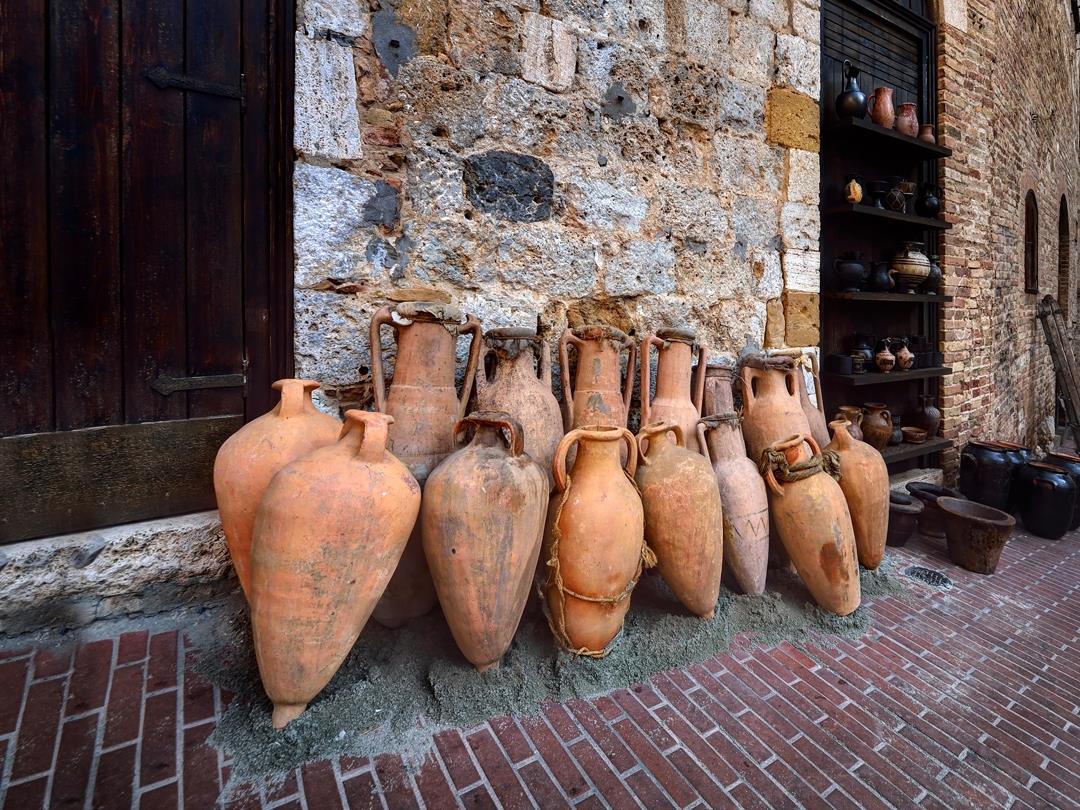
Although they originated long beforehand, amphorae settled into a standardized Greco-Italic design and boomed in production with the expansion of the Roman Empire. Military expeditions and trade saw wine, fish sauce, and olive oil shipped from country to country, and over time, developments in design and technology boosted their capacity from 7 to almost 80 litres.
Amphorae were built with a pointed base to reduce their weight and cost, and to increase their structural strength. Their arc-shaped profiles spread the shock of an impact, Twede explains, and could be reinforced with a protective layer of straw if their walls were thin.
For liquid products, linings were applied to counteract the porousness of ceramic pottery; amphorae carrying wine, for example, were coated with resin made from pine trees. Pinecones could also serve as closures, as could stoppers made of cork, clay, wood, or even mud and grass pushed into the neck and moulded over the rim. A mortar of sand and lime was used to seal them.
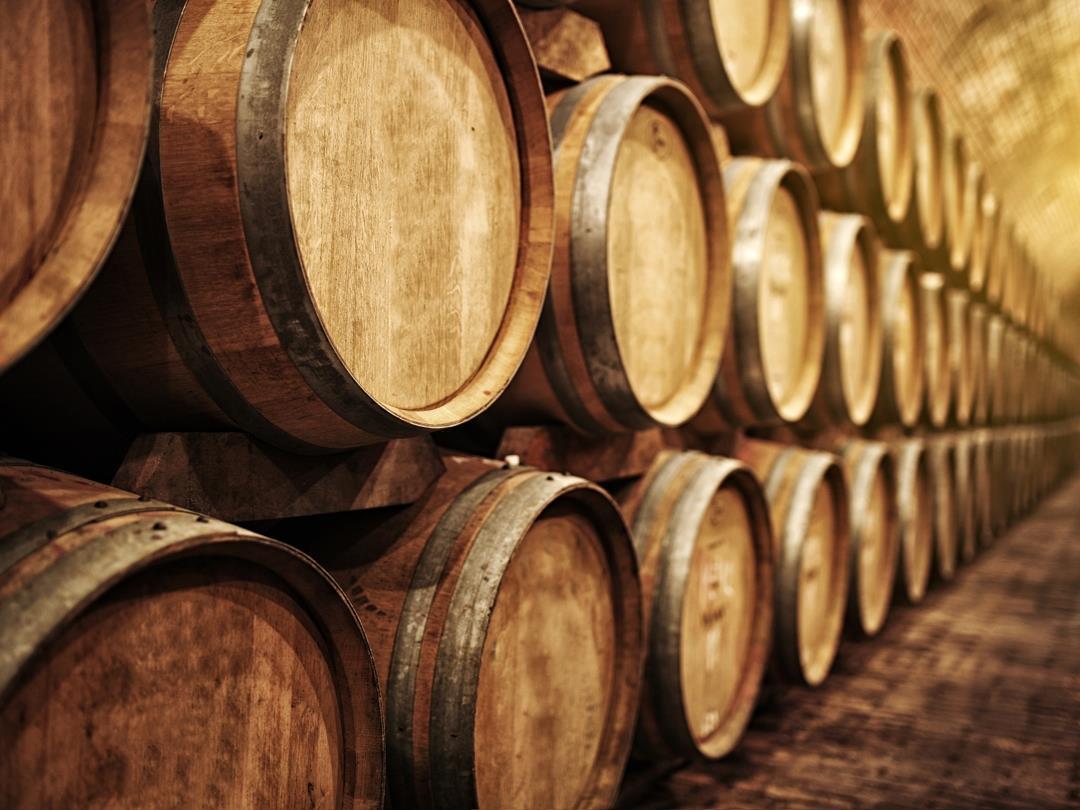
By the Middle Ages, wooden barrels and casks were taking precedence. It was a cooper’s task to produce such containers to store, preserve, and transport such goods as food, wine, beer, and spirits across long trade routes. So, too, would they have stored and aged the beer and wine produced at monasteries.
Oak was commonly used to construct barrels due to its durable, water-resistant properties. Timber staves would be heated or steamed to loosen the lignin in the wood, then bent into shape to form the sides of the barrel, held together by wooden or metal hoops. This curvature is important, as it withstands pressure from products like wine and ale – so, while barrels with straight staves existed, they were more limited in their applications.
Wood is, of course, a renewable resource, and trees would have been more plentiful a thousand years ago than they are today. Yet barrels are also easier to handle, less breakable than ceramics, and protective enough to prevent spoilage. Additionally, they are stackable; to compensate for the shape of a ship’s hull and fully optimize the available space, casks would be produced in various sizes, then tightly packed to ensure they did not cause damage to the ship, its inhabitants, or the product during transportation.
Centuries-old barrels have been known to retain their contents for today’s archaeologists to investigate, telling us more about the history of trade. Specimens recently raised from a shipwreck off the Baltic coast of Sweden contained iron nuggets, or osmunds, thought to have been used as a semi-raw material for forging tools and weaponry in the earliest European cast iron furnaces. Others found in the hold contained tar, ash, deer antlers, dried fish, and butter. According to dendrochronological analysis of the barrels’ wood, they all originated from Stockholm in the 1540s.
Industrial developments
By the nineteenth century, our most familiar packaging materials were starting to come to light. In the run-up to the Napoleonic Wars (1803-1815), the French government sought to improve the preservation of the army’s food supply and offered a 12,000-franc prize to anyone able to find a solution.
Thus, confectioner Nicolas François Appert drew inspiration from the existing wine bottling process to cork food into jars, seal it with hot wax, wrap the jar in canvas, and boil it in hot water. Months later, engineer Philippe de Girard replaced the jar with a tin – marking the origins of both airtight sealing and canning.
As for cardboard, many sources attribute its invention to China somewhere between the fifteenth and seventeenth centuries, made using pulp from mulberry trees; yet it was the English company M. Treverton & Son that first commercialized non-corrugated paperboard in 1817, likely having reached Europe via Silk Road trade routes.
Pre-cut board would emerge in the United States, accidentally created by Scottish immigrant Robert Gair when, as he was printing a seed bag, a metal ruler used for creasing malfunctioned and sliced the material instead. Pleated paper, a similar concept to corrugated board, also received a patent around this time.
American schoolteacher Francis Wolle invented and patented the first machine for mass-producing paper bags in 1852. This would eventually fall under the Union Bag and Paper Company, acquired by International Paper in 1999.
Over time, the developments would continue – the introduction of square-bottomed bags in 1853, courtesy of papermaker James Baldwin; inventor Margaret E. Knight’s subsequent machine for flat-bottomed bags; Charles Stilwell’s patented machinery for pleated-sided bags for easy folding and storage; and the addition of cord handles by grocer Walter Deubener in 1912 – until Swedish company Celloplast invented the one-piece polyethylene shopping bag in 1965.
Materials like paper and metals are gaining new traction in the twenty-first-century demand for sustainability-minded packaging. Depending on the application, they might be considered more recyclable, more durable for reuse, and/or less carbon-intensive – a contrast to the focus on cost and performance in the development of plastics.
But they still come with their downsides; the depletion of natural resources, increased water consumption, and the eventual deterioration of quality after recycling, to name a few.
Drawbacks like these were never absent from non-plastic packaging materials, no matter how much or little our ancestors may have known (or thought) about their impacts. There isn’t, and never was, a silver bullet to solving the environmental drawbacks of packaging.
Yet it is continual trial and error that shows us the best way forward; thus why fragile ceramics no longer package food and drink, yet esparto grass is still used in basketry today. In fact, esparto leaves are said to provide longer, higher-quality fibres for paper and pulp production, with economic benefits to be found in (semi)arid or developing global regions.
Packaging as we know it today stems from millions of years of technological development, starting with the materials to hand in a much wilder landscape than today’s and continuing through the digital age.
Everything we know today comes from the research, breakthroughs, mistakes, and experiences of the inventors, engineers, and industries operating before us. Therefore, it is useful to occasionally look back, take stock of where we are, and use what we find to take us further forward. After all, in certain situations, ancient techniques may sometimes be preferable to newer ones.
If you liked this story, you might also enjoy:
How are the top brands progressing on packaging sustainability?
Sustainable Innovation Report 2024: Current trends and future priorities
Reuse vs. single use – which is better for the environment?
The ultimate guide to global plastic sustainability regulation
Sponsored stories

How ATS-Tanner’s banding solutions align with the new PPWR
ATS-Tanner’s banding solutions aim to reduce packaging waste, provide a practical alternative to plastic and improve recyclability. In

How Rollon’s linear systems provide reliability for tertiary packaging
Rollon believes tertiary packaging machinery must perform without fail, showcased by its recent partnership with AMP Automation to develop palletizing

Discover what’s new at London Packaging Week
Packaging has never carried greater commercial responsibility. It influences how consumers perceive brands, how products perform in increasingly competitive markets

Paperworld Middle East partners with FSC to champion responsible sourcing across the region’s paper and stationery industry
Paperworld Middle East, the region’s leading trade show for paper and stationery products, taking place from 13–15 October

Made for Life: How Sappi reveals what trees make possible
What connects an experienced papermaker, the creators of cactus-based leather, the people conserving forests for future generations, and a

The advantages of all-electric adhesive dispensing in modern packaging
Packaging manufacturers are under constant pressure to increase output, reduce operating costs, improve sustainability, and maintain consistent product quality. One

YUTO won 12 international packaging design awards across three global competitions
Driven by the global sustainability trend, the EU PPWR mandates packaging reduction, recyclable design, and restrictions on single-use packaging.

How rPS Food aims to bring circularity to polystyrene packaging
In this edition of the Spotlight, Coexpan (part of Grupo Lantero) details how its rPS Food enables up to 100%
Read next

Your chance to decide the winner of our 2026 Readers’ Award
The nomination period for Packaging Europe’s 2026 Readers’ Award has ended, the finalists have been selected, and now it’

Nemera launches bi-dose nasal spray solution
Drug delivery device company Nemera has announced its DuoSpray bi-dose nasal spray platform, a ‘non-invasive, needle free’ administration

Coveris develops mono-material sleeve with 30% less material for Dr Beckmann
Coveris has unveiled its mono-material sleeve solution developed for Dr Beckmann, said to use around 30% less material than