

In a rush? Click here to read a short summary of this report
Introduction
This report explores the most impactful sustainable packaging innovations of the past year, as revealed through entries to the 2023 Sustainability Awards. By analyzing standout submissions, it offers a snapshot of where the industry is focusing its energy and investment—and where progress is accelerating.
Key Takeaways
- Fibre-based packaging gains traction: Strong growth in paper-based alternatives is driving innovation in barrier technologies and machinery, reflecting the material’s recyclability and renewable appeal—even as the plastics debate continues.
- Circular plastics efforts diversify: Innovations span improved flexible plastic recyclability, chemical recycling techniques, and higher recycled content use—all aiming to close the loop amid global treaty talks and damning waste statistics.
- Reuse and refill models gain real momentum: A surge in intelligent packaging solutions highlights industry efforts to overcome long-standing barriers to reuse, supporting a systemic shift encouraged by global policy frameworks.
- E-commerce demands smarter, greener packaging: With online retail entrenched in consumer behaviour, innovators are tackling the dual challenge of protecting goods and minimizing environmental impact, including CO₂ emissions.
- Resource efficiency as climate action: Against the backdrop of the hottest year on record, companies are turning to collaborative decarbonization strategies across the packaging value chain.
- Expanding focus on novel feedstocks: A growing range of renewable materials—beyond bioplastics—signals a broader shift away from fossil-based inputs and toward circular, low-impact raw materials.
Conclusion
The report underscores a packaging industry in active transition—responding not only to regulatory and environmental pressures but also to technological opportunities.
Contents
- Introduction
- Key trends identified in the Sustainability Awards 2023
- Innovation priorities for the next year
- Appendix
Introduction
This is the second of our annual reports digging into the sustainable packaging innovation trends of the past year, as reflected in the submissions to and especially shortlisted finalists of the 2023 edition of the Sustainability Awards, organized by Packaging Europe.
Last year’s competition attracted a total of 325 valid submissions – both commercialized and pre-commercialized – with a greater diversity than ever before in terms of both geography and technological breadth.
In this edition of the report, we are also able to draw for the first time on detailed feedback provided in a survey sent to the 55 members of the Sustainability Awards jury after the completion of the judging process.
It’s important to note that, as with any overview of this kind, there are overlaps in several categories – a renewable coating may also work with paper alternatives, for example, while a reusable packaging system may also facilitate sustainable e-commerce, and so on.
What they all have in common is that in some way they are encompassing the now-familiar refrain of ‘reduce, reuse, recycle’, no less important because of its ubiquity in our industry.
But before we go on to look in more detail at the key trends we’ve identified and give some concrete examples from amongst our awards finalists, we should add the caveat that it is, of course, impossible to provide a complete picture.
While Packaging Europe makes every effort to highlight all the important advances in the field of sustainable packaging throughout the year, it is inevitable that significant innovations will have slipped through the net.
This may be because they are not as widely publicized, or simply because, while we continue to broaden our global reach (we are now ‘Packaging Europe’ in name only), the entries to the Sustainability Awards still have a slight imbalance toward submissions from Europe, and to a lesser extent North America.
That being said, there has been a noticeable increase in global entries compared to previous years, and we expect this to continue. We also firmly believe that this report is an essential guide to anyone looking into the nature of sustainable packaging as it stands today.
We welcome your comments on this and, as ever, please feel free to continue to inform us throughout the year about any new innovations the industry should be aware of.
1. Key trends identified in the Sustainability Awards 2023
We asked judges which areas in particular they had been most impressed by the progress made. Overall, design for recyclability and smart / connected packaging scored highly, with 47% of jury respondents mentioning them. Next highest was extending the properties of fibre-based packaging, at 42%, followed by the incorporation of recycled content at 37%. Other areas where they noted progress had been made were in reuse/refill, use of novel feedstocks and developments in renewables.
| Thinking about the submissions to the Sustainability Awards 2023 as a whole, werethere any areas of innovation where you were impressed by the progress industry has made? (Respondents could select multiple options) | |
|---|---|
|
Design for recyclability |
47% |
|
Smart / connected packaging |
47% |
|
Extending the properties of fibre-based materials |
42% |
|
Incorporation of recycled content |
37% |
|
Use of novel feedstocks in packaging materials |
32% |
|
Reuse / refill |
26% |
|
Developments in renewables |
16% |
| Which area of innovation within this year’s competition do you think is most impressive in terms of impact and technological advance? (Respondents selected one answer.) | |
|---|---|
|
Use of novel feedstocks in packaging materials |
32% |
|
Design for recyclability |
16% |
|
Extending the properties of fibre-based materials |
16% |
|
Incorporation of recycled content |
11% |
|
Developments in renewables |
10% |
|
Reuse / refill |
9% |
|
Smart / connected packaging |
5% |
There is significant, but not complete, correlation between these survey results reflecting on the competition and the data from the Sustainability Awards itself. In this section of the report we will discuss the most salient areas of innovation that emerged from the 2023 competition and its outcomes, focusing on fibre-base alternatives to plastics, circular plastics, reuse / refill, e-commerce, carbon reduction, and use of novel feedstocks.
1.1 Fibre-based alternatives
The broader trend of developing alternative paper packaging solutions to replace plastics, where possible, continues. What is significant this past year is that we have seen a real uptick in entries for this category. In turn, this has also boosted innovation in related fields, such as technologies to extend barrier properties of paper and machinery solutions to accommodate fibre-based materials.
One thing we feel bound to note: we have occasionally had comments from proponents of plastics (particularly those who work in the plastics recycling sector) who have concerns about any perceived ‘championing’ of paper over plastics, when life-cycle analyses can suggest that, overall, plastics are the most sustainable solution.
Possibly, but we must also set this against the fact that paper is a renewable material that is widely recycled in existing streams, and until we have the necessary plastics recycling infrastructure in place and a sufficient supply of recyclates, there is certainly an important place for paper packaging innovation within the bigger picture. We see it as our role to look at all sides of the question.
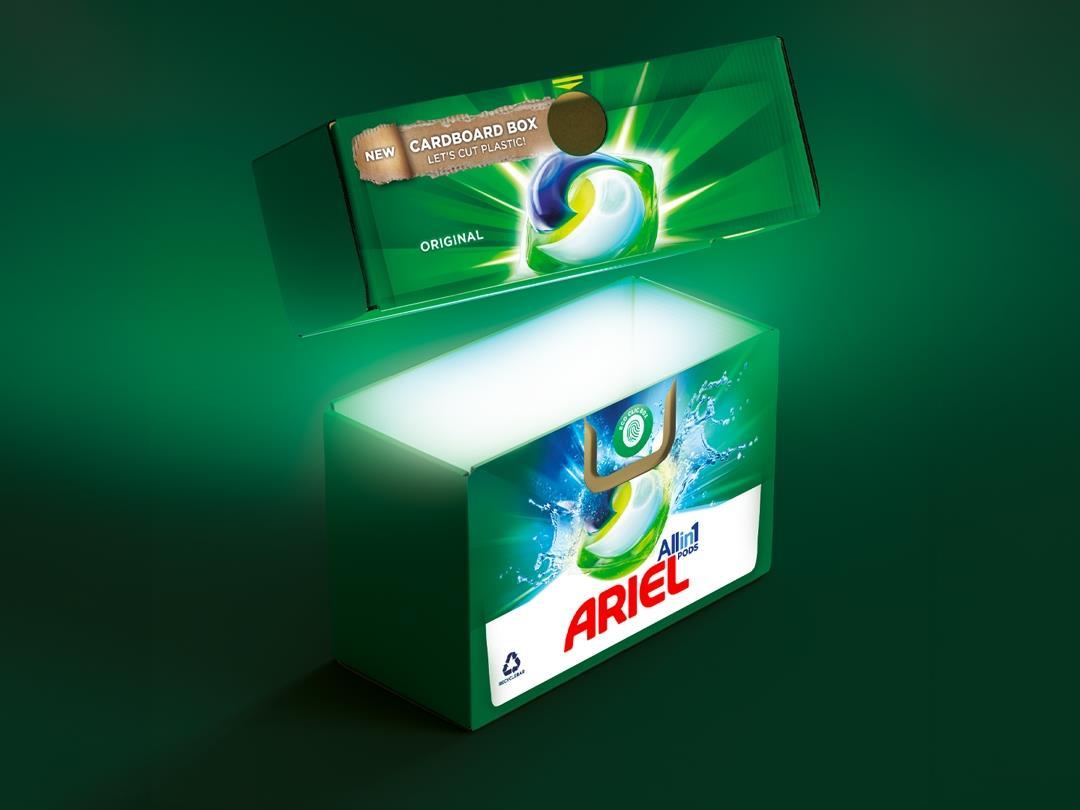
When it comes to developing paper-based packaging alternatives, rethinking format design can be key. Where better to start, then, than with our winner in the commercialized Renewable Materials category, Procter & Gamble’s Ariel ECOCLIC box? This, says the company, solved the challenges of ensuring cardboard was durable enough to protect laundry products, while making the raw material supply scalable.
We were informed that “this is the first Ariel PODS pack made with cardboard packaging that’s fully recyclable in at-home paper recycling streams. The ECOCLIC opening system was re-designed in line with an adult handspan. We incorporated an audio-cue ‘click’, letting consumers know the pack is safely closed and providing reassurance to those with sight issues.”
In fact, we have seen a plethora of fibre-based laundry detergent packaging alternatives in recent years. Another of our Sustainability Awards nominees was Graphic Packaging’s Skip cartonboard pack for Unilever’s Dirt Good range.
The pack features a childproof mechanism, combines virgin and recycled cartonboard to offer ‘optimal performance while still keeping material use to a minimum’. This solution enabled Unilever to replace its traditionally hard-to-recycle plastic tub with a new, recyclable cartonboard alternative.
The pharmaceutical space has traditionally been one that presents a challenge when it comes to recyclability. We have noted increasing efforts to make single-use pharma products such as blister packs from fibre-based materials.
The Blister Pack Collective consists of businesses in pharma, consumer health and FMCG industries working to create a tablet blister pack made from PulPac’s dry moulded fibre to replace plastics. This would represent a significant breakthrough, so we continue to keep a close eye on the project.
Also in the arena of pharmaceuticals, Papacks has developed a tablet blister which replaces aluminium foil with recyclable paper and the coating is plant-based, providing a protective barrier for tablets. This was nominated in the pre-commercialized Renewables category.
And speaking of barriers, we must also mention Cellulotech’s ‘green chemistry process’ for paper packaging barriers, winner of the pre-commercialized Renewables category. The company developed this process to extend the possibilities of paper products, making them more durable and replacing materials such as plastics, silicones and waxes.
Over the past few years, our regular readers will know that we have been following the ongoing work to develop a fibre-based bottle with sufficient barrier properties to replace plastics (such as, for example, Paboco’s bottle with a paper outer shell and thin plastic barrier inside). This year saw Cullen’s Fibre Bottle nominated in the Renewable Materials category of our Sustainability Awards.
Unlike the previous innovations we have mentioned, this bottle is intended for dry goods which perhaps makes it more readily scalable, albeit with a narrower range of application. Indeed, the company has described it as the ‘world’s first scalable paper bottle alternative to plastic bottles and pouches for dry goods’.
The next solution we should mention caters to the changing wider consumption patterns, particularly since the Covid-19 pandemic. Increasingly, consumers are turning to online grocery or fresh meal deliveries and the TempGuard insulated paper bag from SEE (formerly Sealed Air) is a solution to ‘keep perishable food products fresh and chilled during transit, offering full kerbside recyclability and a more efficient pack-out process’. (This is also, of course, an example of where the categories of innovation we cover in this article can overlap – a paper-based alternative to plastic which is also an e-commerce solution.)
Finally, in last year’s report, we highlighted the challenge of ensuring the machinability of paper for packaging. One reason some brands may be unwilling to make the switch is not a scepticism about the material itself but the potential cost of having to update or even replace their existing machinery.
Innovation to address this has focused recently on retrofitting; for example, Syntegon’s paper-ON-form retrofit kit has been designed for cold-sealable paper packaging on existing flow wrapping machines.
1.2 Circular plastics
The OECD’s 2022 Global Plastics Outlook report states that the world is now producing twice as much plastic waste as two decades ago. The bulk of this waste is ending up in landfill, being incinerated or leaked into the environment. Only 9% is successfully recycled.
Fortunately, with the ongoing work done through the Ellen MacArthur Foundation’s Global Commitment network and the ongoing negotiations towards a Global Plastics Treaty, we can see that moving towards a more circular plastics system is top of the agenda. There are many facets to this and the innovation we have seen over the past year reflects that.
For example, in our previous report we highlighted the work done in monopolymer solutions to improve the recyclability of flexible plastics (see the guidelines by CEFLEX for more context); there is also the ongoing interest in advanced (or chemical) recycling to widen plastics recyclability; and the incorporation of ever-greater levels of recycled content which in turn can create market pull to support the economics of recycling.
Indeed, there is so much work going on in this complex field that we only provide a snapshot here. The more interesting innovations have tended to focus on more demanding applications– such as dispensing systems, which can be a challenge when it comes to recyclability.

Here we draw attention to Kraft Heinz with its award winning monomaterial dispensing closure, Balaton. This has enabled the removal of non-recyclable silicone valves, meaning the whole bottle, including the cap, can be put into the existing recycling stream.
But there it is also recognized that we have to think holistically when it comes to plastic waste. We have noticed a growing focus on looking at the entire plastics circularity equation, rather than the design of the package itself.
Deinking primers, for example, can prevent inks and labels on sleeves from contaminating the recycling stream and thus improving recyclate yields – the latter of which is another key goal for the plastics value chain. Two of the entries to last year’s Sustainability Awards were focused on this area – Flint Group’s Evolution deinking primer and Siegwerk’s printable CirKit ClearPrime delamination and deinking primers.
A further challenge relating to plastics recyclability is achieving food grade recyclate – an essential part of making plastics circularity more economically effective. Nextek, winner in the pre-commercialized Driving the Circular Economy category, has developed COtooCLEAN, a solution that addresses the largest plastic waste stream – flexible films. This technology decontaminates post-consumer polyolefins back to food-grade quality, using super-critical CO2 (scCO2) to remove oils and inks.
We are also seeing increasing instances of cross-value chain partnerships to promote plastics circularity. Another category winning entry, the Fully Recyclable Ready yogurt FFS pack brought about thanks to a collaboration between Citeo, Plastiques Venthenat, Olga, Amcor, CEDAP and Synerlink, was developed using polystyrene, a plastic that has previously been particularly challenging to recycle.
According to Plastiques Venthenat, “Yoghurt cup packaging made of single (98.5%) raw material polystyrene is a worldwide innovation. This new Fully Recyclable Ready Polystyrene Yogurt FFS pack will optimize the efficiency of the whole recycling chain process, from sorting to new recycled material applications.”
Meanwhile, the overall winner of the Sustainability Awards 2023, entered into the ‘Machinery’ category, has big implications for flexible plastic circularity. AMP Vortex, by AMP Robotics, is an AI-powered automation system for film removal and recovery in recycling facilities.
It is designed to identify films and flexible items, at which point the material is captured and removed via an automated vacuum and deposited in a configurable location.
Vortex combines AI with recycling-specific automation in pursuit of a sorting mechanism designed specifically for the recycling industry – aiming to relieve recycling facilities of the responsibility to reduce contamination in waste streams, and scale the recycling of film and flexible packaging.
A further design-for-recycling orientated trend we have observed is the use of label-free packaging. Coca-Cola recently announced it is temporarily removing the labels from its Sprite and Sprite Zero on-the-go bottles to trial label-free packaging to reduce the amount of material used and eliminate the need for separation before recycling.
And last year one of our Best Practice category winner, Pepsi, also launched its first label-free PET bottle, available for purchase in multipack format in China.
1.3 Reuse & Refill
Moving from single-use to reusable packaging models is one of the key elements of the ongoing negotiations around the global Plastics Treaty, but it also of course applies to other materials including metals and paper.
For several years one of the widely heard questions around reuse has been: why has it not taken off on a wider scale yet? And what can we do to facilitate this? This partly of course comes down to government incentives and investments in creating the right environment for reuse to flourish, but it also requires forward-thinking solutions.
Last year’s Sustainability Awards saw a definite acceleration in entries focused on enabling reuse, which makes us feel that there is definite momentum in this area. This year, significantly, we saw a very noticeable influx of Sustainability Awards entries in the area of intelligent / connected packaging technologies. This is really important because it implies the wider industry is thinking about how we can use the tools at our disposal to actively facilitate reuse.
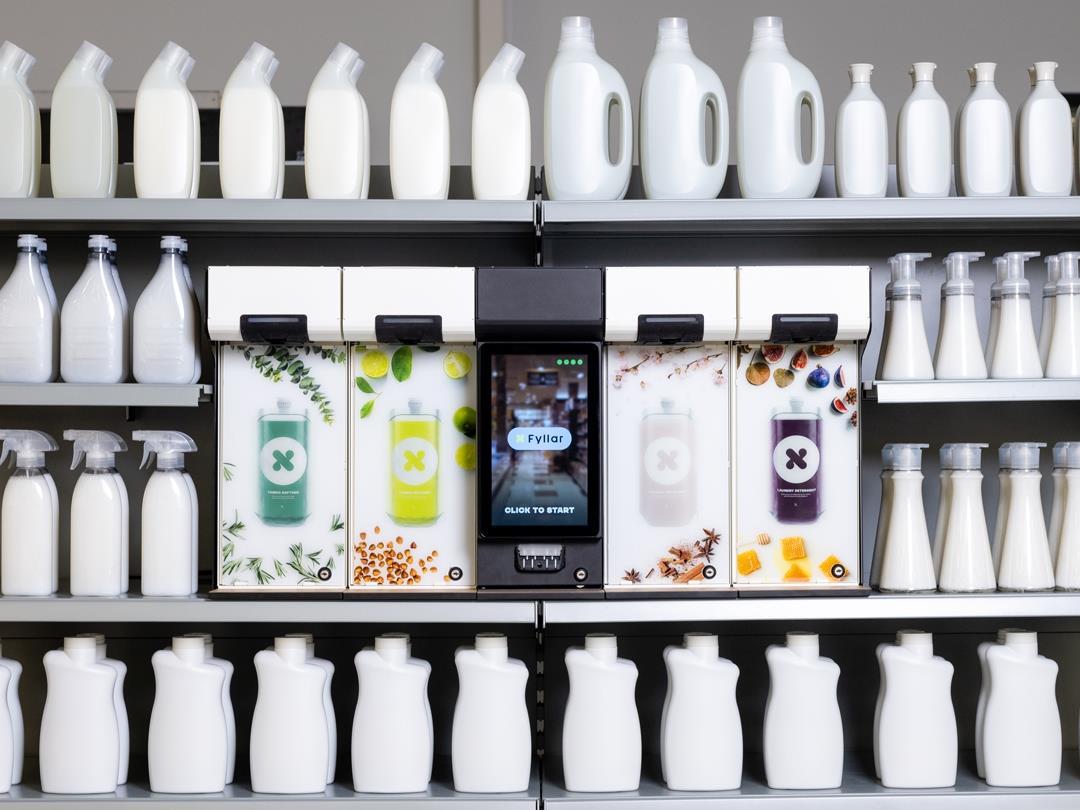
Fyllar’s in-store refill system powered by a smart fill RFID tag won two awards, including one for its collaboration with Algramo and retailer Lidl. The mess-free smart refill solution is designed to facilitate a clean, efficient, and low-cost refill experience, cutting out the shortcomings of traditional refill methods and redefining the use and perception of packaging.
The technology recognizes different products and fills packaging accordingly. It also facilitates data-driven reward systems, streamlines processes, and optimizes inventory management.
Meanwhile, Chile-based Algramo was itself shortlisted for its smart dispensers for on-the-go reusable packaging that allow customers to credit their account and then return their packaging to the dispenser.
Working with Coca-Cola Chile, it has recently been installing these in Chilean universities but its dispensing systems also serve a number of other brands including Quix washing-up liquid and Clorox cleaning products. The machines are currently to be found in Santiago, New York and Jakarta.
Adrich is an IoT and AI powered refillable packaging solution, nominated in the commercial Active and Intelligent Packaging category. Developed to enable the adoption of Connected Commerce, it turns analogue products into Connected products using the company’s ‘smart label’ platform.
According to the company, “While the reuse business model works for brands and consumers, we haven’t yet seen the adoption of subscription-based refill and reuse. Adrich solves the adoption problem by digitizing the entire refill and reuse system. Our privacy-compliant, connected e-commerce platform knows exactly how much product is remaining in the container, and auto-reorders refills when you need them.”
Also in the area of smart, connected reusable packaging solutions is Pragmatic Semiconductor with its flexible microchips (FlexICs), which are embedded in NFC (Near Field Communication) or RFID (Radio Frequency Identification) labels, providing reusable packaging with a unique, item-level identifier – and insights into packaging lifespan, washing efficiency and return rates.
Yet another solution to digitize reuse is Vytal – a smart platform which offers an operating system for B2B2C reusable packaging. Starting with delivery food and to-go consumption, according to the company the Vytal app achieves a return rate of 99% and an average return time of less than 5 days and ‘operates more efficiently than the well-established German beer bottle deposit system’.
This platform is significant not just for its use of smart technology but for its scalability; we have covered many interesting and innovative reuse startups over the years but the biggest challenge often seems to be getting them to scale. Vytal, on the other hand, apparently has more than 500,000 registered users across 12 countries.
Aside from scalability, another challenge with reusable packaging that the industry is now working to address is security, which Linksmart addresses. This solution was actually nominated in our ‘E-commerce’ category but we mention it here for its particular significance to the reuse sphere.
As the company points out, ‘’Reusability for transport packaging is maturing but security packaging remains single-use. Traditionally reusability and security have been mutually exclusive. Our reusable security seals based on non-destructive tamper-evident technology is a fundamental innovation enabling transformational change.”
The next reuse solution to mention is another example of an innovation that actually straddles several spheres, including paper solutions, plastics circularity, carbon reduction and e-commerce: Avery Dennison’s paper wash-off label range has been designed to enable the clean removal of labels from glass and plastic packaging without the need for chemicals. This allows for much simpler reuse as well as increasing recyclability.
1.4 Sustainable solutions for e-commerce
E-commerce is not strictly a ‘trend’ so much as a now-permanent way of life. It’s a reality that growing numbers of consumers these days – time-poor and looking for ever-greater levels of convenience – prefer to shop online for their groceries and other goods.
This obviously poses a big sustainability challenge to the packaging industry: how can we ensure that the packs used are recyclable or reusable, while also being able to protect goods through many more touchpoints? What role can smart technologies play?
And then, of course, it is not just the issue of packaging waste – climate is arguably more pressing. How can we reduce the CO2 emissions resulting from transporting all these goods?
These are questions that several of the entries to last year’s Sustainability Awards – and many more besides – are addressing. While e-commerce of course cuts across all the other trends we are covering in this article, we felt the noticeable uptick in entries addressing this need in particular meant it certainly warranted a space of its own to explore what sustainable e-commerce packaging innovation really means.
As demand for online food shopping grows the industry must employ intelligent solutions both to increase efficiency and – more importantly – to reduce waste. First up in this regard is the Blockstore Group with its Automated Smart Stores and Smart Supply Chain, one of the nominees in the commercialized E-commerce category. The solution provides retailers with real-time ‘best before’ date tracking for all products, from warehouses to stores to consumers.
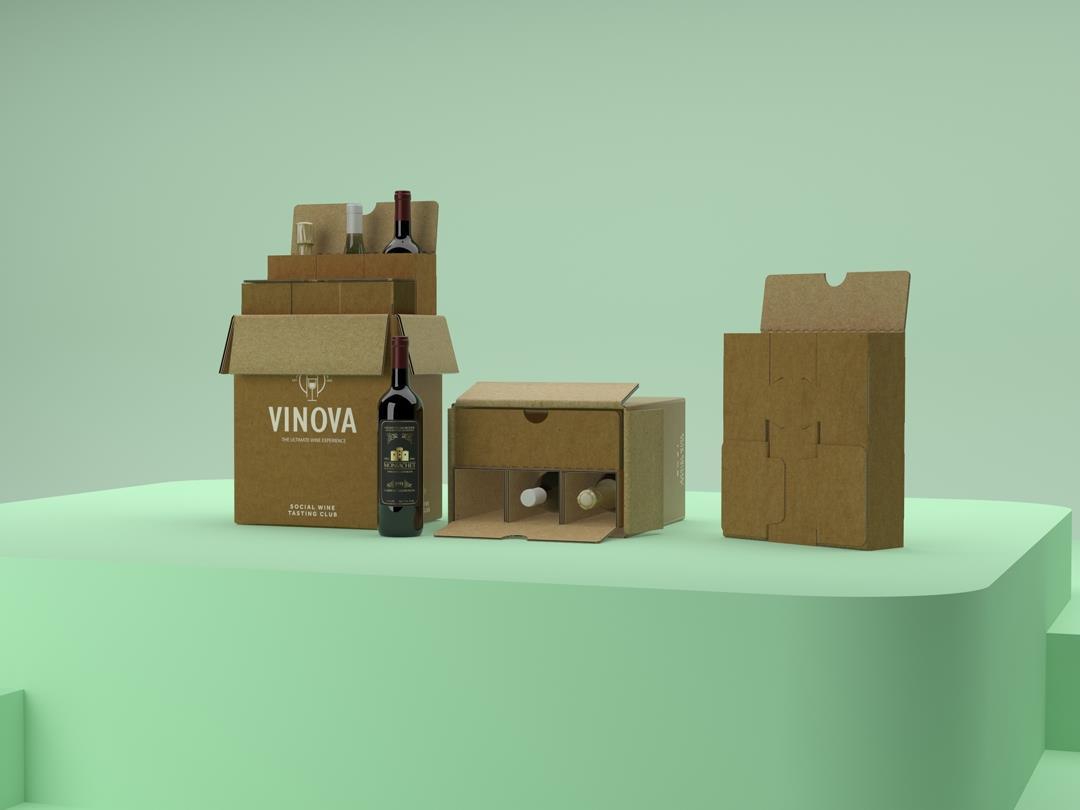
Moving on from the technology side, we have also of course continued to see innovation from the packaging format side – many of which, readers will notice, are paper-based. Smurfit Kappa was one of our E-commerce nominees with its fibre-based packaging for wine multipacks, in partnership with the world’s biggest e-commerce retailer, Amazon.
This is a pre-certified packaging which means, says the company, that “the seller can bypass a long and complex process to meet Amazon’s Frustration-Free Packaging criteria”.
Another solution based on the concept of Amazon’s Frustration-Free packaging is Floeter’s AirWave box, a standardized form of an ultralight air-cushioning system, designed to reduce packing time as well as reduce the cushioning material by 40%, replacing plastics with crumpled paper inlets.
The solution also stands out for its PaperWave inlet cushioning material which is constructed from 100% recycled paper with a potato starch barrier, and is compostable and kerbside recyclable.
Last year Ranpak launched its RecyCold climaliner solution, a recyclable, paper-based thermal liner designed for cold chain shipping applications in various sectors. Its purpose is to keep products within their ideal temperature range – frozen, chilled, or near room temperature – for up to 48 hours. It claims to match the thermal performance of existing technologies while also being thinner and more flexible, thus fitting into various configurations and box sizes.
1.5 Best practice for resource efficiency
We mentioned above that the pressing climate crisis can sometimes be overlooked when we are faced with growing mountains of plastic waste. Yet it’s been confirmed that the year 2023 was the hottest on record, which means that meeting the 1.5°C global warming target laid out in the Paris Agreement should be top priority for the entire packaging value chain.
We have heard much about the importance of ‘decarbonization’ and ‘reaching net zero’. But we know that for a company, or a wider business ecosystem, to reduce its CO2 emissions requires collaboration and a change in practice across the entire value chain.
The lack of high-quality, actionable data has been flagged as an issue when it comes to the carbon crisis. In recent years, we’ve been noticing a range of software solutions emerging to tackle carbon emissions across the packaging value chain.
One such is Recyda’s software for packaging recyclability management, which aims to create transparency when it comes to data around packaging sustainability, “empowering a variety of stakeholders in the packaging industry to perform accurate country-specific recyclability and cost assessments to inspire change and drive the circular economy”.
The Internet of Things (IoT) is also being increasingly applied to the packaging sector, an example of which is Wiliot’s Ambient IoT Visibility Platform which connects the digital and physical world using ‘IoT Pixels’ – stamp-sized, self-powering computing devices – enabling products and packaging to transmit real-time, item-level information about their location, temperature, humidity, and carbon footprint rather than relying on annual or quarterly, backwards-looking assessments. According to the company, “This equips businesses with the real-time data needed to make sustainably-minded decisions to reduce carbon footprint.”
Moving on from software to an example of a specific packaging solution optimized for carbon efficiency we have ALPLA’s Canupak beauty care packaging, nominated in the pre-commercialized Climate award category. According to the company, this packaging stands out because it “demonstrates the possibilities of optimizing the carbon footprint of a packaging system.
In a cradle-to-gate plus end-of-life approach, all aspects that can be influenced by the packaging converter – be it the lightweight design, the selection and sourcing of the material used, full compliance with design and recycling regulations – were evaluated and optimized to the limit”.
Other innovations have doubled down on one aspect of decarbonization in particular. Lightweighting – the ‘Reduce’ element of the ‘three Rs’ of packaging sustainability – is one vital priority for packaging design and it’s something that Amcor, to name just one, has been working on with its Quantum lightweighting technology for PET bottles.
According to the company, this eliminates more than 50% of the material and weight in the finish of the bottle, reducing manufacturing costs and lowering carbon emissions. It “compliments common lightweighting techniques delivering additional reductions in manufacturing costs and greenhouse gas emissions, resulting in energy savings and lower carbon emissions compared to traditionally lightweighted bottles”.
Finally, aside from plastics, there is a continuing question around the relative benefits of ‘infinite’ materials, such as glass or metals, as opposed to plastics. While they are, theoretically, endlessly recyclable, the carbon emissions associated with their production and conversion are another question altogether.
Recent innovation in these fields, then, has been very much focused on reducing their CO2 footprint. ACTEGA do Brasil, Brasilata Labs and Plasmatreat GmBH have combined forces to create UV DIRECT TO METAL, a solution that ‘for the first time’ allows UV coating to be directly applied to metal. Instead of drying the coating in gas ovens, the UV coating is dried with UV lamps that only require electricity, allowing, say the companies, faster production, lower costs and around 40% less CO2 emissions as well as lower volatile organic compounds compared to solvent-based varnish systems.
1.6 Novel and renewable feedstocks
We hear time and again that the industry cannot simply recycle its way out of the plastic waste problem. Part of the solution, as we have seen, lies in reuse, but the industry also needs to at least reduce its reliance on fossil-based plastics.
Last year we looked at the work that has been done in renewable and novel feedstocks for bioplastics – such as those made from post-industrial waste utilizing chemical recycling techniques, or made from trees and shrubs – but this year we are widening the field a little to incorporate not just bioplastic feedstocks but novel feedstocks for non-plastics too.
One obvious reason for this is that we have seen a noticeable increase in the latter solutions over the past year; another is that, while it is certainly envisaged that bioplastics have an important role to play – part of the negotiations around the Global Plastics treaty involve encouraging the development of biobased and biodegradable plastics at scale – it is unlikely that they will ever come to dominate the market. Hence, the reframing of the focus here to look at all kinds of feedstocks.
One notable example to start with is a biopolymer that crosses over into the fields of nanotechnology and smart packaging. Cellulose is a feedstock we continue to hear a lot about for its sustainability properties: The National University of Malaysia (UKM) and Tunku Abdul Rahman University of Management and Technology (TARUMT) have developed a starch-polyaniline biopolymer film reinforced with cellulose nanocrystals (CNC) extracted from agricultural wastes which is synthesized and applied as active and intelligent food packaging.
According to the developers, “Starch-polyaniline-cellulose nanocrystal film is biodegradable and is able to indicate food spoilage simply through the change of colour from green to blue that can be easily differentiated by the naked eye.”
This is not the only pre-commercialized smart biopolymer among the 2023 awards finalists to use cellulose. Melodea is an Israel-based startup which has developed recyclable barrier coatings derived from cellulose which has potential for antimicrobial / antibacterial packaging films.
The company says it has harnessed the raw material in a unique way by creating Cellulose Nano Crystals (CNCs) which provide plants with enhanced strength that can be utilized as a building block to improve the strength of existing materials and produce novel eco-friendly materials.
Indeed, in terms of geography it is worth noting that several of the smart packaging applications we have seen over the past year or two have emerged from the Israeli market, where it seems some innovative work is being done.
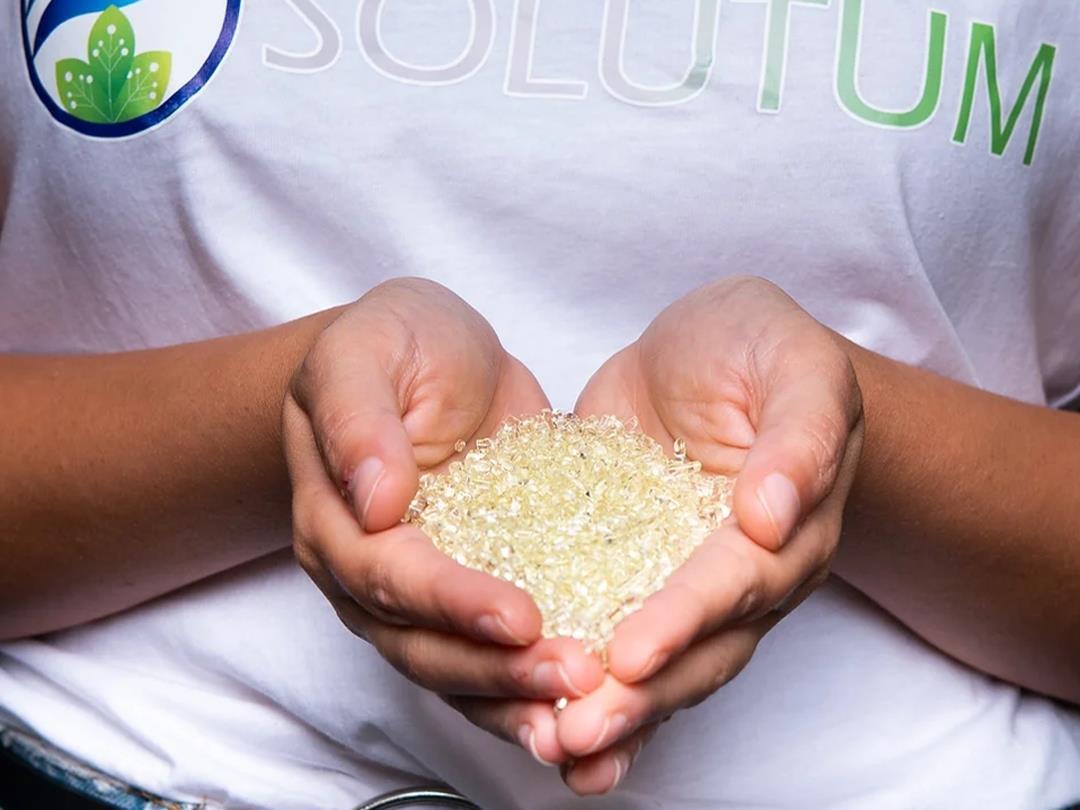
Nominated in the Climate category of the awards was Solutum, an Israeli-based startup that has created a compound utilizing natural biochemical processes to dissolve into natural biomass in ambient-temperature water. According to the company it can ‘easily’ replace resin in the converting process and has a “higher tensile strength, more extended elasticity, and a more potent punch-resistant alternative to conventional plastic”.
Materials made from agricultural residues are another area of interest. Craste, for example, has developed a technology to create food-grade compostable packaging made from crop waste – both creating a renewable packaging solution and discouraging environmentally-harmful crop burning practices.
According to the company, its solution addresses a specific concern some associate with paper-based packaging – namely, that its production can lead to deforestation. By converting crop waste rather than using conventional wood-based fibres, it says it solution can be described as ‘100% tree-free’.
Meanwhile, a pre-commercialized innovation from German startup traceless has utilized plant residues in a different way, developing what it says is a ‘novel plastic alternative material that is bio-circular and uniquely sustainable’.
It is home-compostable, made from agricultural plant residues and contains 100% biobased carbon content, “supporting the transition from fossils to renewables while additionally avoiding direct food conflict”.
Last but certainly not least, one noteworthy trend we have seen in recent years has been the increasing number of seaweed-based packaging materials on the horizon. You can read our article here to find out more about why this is, but for now it can suffice to say that this was also represented among the Sustainability Awards finalists.
Seaweed-based flexible packaging from Go Do Good Studio, India, is a plastic-free material made from algae sourced from the coastal region of India. Formulated with a proprietary blend by borrowing mechanical processes from other sectors this film can be wrapped, heat-sealed into pouches or used as a sheet.
2. Innovation priorities for the next year
What we have seen above is just a flavour of the progress within a few key areas. But where, according to our expert Sustainability Awards jurors, is innovation must urgently required? Based on the results of the survey, there is a curious disconnect between the innovation that has impressed judges most and the current innovation priorities and bottlenecks.
Reuse / refill innovation was identified by 53% of jurors as a priority – but only 26% were impressed by the progress industry has made in this area. On the other hand, smart packaging innovation impressed 47% of judges, while only 5% believed that this was most impressive in terms of urgency, and sustainability impact, respectively. Similarly, 42% were impressed with extension of fibre-based packaging properties, but fewer identified this as a key area for faster progress.
The areas where innovation is not happening fast enough, according to respondents (in order of importance) were:
|
Reuse / refill |
42% |
|
Extending the properties of fibre-based materials |
37% |
|
Incorporation of recycled content |
32% |
|
Use of novel feedstocks in packaging materials |
32% |
|
Design for recyclability |
21% |
|
Flexible packaging collection & recycling |
11% |
|
Developments in renewables |
10% |
|
Smart / connected packaging |
5% |
It’s also essential to reflect that these more granular advances must be put in the wider context. We’re interested in the relative importance of other factors in making progress towards sustainability in packaging.
With that in mind, when we surveyed our jury we also asked them about the wider barriers to progress in the innovation trends we have discussed. It is striking that this judging panel of innovation enthusiasts regarded packaging innovation itself as the least important barrier, as seen in the breakdown of responses:
- 63% felt there needs to be more investment in end-of-life infrastructure;
- 53% thought we should prioritize scaling up new materials and technologies;
- 37% identified the need to align regulation more effectively with sustainable outcomes;
- 36% highlighted the importance of changing consumer behaviour;
- 11% felt there should be increased levels of innovation to provide sustainable packaging materials and systems.
The full results of the survey can be viewed in the following section.
3. Appendix
3.1 Results of the judging panel survey
The following are the results of an online survey of the Sustainability Awards judging panel, which was conducted in July-August 2023 following the completion of judging activities.
3.2 List of Sustainability Awards 2023 entries
3.3 About the Sustainability Awards
The Sustainability Awards is organized by Packaging Europe, and judged according to publicly available criteria by an independent jury of experts representing different parts of the value chain and a diversity of geographical and professional backgrounds. The competition charges no submission fee and features sections open to products / technologies in commercial use, pre-commercialized innovations, and wider initiatives. The Sustainability Awards is recognized by the World Packaging Organization, and affiliated with its WorldStar Awards.
Submissions for the 2024 edition of the Sustainability Awards are open from 15th January to 29th March 2024. Winners will be announced at an awards dinner at the Sustainable Packaging Summit in Amsterdam, Netherlands, on 12-13 November 2024.
For more information about the competition, please visit: theSustainabilityAwards.com.
3.4 Sustainability Awards 2023 judging panel members
The following is a complete list of the jury of the Sustainability Awards 2023, in alphabetical order.
| Name | Organisation |
|---|---|
| Alexander Reitz | PreZero |
| Amy King | Cambridge Design Partnership |
| Anita Etrati | Accenture |
| Ariana Susanti | Indonesian Packaging Federation |
| Arno Melchior | Reckitt |
| Aslıhan Arıkan | Turkish Packaging Manufacturers Association |
| Audrey Guérin | Pernod Ricard |
| Brent Lindberg | Fuseneo |
| Bruno Van Gompel | VGV Management Services |
| Carmen Sánchez | ITENE |
| Caroli Buitenhuis | Green Serendipity |
| Chakravarthi AVPS | World Packaging Organisation |
| Clem Ugorji | Global Plastic Action Partnership |
| Colin Kerr | Unilever |
| Colin Yates | Mars |
| Cory Connors | Landsberg Orora |
| David Luttenberger | Mintel |
| Dick De Koning | PACKZ |
| Farida Bensadoun | AB InBev |
| Ferran Marti | AIMPLAS |
| Frank Wang | Mengniu Dairy Group |
| Fredric Petit | Emerald Technology Ventures |
| Giacomo Canali | Barilla |
| Gian De Belder | P&G |
| Guido Schmitz | InnCreReal |
| Hannah Worthington | Root |
| Jim Downham | PAC Global |
| Jocelyne Ehret | TheRightPackaging |
| Jochen Hertlein | Nestlé |
| Kay Cooksey | Clemson University |
| Kevin Vyse | ProAmpac |
| Kitty Zhang | LIBY |
| Linda Roman | Kraft Heinz |
| Lindy Hughson | International Packaging Press Organisation |
| Louis Lindenberg | 2day42morrow |
| Luciana Pellegrino | Brazilian Packaging Association (ABRE) |
| Marcel Verhaaf | Anthem Benelux |
| Mark Allen | PepsiCo |
| Matthias Giebel | Berndt+Partner GmbH |
| Michael Nieuwesteeg | NVC |
| Naresh Khanna | Packaging South Asia |
| Nerida Kelton | Australian Institute of Packaging |
| Niels van Marle | KIDV |
| Nina Goodrich | Sustainable Packaging Coalition |
| Olga Kachook | Green Blue |
| Patrick Poitevin | Advisory4Pack Ltd |
| Paul Jenkins | The Pack Hub |
| Paul Vanston | INCPEN |
| Philippe Blank | Henkel Adhesive Technologies |
| Sandra Krasovec | Fashion Institute of Technology Packaging Design BFA |
| Sanjay Patel | Packaging Collective |
| Shira Rosen | Israeli Packaging Institute |
| Silvia D’Alesio | Nuova Accademia di Belle Arti, Milan |
| Susanne Folkerts | ofi |
| Thais Blumer | Amazon |
| Tom Szaky | TerraCycle |
| Valentin Fournel | CITEO |
| Veronika Khalaydzhi | Packagers Club of Ukraine |
Sponsored stories

How ATS-Tanner’s banding solutions align with the new PPWR
ATS-Tanner’s banding solutions aim to reduce packaging waste, provide a practical alternative to plastic and improve recyclability. In

How Rollon’s linear systems provide reliability for tertiary packaging
Rollon believes tertiary packaging machinery must perform without fail, showcased by its recent partnership with AMP Automation to develop palletizing

Discover what’s new at London Packaging Week
Packaging has never carried greater commercial responsibility. It influences how consumers perceive brands, how products perform in increasingly competitive markets

Paperworld Middle East partners with FSC to champion responsible sourcing across the region’s paper and stationery industry
Paperworld Middle East, the region’s leading trade show for paper and stationery products, taking place from 13–15 October

Made for Life: How Sappi reveals what trees make possible
What connects an experienced papermaker, the creators of cactus-based leather, the people conserving forests for future generations, and a

The advantages of all-electric adhesive dispensing in modern packaging
Packaging manufacturers are under constant pressure to increase output, reduce operating costs, improve sustainability, and maintain consistent product quality. One

YUTO won 12 international packaging design awards across three global competitions
Driven by the global sustainability trend, the EU PPWR mandates packaging reduction, recyclable design, and restrictions on single-use packaging.

How rPS Food aims to bring circularity to polystyrene packaging
In this edition of the Spotlight, Coexpan (part of Grupo Lantero) details how its rPS Food enables up to 100%
Read next

Your chance to decide the winner of our 2026 Readers’ Award
The nomination period for Packaging Europe’s 2026 Readers’ Award has ended, the finalists have been selected, and now it’

Nemera launches bi-dose nasal spray solution
Drug delivery device company Nemera has announced its DuoSpray bi-dose nasal spray platform, a ‘non-invasive, needle free’ administration

Coveris develops mono-material sleeve with 30% less material for Dr Beckmann
Coveris has unveiled its mono-material sleeve solution developed for Dr Beckmann, said to use around 30% less material than