

In a rush? Click here to read a short summary of this article
Key Takeaways
The research explores several aspects of the single-use to reuse system comparison, including:
- An overview of what is often taken up in comparison studies of single-use versus reuse and what is missing based on the mentioned sources. Reuse cases are presented including formulas that use the potentially relevant factors for calculating the environmental impact of the systems.
- Based on these studies, the effect of several potentially relevant factors is explored. An overview of the parameters that can influence an outcome of a comparison study is presented.
- The possible use of these insights and what this would mean for comparison studies of single-use versus reusable items is discussed.
- Significant factors include single-use components in a reuse system; constant factors in a reuse system; pool size compared to system size in a reuse system; loss percentage.
Conclusion
Pool size and losses factors are very relevant for the outcome of reuse/single-use system comparisons. It is not possible to establish an equation that is suitable in every case; it depends on the factors taken up and the supply chain. The effect of fixed parameters such as weight can make the difference in breakeven point depending on the single-use system.
A new research article by Mieke van den Berg of The LCA Centre and Roland ten Klooster of the University of Twente in the Netherlands evaluates the factors in Life Cycle Assessment (LCA) studies comparing single-use to reuse.
In this article, we detail the main points of the research including significant factors and the method suggested to calculate the impact of reuse systems and compare it to single-use systems, presented through equations based on the case studies.
A difference of around 5% in the environmental impact of a specific rotation in a reuse system can be caused depending on how losses are taken up, by replenishment or by every rotation. Several factors need to be taken up outside of LCA software to determine a break-even point or to understand the trajectory of the system impact over rotations. Combined with inventory reporting according to ISO 14040/14044 this can be the basis for transparent reuse system impact calculations and its fair comparison to single-use system impact.
The researchers begin by noting that companies and organizations are considering the use of reusable packaging due to upcoming legislation such as the PPWR, and because packaging that is reused or refilled gives the impression of ‘being more sustainable than a single-use solution’ – whether true or not - due to there being less visible waste/ or litter. To gain insight into the environmental impact of single-use packaging versus returnable packaging, Life Cycle Assessment (LCA) studies are often used.
Mieke van den Berg and ten Klooster cite research by Thoden van Velzen and Brouwer, which found that factors including breakage/damage rates in reusable packaging systems, weight ratio of reusable vs. single-use packages, required pool size to operate a reusable system and recycled content of single-use packaging are often not taken up in LCA (reuse) studies.
Van den Berg and ten Klooster add that WRAP published concerns about factors often not taken up in LCAs of reusable packaging, stating that LCA comparisons of single-use versus reusable systems compare systems with different factors without standards or guidelines within the ISO Standard.
WRAP found that raw materials, energy in manufacturing, return rate, transport distances, pool size, type of transport and recycled content are important impact factors. Other secondary factors with varying impact according to the study are end of life in reuse packaging, recycling location, type of energy mix, secondary and tertiary packaging items, washing impact and repair of reusable packaging.
Factors that reportedly influence the sustainability of reusable packaging systems include the recycled content, material type, weight, transport volume ratio, distance, return, loss and breakage rates.
High complexity and reuse system factors
When examining existing case studies comparing single-use and reuse systems, the researchers found that reuse LCA studies are often of high complexity, which was also reviewed in a study by Hann. The study evaluated two LCA studies on reuse systems compared to single-use system. One of the key points made was that the comparison is often made between an optimal single-use system and a novel, suboptimal reuse system.
A reuse system has factors that a single-use system does not have, such as washing, system transport, return rates and losses, pool size and a product lifespan, van den Berg and ten Klooster point out. Transport distances for transport in reuse systems are the same in every rotation, which makes the impact a relevant factor for the impact of a system. These values were only presented in six studies.
Van den Berg and ten Klooster state:
“In most of the studies, the formulas used for calculating the outcome are not presented; often they are a black box.”
The researchers considered three different LCA case studies which compared bucket and box systems for transporting flowers to and from a retailer, and bottle systems for production, end of life and transport to the distribution center (DC) of the brand owner.
Flower bucket study
The flower bucket study utilised both single-use and reusable buckets, used to transport flower bouquets to a retailer with return transport divided over different routes (via flower binder, growers or to storage). In the single-use system, the buckets are sent from the distribution centre to the recycler. The reuse system is considered a partial open-loop system, because it takes place in a retail setting. The equations for these systems are presented as follows:
Single-use bucket equation:

The impact (pack) is comprised of the production of virgin materials (vm), production of the packaging (p), transport up to the retailer (t) and end of life (eol). The percentage of recycled content (rc) is taken up to show the effect of this on the calculation. The impact of the production of recycled materials is indicated by rm.
Reuse bucket equation:

This equation is used to calculate the impact of one specific rotation of one bucket in the reuse system with the parameters: pool size (ps), packaging items in rotation (piir), loss percentage (l), the impact of system transport (st), the impact of washing (w) and the number of rotations (n).
The production, transport and EoL of the new buckets to replace those lost from the system is indicated by packimpact*l. The effect of losses on return transport is not taken up in this equation, partly due to the multiple scenarios that can occur such as transport directly to the retailer’s DC, to the brand owner or back to the flower auction.
Flower box study
This study aimed to understand if and where the existing reusable box system breaks even with the single-use box system, with the systems are assessed over multiple rotations. The single-use product is a corrugated board box and the reusable product is a corrugated polypropylene box.
The reuse system is a closed loop system where all damaged boxes were returned to the box manufacturer in France to be recycled, and this recycled material was used in the new boxes produced to replenish the system. Van den Berg and ten Klooster noted that both systems required tertiary packaging items (TPI) for transporting the boxes, so extra material was used transport and needed to be considered in the comparison. Tertiary packaging was also required for return transport.
Single use box equation:

Reusable box equation:
Two different equations were created for this scenario. Van den Berg and ten Klooster explained:
Where initial pool size > boxes remaining in the pool, the following equation was used for impact calculations per box per rotation after n rotations.

In the case where initial pool size = < boxes remaining in the pool, the following equation is used to calculate the impact per box per rotation after n rotations.

Beverage bottle study
This case study focused on single-use and reusable beverage bottles, with the functional unit (FU) being the packaging required to contain 1 litre of beverage. The assessment sought to understand if the reusable system should be implemented based on a break-even point, with the systems assessed over multiple rotations. Only pilots were carried out.
Van den Berg and ten Klooster detail the packaging used in the single-use system as a single-use PET bottle, label and cap, and the reuse system packaging as a reusable glass bottle (RGB) and a single-use label and cap. Tertiary packaging is only included in the single-use system, consisting of pallet wrap and a single-use big-bag for return transport of the bottles.
Single-use bottle equation:

The study assumes an open loop system where damaged or lost RGBs are assumed to be recycled and incineration is assumed for the cap and label at end of life. Losses occur at the consumer, and damages occurring or detected at the filler are seen as losses. This means the replenishment of the bottles rotating in the system is required.
Reuseable bottle equation:
Where pool size > bottles remaining in the pool, the following equation is used for impact calculations per bottle per rotation after n rotations:
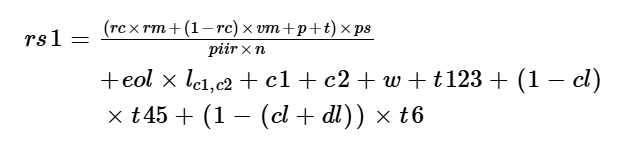
Where pool size = < bottles remaining in the pool, the following equation is used to calculate the impact per bottle per rotation after n rotations is calculated using the following equation:
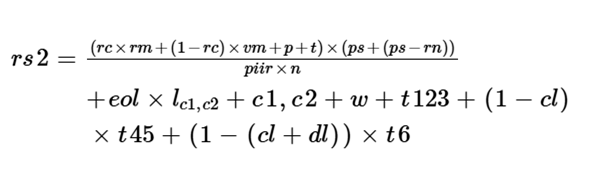
Van den Berg and ten Klooster state that the pallet load is relevant too, as the weight of the bottle plays a role in the number of bottles that can be transported per pallet. In this case, double the single-use bottles can be transported on a pallet compared to the RGB, resulting in double the transport for the RGB.
Final considerations
Concluding their research, van den Berg and ten Klooster highlight pool size and losses factors as very relevant for the outcome of reuse/single-use system comparisons, adding that various established parameters and influences on these systems - such as the single-use components in a reuse system or the weight of a reusable product compared to that of the single-use product – are significant.
They state that:
“It is not possible to establish an equation that is suitable in every case; it always depends on the factors taken up and the supply chain. The effect of fixed parameters such as weight can make the difference in breakeven point depending on the single-use system. The larger the pool, the higher the rotation where the breakeven point will be reached.”
The researchers add that a difference of around 5% in the environmental impact of a specific rotation in a reuse system can be caused depending on how losses are taken up, by replenishment or by every rotation.
Finally, van den Berg and ten Klooster assert that the equations presented are the basis of adjustments that need to be made for system parameters, and they believe that combined with inventory reporting according to ISO standards 14040/14044, this can be the basis for a ‘transparent reuse system impact calculations and its fair comparison to single-use system impact’.
If you liked this story, you might also enjoy:
The ultimate guide to the Packaging and Packaging Waste Regulation in 2025
How are the top brands progressing on packaging sustainability?
Everything you need to know about global packaging sustainability regulation in 2025
The key to increasing the use of reusable packaging in supermarkets
Sponsored stories

How ATS-Tanner’s banding solutions align with the new PPWR
ATS-Tanner’s banding solutions aim to reduce packaging waste, provide a practical alternative to plastic and improve recyclability. In

How Rollon’s linear systems provide reliability for tertiary packaging
Rollon believes tertiary packaging machinery must perform without fail, showcased by its recent partnership with AMP Automation to develop palletizing

Discover what’s new at London Packaging Week
Packaging has never carried greater commercial responsibility. It influences how consumers perceive brands, how products perform in increasingly competitive markets

Paperworld Middle East partners with FSC to champion responsible sourcing across the region’s paper and stationery industry
Paperworld Middle East, the region’s leading trade show for paper and stationery products, taking place from 13–15 October

Made for Life: How Sappi reveals what trees make possible
What connects an experienced papermaker, the creators of cactus-based leather, the people conserving forests for future generations, and a

The advantages of all-electric adhesive dispensing in modern packaging
Packaging manufacturers are under constant pressure to increase output, reduce operating costs, improve sustainability, and maintain consistent product quality. One

YUTO won 12 international packaging design awards across three global competitions
Driven by the global sustainability trend, the EU PPWR mandates packaging reduction, recyclable design, and restrictions on single-use packaging.

How rPS Food aims to bring circularity to polystyrene packaging
In this edition of the Spotlight, Coexpan (part of Grupo Lantero) details how its rPS Food enables up to 100%
Read next

Your chance to decide the winner of our 2026 Readers’ Award
The nomination period for Packaging Europe’s 2026 Readers’ Award has ended, the finalists have been selected, and now it’

Nemera launches bi-dose nasal spray solution
Drug delivery device company Nemera has announced its DuoSpray bi-dose nasal spray platform, a ‘non-invasive, needle free’ administration

Coveris develops mono-material sleeve with 30% less material for Dr Beckmann
Coveris has unveiled its mono-material sleeve solution developed for Dr Beckmann, said to use around 30% less material than