

In a rush? Click here to read a short summary of this report
Introduction
This year’s global packaging regulation update tracks how laws and industry practices are evolving across all materials, not just plastics. It offers a continent-by-continent overview of rules, infrastructure, and market trends, highlighting where progress is being made – and where significant gaps remain. For businesses, it’s a snapshot of the shifting regulatory landscape that will shape packaging design, sourcing, and compliance over the next decade.
Key Takeaways
-
Africa – Progress is uneven, with South Africa leading on EPR, recycling rates, and PET circularity. Many other countries face weak regulatory capacity, poor infrastructure, and slow EPR rollout. Informal reuse is widespread, but large-scale reuse and biobased systems remain limited.
-
Asia – Leaders like Japan and South Korea have strong systems, while India and parts of Southeast Asia are still building capacity. New EPR schemes are emerging, and bans on certain single-use plastics are expanding, but flexible packaging remains a challenge.
-
Australasia – Australia is preparing major packaging law reform, likely to introduce national EPR and bans on problematic materials. Despite strong curbside recycling, flexible plastics and compostable recovery systems lag. Political change could slow progress.
-
Europe – The new EU Packaging and Packaging Waste Regulation (PPWR) sets mandatory reuse, recycling, and compostable targets, but national variations threaten harmonization. Deposit Return Schemes will expand, and demand for food-grade recycled plastics is outpacing supply.
-
North America – US packaging rules are mostly state-led, with EPR growing but inconsistent across states. Canada has more established producer-funded models. Recycling access is high, but diversion rates remain low, especially for flexible plastics.
-
South America – Countries like Chile and Brazil have strong anti-plastic measures and EPR laws, but infrastructure gaps, inequality, and informality in waste management limit impact. Refillable bottles are common, but compostable systems are scarce.
Conclusion
Across regions, the trend is toward stricter, more detailed packaging rules, with EPR and bans on problematic formats becoming standard tools. However, fragmented approaches, weak enforcement in some areas, and mismatched infrastructure threaten to slow progress. Businesses operating across markets will benefit from preparing now for more harmonized global standards – especially if the proposed Global Plastics Treaty gains traction – rather than waiting for compliance deadlines to force change.
Packaging Europe members may already be aware of the previous guide to global plastics regulation we published last year. This year’s report again explores how plastic regulation continues to evolve but opens up the field to include all materials and formats.
What follows is a broad, high-level continent-by-continent update on the status of packaging regulation, as well as progress in key metrics such as plastics circularity, recycling infrastructure, extended producer responsibility (EPR), reusable packaging and biobased materials. (For those interested in more detailed country- or region-specific profiles, look out for future member reports on these, or we refer you to our recent piece on the success of South Korea’s measures to tackle plastic waste.)
AFRICA
Overview
There has been some progress in sustainable packaging regulation in Africa over the past 10 years, mostly focused on reducing single-use plastics and promoting recyclability, as well as measures aimed at boosting consumer awareness and safety such as fostering responsible labelling and on-pack marketing by product manufacturers.
But according to Clem Ugorji, Lead Advisor at Circularium Africa and Consultant to the World Economic Forum, regulatory progress does vary a great deal from country to country.
“Many African countries have developed some form of policy support documents such as solid waste management strategies and circular economy roadmaps that articulate specific action plans on these key areas. In most cases, however, the absence of policy documents and enabling regulations has made implementation infeasible while the absence of performance tracking and published reports makes it challenging to comment objectively and specifically on the progress achieved.”
There has, however, been progress in terms of harmonization. For instance, Clem highlights that “Regional harmonization of standards is another very significant development in Africa’s evolving packaging regulatory landscape, the most recent example being the draft harmonized regional standards on rPET for food-contact applications which the African Organization for Standardization (ARSO) developed towards the end of 2024 with support from the African Circular Economy Alliance (ACEA) and a few other organizations.”
Extended producer responsibility
So far, the only country across the continent to have implemented a target-based mandatory EPR scheme is South Africa. According to Clem, “Many other countries, notably, Nigeria, Kenya and Ghana, are at various stages of finalizing their EPR frameworks but they have suffered delays due to regulatory capacity or unresolved deadlock between regulators and industry.
“In Nigeria, for example, the EPR scheme introduced in 2014 for three pilot sectors – plastics, e-waste and batteries – has remained voluntary and unenforced, resulting in very low compliance and impact levels. In Ghana, the government’s inability to account for the proceeds of the plastics levy collected since 2011 has been one of the major hindrances as the industry views the introduction of EPR levy, alongside the plastics levy, as a double charge.”
Collection and recycling infrastructure
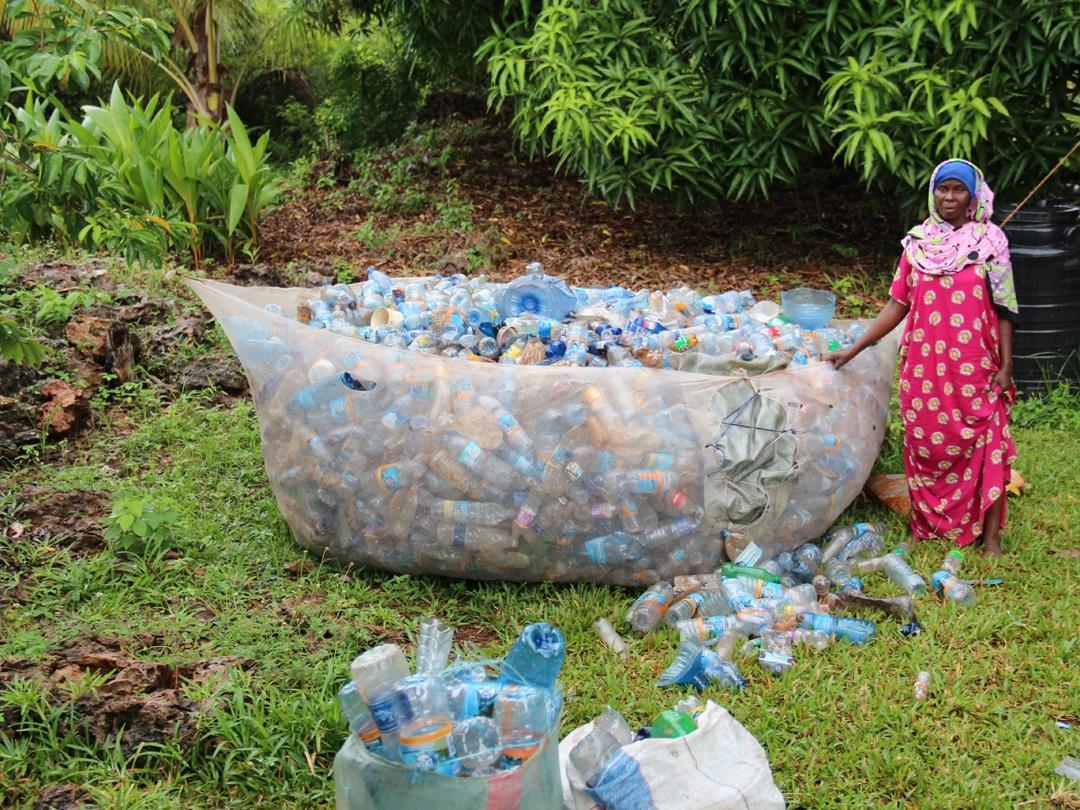
There are several barriers to improving sustainable packaging infrastructure across Africa, which include the predominance of the sachet economy and the informal sector, low environmental activism, weak regulatory capacity, the lack of domestic end-use markets which ‘impedes offtake and margins for collectors’, the high cost of adoption and widespread reluctance or inability to attract private sector investors.
According to Clem, collection and recycling infrastructure are “At various stages of development and maturity in different countries, with Rwanda perceived as having an effective plastic waste collection system. Clearly, South Africa leads not only on collection/recycling infrastructure but also on end-use market development. In 2023, its aggregate collection rate for all packages is reported at 52.5% (Packaging SA), 60.4% for paper (Paper Manufacturers Association of South Africa, PAMSA), and 34% for plastics (Plastics SA).”
Circular plastics
“Only a handful of countries has begun to implement specific regulations to directly boost circularity in plastic packaging,” says Clem, “although Nigeria, Mauritius, South Africa, Ghana and Kenya have developed or are at the final stages of developing national standards for food-contact rPET.
He tells us that verifiable aggregate recycling capacity across the region is only available for South Africa. According to Plastics SA, he says, 432,000 tons of locally recycled plastics (including 91,000 tons of rPET) was consumed in 2023, accounting for 22% of total plastics consumption and up from 17% in 2020.
Bans or levies on single-use plastic grocery bags – widely known to be incompatible with recycling streams – have been announced across more than 40 African countries, although the degrees to which these have been implemented vary.
Another of the main goals of plastics circularity initiatives is increasing recycled content of plastics, and there has been progress in areas such as cutlery, grocery bags, household plastics, footwear and fashion.
Clem also notes the progress in the growth of PET recycling capacity across the continent, “which has led to increased use of rPET in lieu of virgin PET for production of fibre and food-grade packaging, particularly in South Africa, Nigeria, Egypt and Morocco which are the leading PET recycling countries on the continent.”
When it comes to the recycling of more challenging plastics, such as flexibles or small-format, there has been rapid growth of sachet packaging made from hard-to-recycle multiplayer plastics which is ‘outside the reach of regulators’. This means that recycling figures for certain plastics are relatively low. Again data is only available for South Africa where Plastics SA reports about 5,000 tonnes of PS & PS-E recycled annually between 2020 and 2023.
“However,” says Clem, “in most African countries, including Nigeria, most of the recovered plastics under this category as well as the coloured PET bottles, are downcycled into bricks and other applications or channelled to incinerators for waste to energy recovery, for which Lafarge Cement’s Geocycle Unit is the largest off-taker in Nigeria.”
Reuse/refill
While there are no industrial-level reuse or refill systems across Africa, there are, says Clem, widespread return rates on glass. Returnable glass bottles for carbonated soft drinks or beers have over a 90% recovery rate “enabled by a long-established reverse logistics operated directly by such beverage manufacturers.”
There is also, he tells us, an informal secondary reuse market for rigid packaging in particular. “For example, PET and glass bottles are reused to retail roasted nuts and various liquid products such as local beverages, herbal medicines, edible oils and petroleum products as well as for household storage of these products. Similarly, tin and aluminium cans of various sizes serve as measuring cups for retailers of cereals and other dry food items in the open market.
“These non-industrial reuse models can prolong the ‘useful’ life of these packaging materials by several months, if not years. Even flexible packaging such as the supposedly single-use grocery bags are often reused for the same purpose or to store items in households or as trash bags.”
Biobased packaging
There has been a notable shift from plastics to paper and other biobased materials for grocery bags and pouches. A recent analysis conducted by Packaging Insights on packaging trends in Africa (Oct 2019-Sep 2024) reports that biobased packaging use for food and beverages in Africa ‘is growing fast’. However, cautions Clem, “with the lack of country-specific data (even for South Africa) and the fact that biobased and biodegradable packaging account for less than 2% globally, the volumes in Africa are possibly too minute.”
Also, he says, there is little to no scaled R&D infrastructure for biobased and biodegradable packaging despite the abundance of biobased raw materials across the continent.
Outlook
Clem argues that the ‘weak institutional capacity’ of regulators across Africa currently translates to a lack of pressure on product manufacturers – who he says ‘mostly prioritize cost avoidance – to improve their sustainability practices.
To address this, “African countries need to focus on developing domestic markets for sustainable packaging through implementing stimulating measures such as regulations that realistically mandate recycled content and biodegradable alternatives.
“The argument against this regulation-driven approach to market development is often anchored on the inadequate domestic supply capacity. However, this situation is akin to the chicken and egg question, and my perspective is that credible regulations backed with appropriate incentives will drive scaled and effective demand and also attract the capital and other investments that are needed to resolve the supply side bottleneck.”
Finally, we asked Clem what other continents can learn from Africa’s approach to packaging and waste management – and, conversely, what Africa can take from elsewhere.
“The informal sector has been the backbone of waste collection across Africa over the years. I think there is something the rest of the world can learn from the positive impact such ‘vulnerable’ but very resilient groups can have in society.
“Conversely, there is quite a lot that Africa can learn from the EU, in particular, on the importance of regional cooperation and leveraging strong institutions and regulations to motivate and accelerate progress on sustainable packaging, including circularity. Nearer home, the rest of Africa can learn so much from South Africa which faces more similar challenges but has been able to establish highly organized and forward-looking industry associations that are constructively collaborating with government to advance effective packaging regulations.”
ASIA
Overview
There is significant variation in packaging sustainability across the Asian region, as one would expect. We mentioned last year that Japan and South Korea continue to be the highest-performing countries while India and Indonesia, for example, are still at a relatively early stage in many areas. This is still broadly the case, although India in particular has made some progress as we will see.
Extended producer responsibility
Countries such as Indonesia, Vietnam, the Philippines, Thailand, and Singapore are introducing EPR schemes to manage packaging waste responsibly.
Naresh Khanna, Editor Packaging South Asia and Vice-president of IPPO (International Packaging Press Organization), was able to give us the specific perspective from India on this topic. While the country is currently understood to be one of the world’s biggest plastic polluters, it is increasingly recognized that producers must shoulder some of the burden of the country’s grave packaging waste crisis.
“In February 2022 in what is known as the second amendment to the plastic waste management rules, Extended User Responsibility for the import, production and use of plastic for packaging was introduced with timelines for gradual implementation and financial penalties, based on a government portal where PIBOs were supposed to register. Although these regulations are in effect, they are expected to start biting brand owners and the packaging industry from 1 April 2025.”
In response to these rules, brand owners such as Pepsi and HUL (Hindustan Unilever) and packaging producers are currently adapting their packaging to comply.
Recycling and collection infrastructure
Again, there is huge variation across the region. In Singapore, non-recyclable waste is sent to one of four waste-to-energy plants and any remaining refuse disposed of at Singapore’s sole landfill site; while South Korea’s strict jongnyangje system requires all household waste to be separated into colour-coded bags. Furthermore, to boost sorting efficiency, the South Korean government has implemented a Separate Discharge Mark System, under which all packaging must include the separate discharge mark (comprised of three chasing arrows with the material type in Korean text) by printing, engraving or adhesives labels.
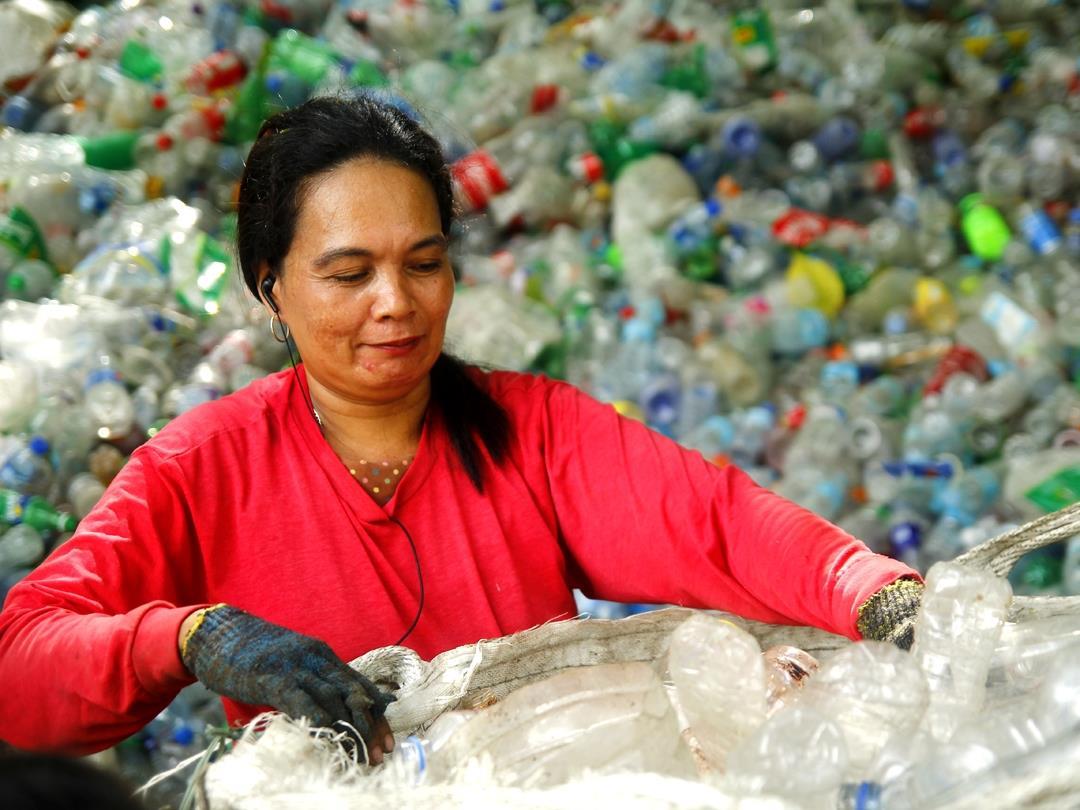
However, it’s the developing countries in the region that are facing the biggest battle when it comes to improving recycling and collection infrastructure. In India, says Naresh, the heavy reliance on the informal sector and rapid urbanization are the biggest contributors to the problem – and as ever, the burden falls most heavily on the more vulnerable members of society.
“Industry has blithely relied on the ‘informal sector’, leaving poor people including mostly women and children to rummage through various neighbourhood garbage bins. These are built on roadsides and the entire neighbourhood or gated colony’s garbage is collected by a formal system of paid collectors and in most communities and cities it goes to landfills.
“Of course, the landfills are where poor people live in slums. These landfills also frequently catch fire. Since thin single use plastic is the least remunerative to collect by the informal sector, this is often flying around on roadsides, on the sides of highways.”
In 2014, India’s Prime Minister Modi launched the ‘Swach Bharat Mission’ (Clean India Mission) in 2014, through which more than 4100 cities and towns have started collecting, sorting and recycling waste. The subsequent ‘Swach Bharat Mission 2.0’ has the ambitious target of making India ‘garbage-free’ by 2026. December 2024 also saw the release of new draft solid waste management rules.
Circular plastics
When it comes to more challenging plastics, regulations across Asia are most heavily focused on flexibles, particularly plastic bags. China has banned single-use plastic bags in some regions, while Thailand aims to be free from three types of plastic (microbeads, cap seals & oxo-degradable plastic) – and from four other types of single-use plastics. South Korea has instigated a ban on PVC packaging and coloured PET bottles, and Indonesia has placed a ban on polystyrene which is not currently commonly recycled.
In India, the manufacture, distribution, sale and use of 19 single-use plastic items has been in effect since 2022. Aside from legislation on plastics, some of the bigger industry players are also taking the subject seriously. This year Hindustan Unilever Limited (HUL) announced the acquisition of a 14.3% stake in Lucro Plastecycle Private Limited (Lucro), a waste management, recycling and product manufacturing company in the area of flexible plastics.
According to HUL, “The investment aims to strengthen plastic circularity by increasing the availability of recycled content for flexibles, providing a roadmap for businesses to move towards sustainable plastic packaging and address the challenge of hard-to-recycle flexible plastic.”
Reuse/refill
While there is still as yet little formal legislation on reuse and refill across Asia, there are many individual examples of country-specific initiatives reaching back decades. To give just a few examples: in Hong Kong, reusable tableware systems are driving the country’s shift towards a circular economy; in South Korea, the city of Seoul has been trialling the adoption of reusable food delivery containers with major food delivery operators; and in India, lunches for office staff have long been delivered in tiffin carriers or ‘dabbas’ – reusable metal lunch boxes which are now widely available across Asia.
There is now growing interest in scaling reuse more widely, as a recent report, Unpacking Reuse in Asia, highlights. Among other things, it emphasizes the need for strong, legally binding rules on reuse such as those that would be outlined in a Global Plastics Treaty.
Biobased and biodegradable packaging
The market for bioplastics across Asia is still small. However, as we mentioned in our previous article on this topic, a report from European Bioplastics suggested that, while almost a quarter of bioplastics production capacity is still located in Europe, within the next five years Europe’s share and that of other world regions is set to significantly decrease; Asia, meanwhile, is expected to hold a more than 70% market share by 2026.
But Naresh cautions that in India, for example, there is still “a lot of confusion and fraud. Amazon India is selling biodegradable garbage bags that cannot be tested or verified. The government does not yet have a rapid testing system for these and chemical suppliers do not want to wait five years to be certified.”
Outlook
What are the next steps for regulating packaging waste, looking at the region in the global context? Naresh is very clear on the need for governments to look to the interests of their own countries and citizens.
“First of all, the region must refuse to step back from the global and local regulations in place, and refuse the shipment of waste to Asia. Even nuclear waste is sent here! Secondly, they have to figure out the problems in the implementation of the regulations in place. They will have to set up more labs and invest in more elaborate scientific testing for instance of what is compostable and biodegradable and under what conditions.
“And thirdly, they must give up all hope of any financial help coming from the developed countries to mitigate climate change. It is the small countries in Asia and even larger ones such as Bangladesh that will first be submerged by the rising seas. The coffee crops of Vietnam and South India will be the first to affected.”
AUSTRALASIA
Overview
The headline from Australia is the complete overhaul of its packaging legislation planned for this year, aimed at ‘reforming packaging regulation to minimize waste, increase recycling rates, and foster a circular economy for packaging’.
There are three potential options on the table to approach this:
- Strengthen the administration of the existing co-regulatory arrangement, without fundamentally altering its structure.
- Impose mandatory national requirements for packaging circularity, including bans on problematic materials and chemicals of concern such as carbon black, oxo-degradables, and PFAS. This means all packaging placed on the Australian market would be regulated.
- Develop an EPR scheme for packaging with financial incentives to drive change.
Chris Foley, CEO of the Australian Packaging Covenant Organization (APCO), talked us through the background behind this and issues that need to be addressed.
“We have three levels of government in Australia: local, state, and territory. If you’re a national brand owner, like most of our members are, it can be quite challenging to have a consistent packaging format across all states and territories. So you could have the most technically recyclable packaging, but if that’s not going into a system that supports its recovery, sorting and reprocessing it’s not going to work. We have lots of issues with ‘free riders’ and it’s hard to prosecute these because of the way we have this three-level system and the states and territories are under-resourced.
“So the federal government, to their credit, are now working with the state and territory environment ministers to overhaul legislation. For our part, we have developed a 2030 strategic plan to help industry and our members transition to this future state of regulation.”
Extended producer responsibility
Going back to the third option on the table for regulatory reform – establishment of mandatory EPR schemes – the feedback from the first round of proposals seemed to be very much in favour of this, at somewhere between 65–70%.
Under the existing system, states and territories are setting their own legislation in this regard but they have agreed to pass this responsibility in future to federal government, which is a significant step forward. This, says Chris, might involve the application of eco-modulated fees – perhaps taking inspiration from those established in Belgium and the Netherlands – to incentivize eco-design and replace progressive bands.
Collection and recycling infrastructure
Last year we highlighted the introduction of the Recycling Modernization Fund by the previous Federal administration which assisted in developing infrastructure for clean stream recycling, for example, in the PET bottle stream.
And Chris explains that while Australia does have a very advanced, well-established curbside collection infrastructure, there are still many questions to be asked in the context of new regulatory frameworks.
“Looking ahead, it’s really a case of what else can we either get into the curbside bin and if it’s not appropriate to get materials collected through the curbside bin, what’s the most appropriate channel for recovery? Above all those materials, they need an end market. Where do they go? Who will process them?
“This is where design standards and mandates on minimum recycled content come into play, helping businesses to embrace and include recycling in their business models beyond just packaging to packaging.”
Circular plastics
The national plastic recycling target for Australia is 70% of plastic packaging being recycled or composted (current progress: 19% as of 2022-23). The upcoming new regulations are also expected to restrict or ban the following:
- Use of mixed or multiple polymers.
- Inclusion of colours in plastic packaging.
- Use of PVC/PDVC, EPS/PS, PETG, non-polyolefin bioplastics (PLA, PHA), PA, nylon, EVOH, AIOx, SiOX, rigid steel, and oxo-degradable polymers in packaging.
- Overwraps, empty space (excess headspace, double walls, and false bottoms).
- Additives that prevent or impede recycling.
- Additives that reduce the value of the recyclate.
When it comes to the particular issue of challenging-to-recycle flexible plastics, the collapse of the nationwide, privately operated, soft plastics collection scheme, REDcycle, in November 2021, left a gap which has since been filled to some extent by the establishment of the Soft Plastics Task Force through which major supermarkets are collaborating to recycle stockpiled soft plastics and carry out pilot in-store collection programs.
Reuse/refill
The question of implementing widescale reuse and refill models in Australia is partly one of geography. With the majority of the population living around the coast and the huge distances between centres, mastering complex supply chains for collection and distribution of reusable packs is not a simple task.
“Certainly from APCO’s perspective there are lots of efficiency improvements that can be made with reuse in supply chains and also in public place settings,” says Chris Foley. “For example, I worked for nine and a half years in big box retail, heading up sustainability for companies like K-Mart and Target and we were able to drive incredible outcomes for reuse within our own supply chain systems.
But overall, he says, “It’s going to be a really long journey and that takes many systems to be changed. We must be very careful with where we lean into reuse systems and take the path of least resistance in areas – such as public spaces – where it makes economic sense.”
Biobased packaging
The recovery system for compostables is underdeveloped across the Australasia region as a whole and unfortunately certified compostable packaging is frequently contaminated by non-certified compostable plastic packaging.
For example, in New South Wales, bio-based/compostable packaging will not be accepted in food and organics collection due to the possible inclusion of harmful chemicals such as PFAS, or other environmental harmful materials such as oxo-degradables.
ANZPAC has been developing a ‘strong position statement’ with a ‘red’ and ‘green’ list to make it easier for Members to choose when and where certified-compostable plastic packaging ‘presents an appropriate recovery pathway’.
Outlook
Chris Foley concludes: “One of the challenges with regulatory uncertainty in an Australian context is that there is a federal election upcoming, and so the last four years of activity in this space may well be challenged if there was a change of government or even a change of environment minister.
“That being said, I am confident and hopeful that this issue of packaging reform is seen to be bipartisan and in the nation’s best interest. States and territories certainly want a better way of working and so, too, from what we can tell, do the two major political parties and most of the independents.”
This situation is very much ongoing, so it’s likely we will be returning to the topic of Australia’s new regulatory reforms in the coming months.
EUROPE
Overview
Many of our readers will be familiar with the significant evolution of Europe’s environmental, waste and packaging laws in recent years. In 2020 the EU Commission also introduced a new Circular Economy Action Plan in 2020, the Single-Use Plastic Directive in 2019 and the European Green Deal.
But the most talked-about recent addition is the new Packaging and Packaging Waste Regulation (PPWR) that was formally adopted in 2024 and is now being implemented across the region. We’ve covered this extensively and readers can find out more details here, but briefly, key provisions include the increased use of deposit return schemes, exemptions for compostable plastic packaging from recycled content targets, mandatory recycled content targets, stricter rules on ‘substances of concern’, increased use of compostables and the introduction of reusable packaging options for takeaway food and drinks.
While most view the adoption of the PPWR as largely positive, the path is not an entirely smooth one. Some countries, for example, are asking for protectionist measures which could be antithetical to the aims of the legislation. And Spain has been introducing national labelling obligations for household waste, which could create a clash with the PPWR requirements and stand in the way of harmonization.
There has also been some criticism of the new rules regarding treatment of certain materials, whether standards for reuse go far enough, and confusion surrounding the various derogations and exceptions. (We don’t have space to go into great detail about these here, but to learn more take a look at our Q&A with PPWR expert Maris Tent.)
A more general stumbling block to standardization, according to Ernst Krottendorfer, Managing Director of Circular Analytics, is a lack of consistency. There is, he said, “currently no universally agreed-upon definition of recyclability for packaging. Different countries, regions and organizations may have their own criteria and standards leading to confusion and inconsistencies.”
Extended producer responsibility
Articles 44-47 of the PPWR introduce EPR for packaging producers, such as in the form of financial participation in the costs of collecting, sorting, and recycling packaging waste. But what are the concerns when it comes to implementing this in practice?
Joachim Quoden of EXPRA, the Extended Producer Responsibility Alliance, suggested at Packaging Europe’s 2024 Sustainable Packaging Summit that far too many companies are still holding back to see how the rules will be implemented in other member states.
According to Marius Tent in our above-mentioned Q&A: “EPR is embedded within the PPWR framework but remains broad in its directives. Yet without a robust and well-funded EPR system, the PPWR’s objectives risk falling short. Businesses must view EPR not as a regulatory burden, but as a strategic investment in a circular, sustainable future.”
Recycling infrastructure
Recycling rate across the EU, as with anywhere in the world, vary widely by material. A fundamental aim of the PPWR is to ensure that all packaging, whether it is reusable and whatever recycled content it contains, is recyclable (meaning with a recyclability grade of 70% or over) by 2030.
But the key is that it must be recyclable in an ‘economically viable’ way, not just recyclable in theory as many materials are currently. This means sufficient infrastructure must be put in place, including a common verification system. The only exceptions to this rule are lightweight wood, cork, textiles, rubber, ceramics, porcelain and wax.
Circular plastics
Certain types of packaging, mainly single-use plastics such as hotel miniature shampoos and soaps; grouped packaging of beverage cans and sachets for restaurants; and very lightweight plastic bags, will be banned under the PPWR.
One major ongoing challenge is accessing grater levels of food grade recyclate. While Europe has been seen as frontrunner in the supply of rPET food grade, sorting and collection infrastructure is still lacking. Food grade plastics currently still make up less than 10% of recycled plastic globally, and this is a significant barrier to circularity.
More concerningly Plastic Recyclers Europe has warned of an ‘alarming’ downward trend in the plastic recycling industry and states that in order to address this, it will be important to restrict market entry for imports that fail to meet the EU’s environmental requirements.
Reuse/refill
Reuse and refill has not taken off on as wide a scale as many would have hoped in Europe – and part of this has come down to a lack of mandatory targets, which again the PPWR may go some way to addressing.
By 2030, 20% of cold and hot beverages will have to be filled in a container that is part of a reuse system, and by 2040 this figure rises to 80%. For takeaway-prepared meals, the targets are 10% in 2030 and 40% in 2040. Finally, 10% of e-commerce transport packaging must be reusable by 2030 and 50% by 2040.
Biobased packaging
From three years after the PPWR comes into force, compostable packaging will be mandatory for items such as tea/coffee bags and capsules, and sticky labels attached to fruit and vegetables.
The organization European Bioplastics naturally welcomed this move but with some reservations, as it will be up to each Member State to decide whether, in addition to the mandatory ones, other applications should be compostable, ‘provided they comply with the obligation to set up separate collection of bio-waste in their territory and ensure composting infrastructure is in place’.
According to Hasso von Pogrell, Managing Director of European Bioplastics, this makes compostable packaging “somewhat hostage to the willingness of Member States to properly implement the Waste Framework Directive, particularly the obligation for separate collection of bio-waste and the development of appropriate recycling infrastructure.
Outlook
It was widely reported last year that all 27 Member States missed their recycling and collection targets. This attracted attention because, according to the PPWR, if countries are not able to achieve more than a 90% collection rate by 2029 then Deposit Return Schemes (DRS) will become mandatory. We can therefore expect to see a wider uptake of DRS in the coming years across the continent which can theoretically only boost levels of collection, sorting and recycling for all materials. Schemes established in countries such as Germany, Lithuania, Slovakia and Norway have already created significant gains.
Aside from the question of DRS, at the 2024 Sustainable Packaging Summit, Francesca Stevens, Managing Director of EUROPEN, told us that another vital regulatory step to building a circular economy across Europe is creating a single market for secondary raw materials. She noted various barriers to this, including the recently revised waste shipment regulation which still impedes the free movement of waste – even non-hazardous waste – across Europe to some extent.
To this end, another potential piece of legislation on the horizon to take note of is the Circular Economy Act, expected to come into effect in 2026. One of the main purposes of this will be to drive organizations to completely rethink their resource use and create a business case for secondary raw materials.
NORTH AMERICA
Overview
The United States government has historically left waste management to the individual states, and according to Lucy Pierce, Senior Project Manager at GreenBlue and lead of the Sustainable Packaging Coalition’s (SPC’s) Policy Pillar work, this isn’t expected to change anytime soon given that the federal government is dismantling programs and limiting oversight.
On a more positive note, state-level voluntary initiatives are setting a precedent for the regulatory agenda.
“We have seen bills introduced in the United States, like the California Assembly Bill 1290, New York Senate bill 1464, and California Senate Bill 54 (passed into law in 2021) taking inspiration directly from these voluntary initiatives,” says Lucy. “Language around all packaging being reusable, compostable or recyclable by specific time targets, the banning of unnecessary and problematic materials, or the requirement of post-consumer recycled materials in packaging are now commonplace in bills in the United States and legislators are not easing up.
“We tracked packaging-related bills at the state level in the United States over the past few years. In February 2022 there were 140 bills, in May 2023 there were 258, and in August 2024 303 bills were on the table in the 50 states.”
Furthermore, according to a spokesperson from AMERIPEN: “Packaging is very much top of mind in certain states, particularly those in the northeast and west coast, and most of those states have introduced legislation as stand-alone bills or wrapped into ‘omnibus’ type packaging legislation that seeks to address many packaging issues at once.”
But the latter approach is not one that AMERIPEN and its members support as these are complicated policies with potentially costly and far-reaching impacts on producers and consumers.
“Each should be considered carefully on a case-by-case basis to evaluate if it represents a constructive solution, rather than a punitive measure, that will improve recycling systems in a state.”
Extended producer responsibility
While EPR is still in its relative infancy in the US, it has been established for many years in Canada, where most provinces have enacted EPR legislation for packaging, with many transitioning to producer-funded programs.
That being said, states in the US – at least 10 so far in 2025 alone – have now introduced EPR bills to shift the payment for operating costs of recycling programs from taxpayers to the producers of packaging and paper products. Five of these states – Maine, Oregon, Colorado, California, and Minnesota – already have their packaging EPR programmes in place, and according to Olga Kachook, SPC Director at GreenBlue, the implementation details for these programs are slowly starting to be outlined as the main PRO, Circular Action Alliance, submits plans to state groups.
“While some in the US look to our experienced neighbours to the north, each state is taking their own unique approach,” says Lucy Pierce. “We’ve seen EPR spring up coastally in the US first, with some outliers now in the middle of the country. Colorado is a full producer EPR state (meaning producers are in full control and pay the full costs of the program), while others like Oregon and Minnesota are partial programs where the PRO shares costs with the existing municipal programs.
“Maine is uniquely positioned with their program as they are directly contracting with a PRO (called a stewardship organization) through a state request for proposals process unlike any other state. All of these states have EPR in common, but the details are where they diverge.”
The spokesperson from AMERIPEN, however, pointed out that these news laws are still fragmented and lacking a common framework.
“To those of us focused on packaging policy in the United States, recently passed EPR laws lack much standardization across various state laws as recycling systems themselves are unique in each state.
“Inclusion of provisions like a needs assessment or other processes for evaluating the effectiveness and capabilities of a state’s current recycling systems should be a key foundational step to developing program goals. Further, programs should all be managed by a PRO, need to be financially sustainable through dedicated funds, and should have clear statutory timelines for producer registration, feedback, reporting, fee schedules, and invoicing to allow for adequate planning.”
Recycling and collection infrastructure
The US Environmental Protection Agency (US EPA) has been working on updating its National Recycling Strategy, which includes goals to improve packaging recyclability.
According to The Recycling Partnership’s 2024 State of Recycling Report, 79% of recyclable material is still going to landfills, even though 73% of US households have access to recycling programs. In Canada, about 27% of solid waste generated is diverted from landfills.
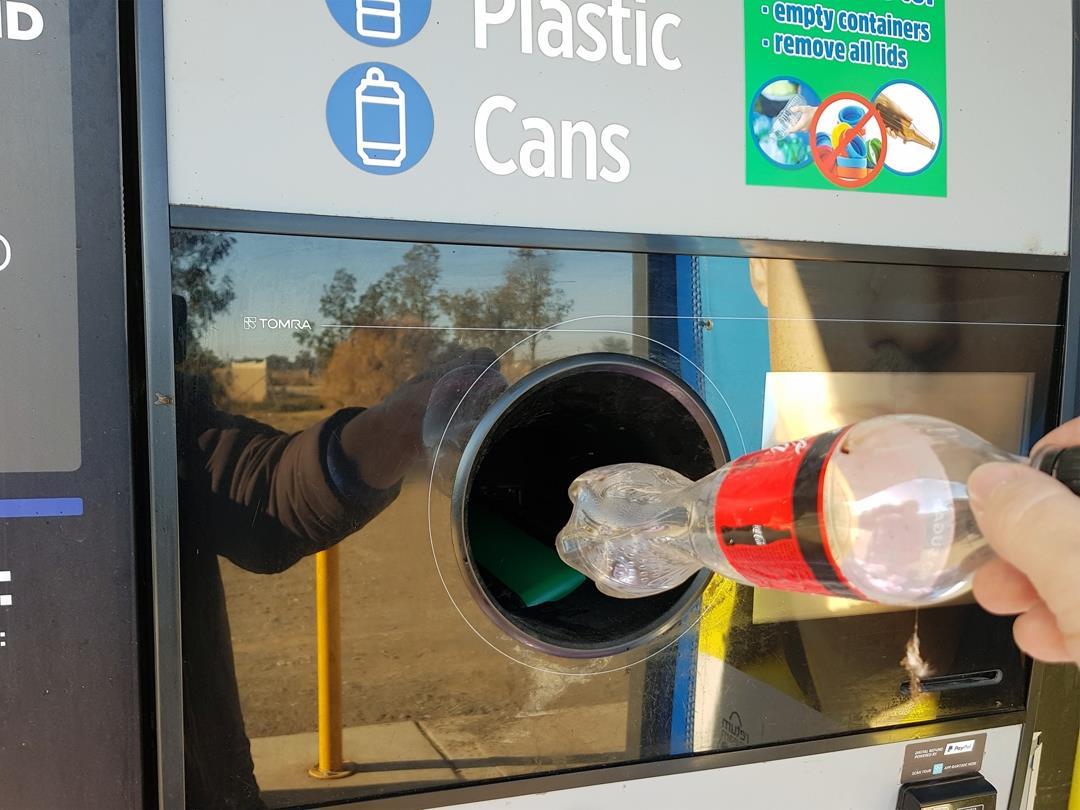
“Generally,” says Olga Kachook, “North America has a significant opportunity to increase these diversion rates and to increase the use of other collection systems that are more common in other parts of the world, such as reverse vending machines.”
Furthermore, according to the spokesperson from AMERIPEN, there are ways in which progress in the implementation and improvement of recycling and collection infrastructures across the US is tied to EPR policy. For many in the value chain, the aspiration is that funds collected from producers through EPR laws will be used “primarily for infrastructure improvements, innovation research and development, consumer education, and other clearly defined initiatives that will improve recycling systems themselves”.
Circular plastics
“Recyclability-challenged plastic packaging, particularly flexible plastic packaging, remains an issue, as this material is generally not accepted for curbside collection,” says Olga.
“Many companies have worked to transition their packaging to flexible plastics that are eligible to be recycled through Store Drop-Off programs, yet consumers may find these programs inconvenient or difficult to participate in. GreenBlue is currently conducting research into consumers’ access to these programs, and will also explore consumer willingness to engage with Store Drop-Off initiatives.”
Reuse/refill
Reuse and refill legislation has not as yet been widely implemented across North America, although Olga tells us there are increasing instances of successful pilots and programs.
“The most recent example is a reuse program being launched at a larger scale in the US is the reusable cup program in Petaluma, CA. This city-scale, ‘reuse as the default’ concept could serve as a model for other locations, and it was one of the packaging trends we called out in our 2024 Innovation Trends report.
“In Canada, the city of Ottawa is also experimenting with city-wide reusable packaging alternatives at major retailers.”
Biobased packaging
According to AMERIPEN, while there has been increased interest in compostable and biobased packaging in the US in recent years, legislation is still not fit for purpose which creates challenges for the future.
“Much of the recycling policy written 4–5 years ago failed to account for these products in newly proposed EPR systems, recycled content mandates, and other regulations. Compostable packaging, because of its unique characteristics, often doesn’t fit into broad definitions in these laws and compliance, resulting in significant challenges with respect to recycled content laws.
“AMERIPEN has seen an increase in membership among these producers and is seeking clarity on current laws and pending legislation as to how compostable packaging will fit into these systems.”
Two US states – Colorado and Washington – have policies that require biobased and compostable packaging to be clearly labeled and distinguished from recyclable packaging. Packaging regulation is also increasingly prohibiting the use of the term ‘biodegradable’ for this category of packaging, since this can be misleading and according to Olga is ‘often used as a form of greenwashing’.
Outlook
While the apparent deprioritization of environmental issues by the new Trump administration is cause for some considerable concern, there are still some positives to be taken from the current trajectory.
“Packaging regulation in the US has been slower to develop than in other regions of the world, and it was originally expected to only stand a chance at being passed in progressive states,” says Olga. “However, more recently these bills are being introduced in conservative areas as well, with the recognition that they can enhance local waste management and create local jobs.
“The main takeaway here is that packaging regulation is nearly inevitable, regardless of a region’s political leaning, and companies will benefit from advocating for federal-level bills, whose implementation will likely be more efficient and less costly in the long run.”
SOUTH AMERICA
Overview
In South America, according to Assunta Camilo – Director of the Brazilian Packaging Institute, Brazil, Argentina, Chile and Colombia in particular have made progress with policies aimed at waste management and the reduction of materials, especially in relation to plastic.
Regulations implemented by Brazil include the National Solid Waste Policy (PNRS) - Law No. 12,305/2010, which imposes obligations on governments, companies and citizens regarding waste management and reverse logistics for packaging, and Decree No. 10,936/2022, which regulates the PNRS and establishes consumer responsibilities regarding the proper disposal of waste.
Chile, meanwhile, has created legislation that prohibits the use of plastic bags. It has also promoted the circular economy and packaging recycling, with initiatives aimed at reducing waste production.
Yet despite the growing focus on sustainability and waste management in the region Assunta tells us there are still ongoing barriers to wider adoption of environmental legislation.
“Deforestation, environmental degradation and lack of awareness about the importance of sustainability are still low in many communities, which hinders the acceptance and adherence to new regulations.
“The lack of financial and fiscal incentives for companies that adopt sustainable practices and recycling cooperatives can limit the adoption of newer technologies and processes with lower environmental impact.”
Extended producer responsibility
EPR is growing in importance across the region. Chile is an example of a country with a strong EPR model that meets the specific needs of its region as it supports the informal waste collection sector by actively including waste pickers.
In Venezuela, producers of packaging made from plastics must submit individual or collective EPR plans and pay fees to the Ministry of Ecosocialism based on the quantity and types of materials placed on the market.
Elsewhere, Mexico does not have a formal EPR program for packaging, but rather uses the concept of ‘shared product responsibility’ which means that producers are not considered solely responsible for managing waste associated with their products.
Recycling and collection infrastructure
Assunta tells us that socioeconomic inequality, lack of adequate infrastructure for collection and recycling, and informality in the collection and recycling of materials are factors that hinder the implementation of policies that depend on formal waste management systems. Mexico’s recycling rate, for example, is estimated to be at only around 5% - although it should be noted that PET bottles have a recycling rate of about 50%.
In short, for the most part, while there some regional laws relating to waste management, there is a lack of coherence overall.
Circular plastics
There has been a progressive increase in the use of post-consumer recycled plastics in packaging across South America for cleaning products, PET bottles for soft drinks and the development of mono-material packaging.
Again, there is variation in the region. Countries like Argentina, Brazil, Chile, Colombia, and Uruguay have national action plans and bans on single-use plastics. Chile, in particular, became the first country in South America to ban the use of plastic bags in 2018 and implemented a Single-Use Plastics Law in 2021.
In Mexico, 31 of its 32 states have enforced bans or restrictions on a range of single-use products, such as disposable plastics bags, straws and EPS products.
Reuse/refill
In recent years, says Assunta, there has been growth across South America in the use of returnable glass and PET bottles for soft drinks; refillable packaging, mainly for liquid soap, liquid detergent and fabric softeners; and recently, major perfume brands have implemented refills for glass bottles.
However, while some EPR rules have provisions for increasing the amount of packaging reused, initiatives are still mainly being implemented by individual companies. Unilever, for instance, has run a number of successful pilots in the region, while Coca-Cola’s universal bottle scheme has been available for several years..
Biobased packaging
While bioplastics are not new in South America – Brazil’s Braskem is a major producer here – the market for biodegradables is still small across the region and there are as yet no composting programmes.
That being said, while there is little to no regulation to promote these materials, there have been moves from individual companies. For instance, earlier this year Israeli company W-Cycle received a new investment from Brazil-based Melhoramentos to strengthen their partnership promoting the introduction of plastic-free, compostable food containers in Latin America.
Outlook
In summation, Assunta tells us there has been some development in the region in the past year, but there is much more work to be done on the regulatory side to implement more ambitious sustainability programmes.
“The use of lighter and more economical packaging, to make it possible for more people to consume food, drinks and other products, is a positive point for the region. However, there is still a long way to go in terms of the circular economy, especially with regard to flexible packaging.”
CONCLUSION: THE NEED FOR GLOBAL ALIGNMENT
The above should demonstrate the challenges faced just within individual continents to harmonize packaging and waste management regulation. Even so, most recognize that while every region needs laws to suit its own specific needs, it is important to move closer to greater global alignment, where possible, to simplify supply chains and accelerate the journey towards Net Zero. It’s also clear that, while voluntary commitments such as the Ellen MacArthur Foundation Global Commitment have been crucial to help frame regulations, mandatory legislation is more effective.
Giving the Australian perspective on this as an example, Chris Foley says: “Australia is at the end of the global supply chain and while we are a geographically big island in reality we are a small market. I think around 85% of what we sell in the Australian market or in the New Zealand market is sourced from Asia. They, in turn, are sourcing their raw materials – often from European markets. So that’s got to be better managed and harmonized.”
We would also be remiss if we didn’t not touch upon the potential impact the current political upheavals engendered by the Trump administration will have on regulating packaging. Naresh Khanna was very clear about this.
“The current global upheavals will play a substantial role in the evolutionary process of sustainable human development. For instance, if the global price of oil rises, recycled polymers will become more viable.”
From the perspective of the developing world, Clem tells us: “Global homogenization of standards and certain other packaging regulations can minimize the burdens faced by developing countries, in particular, from the influx of environmentally risky materials which they lack the capacity to effectively manage. In the case of plastics, for example, a global regulation that mandates 100% recyclability of packaging plastics will eliminate the waste management challenges posed by non-recyclable packaging. This is one of the great benefits that the proposed Global Plastics Treaty can offer.”
While of course it’s up to policymakers to formalize regulation, businesses and industry bodies can play their role by lobbying for the change that is needed and ensuring they are ready to comply from the offset.
In short, as Renata Daudt of Awen Packaging Consulting recently told us, “Don’t wait the last minute to start thinking about what meeting regulations will mean for your company. The cost of trying to catch up is often greater than, than the cost of leaning in at the front end.”
If you liked this story, you might also enjoy:
Reuse vs. single use – which is better for the environment?
Sustainable Innovation Report 2025: Current trends and future priorities
What can the world learn from South Korea’s world-leading performance in plastics circularity?
Sponsored stories

How ATS-Tanner’s banding solutions align with the new PPWR
ATS-Tanner’s banding solutions aim to reduce packaging waste, provide a practical alternative to plastic and improve recyclability. In

How Rollon’s linear systems provide reliability for tertiary packaging
Rollon believes tertiary packaging machinery must perform without fail, showcased by its recent partnership with AMP Automation to develop palletizing

Discover what’s new at London Packaging Week
Packaging has never carried greater commercial responsibility. It influences how consumers perceive brands, how products perform in increasingly competitive markets

Paperworld Middle East partners with FSC to champion responsible sourcing across the region’s paper and stationery industry
Paperworld Middle East, the region’s leading trade show for paper and stationery products, taking place from 13–15 October

Made for Life: How Sappi reveals what trees make possible
What connects an experienced papermaker, the creators of cactus-based leather, the people conserving forests for future generations, and a

The advantages of all-electric adhesive dispensing in modern packaging
Packaging manufacturers are under constant pressure to increase output, reduce operating costs, improve sustainability, and maintain consistent product quality. One

YUTO won 12 international packaging design awards across three global competitions
Driven by the global sustainability trend, the EU PPWR mandates packaging reduction, recyclable design, and restrictions on single-use packaging.

How rPS Food aims to bring circularity to polystyrene packaging
In this edition of the Spotlight, Coexpan (part of Grupo Lantero) details how its rPS Food enables up to 100%
Read next

Your chance to decide the winner of our 2026 Readers’ Award
The nomination period for Packaging Europe’s 2026 Readers’ Award has ended, the finalists have been selected, and now it’

Nemera launches bi-dose nasal spray solution
Drug delivery device company Nemera has announced its DuoSpray bi-dose nasal spray platform, a ‘non-invasive, needle free’ administration

Coveris develops mono-material sleeve with 30% less material for Dr Beckmann
Coveris has unveiled its mono-material sleeve solution developed for Dr Beckmann, said to use around 30% less material than