

In a rush? Click here to read a summary of this report
Introduction
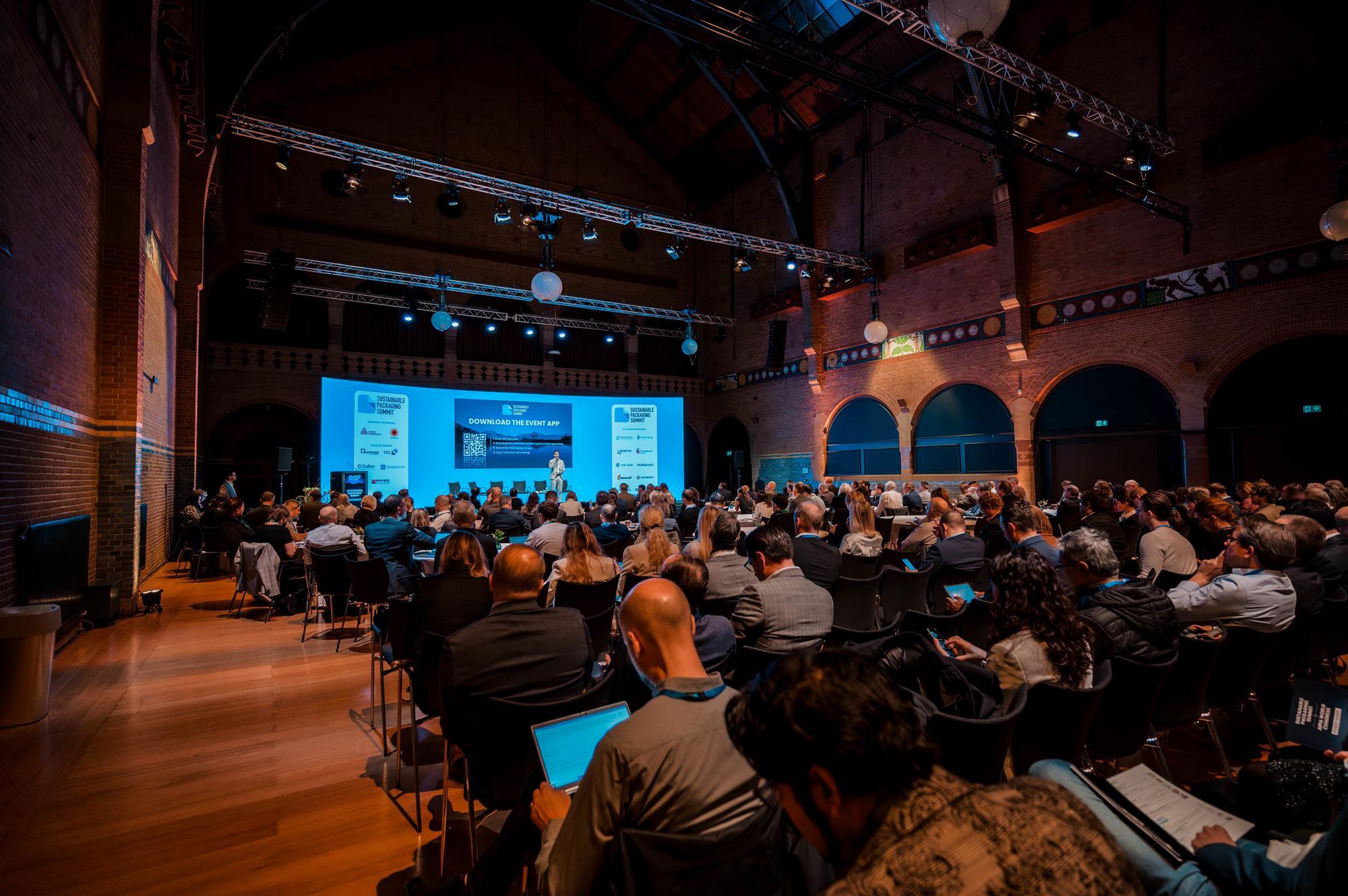
The 2023 Sustainable Packaging Summit brought together over 600 industry leaders, policymakers, NGOs, and investors in Amsterdam to confront the challenges facing packaging sustainability. This report distils the high-level discussions from the Strategy Stage, focusing on climate, circularity, investment, regulation, and reuse—critical levers for industry transformation.
Key Takeaways
- Climate must move to the centre of packaging strategies: While waste remains a focus, the Summit stressed that decarbonization—especially Scope 3 emissions and embedded carbon—needs urgent, transparent action. Companies must act on imperfect data and take calculated risks rather than wait for ideal conditions.
- Unlocking investment requires rewiring financial incentives: Current systems favour short-term gains and large players. Financing mechanisms, such as reallocating fossil fuel subsidies and enforcing extended producer responsibility (EPR), must evolve to support circular innovations and recyclate infrastructure.
- Global circular plastics face inconsistent regulations: Fragmented standards across regions hinder recyclability and reuse. Stakeholders called for global design-for-recycling standards and equitable treaty mechanisms to hold multinationals accountable across markets.
- Reuse needs systemic support, not pilot fatigue: Only 2% of packaging in circulation is reusable. To scale reuse, the entire value chain must collaborate, invest in infrastructure, and push for legal reforms to enable shared systems without breaching competition law.
- Data, harmonization, and education are top priorities: Delegates identified better data, aligned regulations, stakeholder collaboration, and public engagement as essential next steps to drive measurable, industry-wide impact.
Conclusion
The Summit revealed a clear appetite for deeper collaboration, risk-taking, and systemic reform. Stakeholders agree that progress will hinge on aligning financial, regulatory, and operational frameworks around a climate-first, circular model. In 2024 and beyond, the industry must turn dialogue into action—by investing in reuse infrastructure, enabling transparent decarbonization, and pushing for cohesive global standards.
The high-level discussions at the Sustainable Packaging Summit held in Amsterdam on 14-15 November 2023, included panels on Climate, Unlocking Investment, Global Circular Plastics, Regulation, Innovation and Reuse. The event brought together over 600 leading stakeholders across the packaging and FMCG value chain, along with NGOs, regulators, EPR, investors and recyclers for frank discussion of the challenges, disconnects and opportunities around which broad alignment is needed in order to accelerate sustainable transformation.
The ambition of the Sustainable Packaging Summit is to facilitate such alignment and build a critical mass to drive impact – and this report aims to support this impact by combining summaries of key discussions on the stage with input from delegates via the engagement platform.
Note on the scope of this report
The content of the Sustainable Packaging Summit ran the entire gamut of packaging sustainability, focusing on high-level strategic challenges on the Strategy Stream, while the Innovation Stream explored how we can accelerate innovation, discussed technological advances on a more granular level and introduced startups. This report focuses on key takeaways from the Summit’s Strategy Stage.
While there were extensive discussions of the ongoing UNEP Global Plastic Treaty and European PPWR, since these are fast-evolving topics it would be unproductive to summarize the findings as they stood at the last quarter of 2023, so they are omitted from the current report. However, these crucial European and global regulatory issues will be closely followed throughout the year in Packaging Europe’s content channels, and addressed again at the next edition of the Sustainable Packaging Summit.
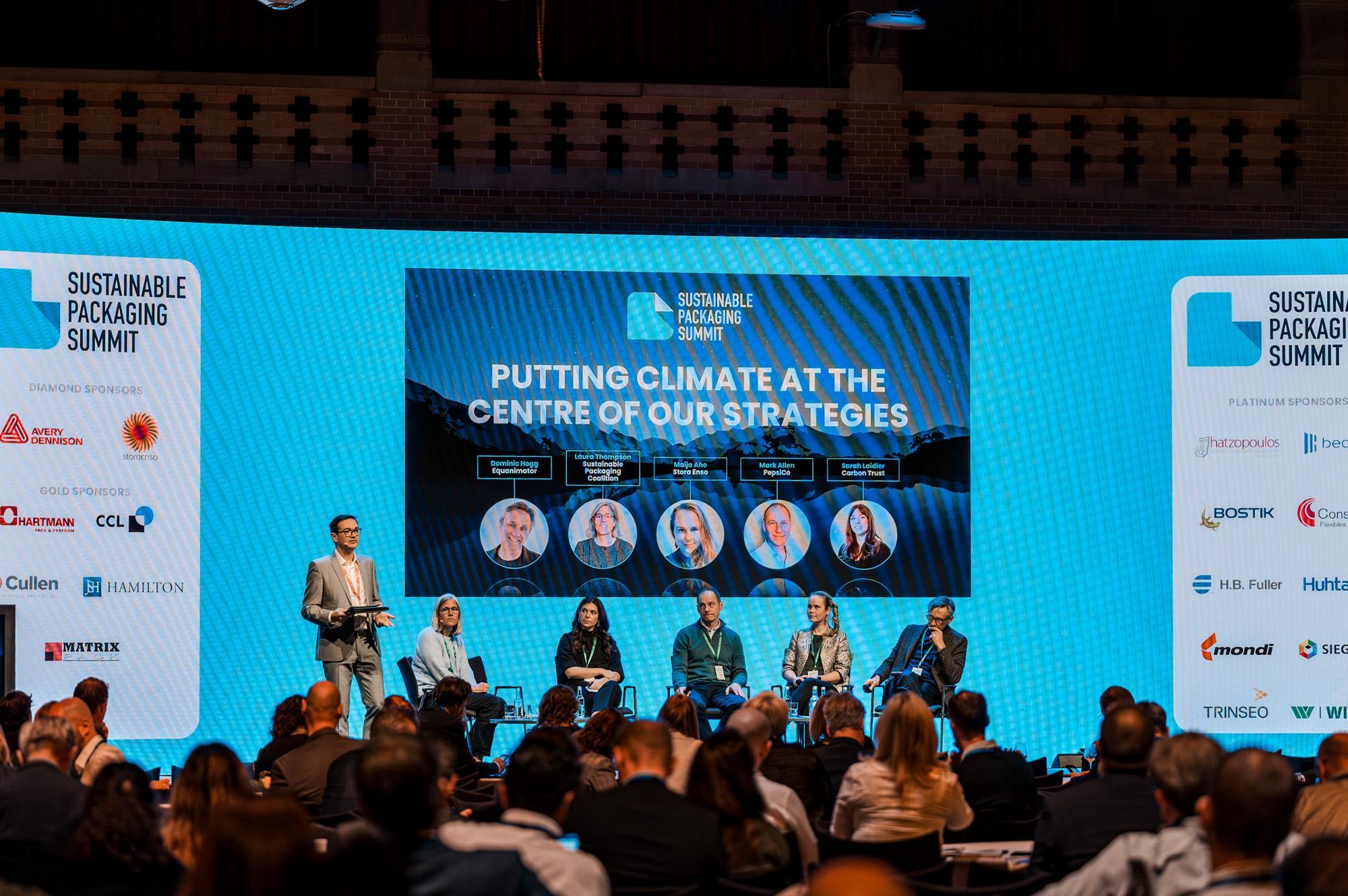
1. Putting climate at the centre of our strategies
There has – quite understandably – been a great deal of focus on packaging waste, specifically plastics, in recent years. While it’s an issue we have to address, some would say there is a lack of recognition that we should be putting at least as much focus on tackling the climate crisis through the packaging systems and materials we use.
To gauge how the industry is responding to this question, during the panel we launched a poll to find out how far the organizations in attendance were in their individual Net Zero plans. While it was encouraging to learn from this that 52% of attendees had a Net Zero strategy in place and were actively working towards it, the fact that 14% had no plans or targets in place tells us there is still a huge amount of work to be done.
This panel aimed to steer the conversation by looking at some of the ways the industry is – or should be – progressing towards the goal of Net Zero. The key takeaways / next steps for the industry were:
Greater focus on Scope 3 emissions reduction: While the industry generally has very good plans for Scope 1 and 2 emissions, it has still yet to find an efficient way to tackle Scope 3. For this, there should be a great focus on active collaboration with the supply chain rather than producers ‘relying on suppliers’ to do this for them.
This could be through, e.g. material reduction where possible, changing suppliers based on their emissions scores and looking at different logistics options. Related to this, there also needs to be a greater focus on tackling embedded carbon in products; it could be said that we’re moving fairly well towards decarbonizing power, but much less work has been done on decarbonizing materials.
Transparency is vital: It was suggested that the targets set by companies are almost ‘old news’ and the minimum we should expect. There should now be a focus on transparent decarbonization plans. To be most thorough, these should also include references to the challenges and barriers companies face here and their financial planning.
If the plan involves a big business model shift or innovation, or you’re moving to a much high recycled content scenario, where is the funding going to come from? Which partners will you be working with? These are the kinds of disclosures companies should become used to making. One suggestion from the audience was to adopt the Open 3P standard for packaging data.
Don’t wait for the ‘perfect’ data to act: While good-quality data can be instrumental to the development of a Net Zero strategy, there is a danger that waiting for this could lead to paralysis. It’s true that, theoretically, the technologies are now available to track all emissions through the supply chain but the reality is that in practice this doesn’t happen.
(The available data on waste management, for example, is particularly poor.) So assuming the ‘perfect’ data does not exist, companies can still act on the knowledge we already have available to us about carbon reduction.
Take more risks: This applies in particular to larger brand owners. As one of our panellists working in this part of the value chain pointed out, even when the risks haven’t paid off, this is still where they have learned the most about how to do better.
As an industry, we don’t have all the answers yet so trying new approaches (and sharing the learnings from this) is a way for the sector as a whole to move closer to its carbon goals. That said, we also recognize it’s an issue that the most innovative startups may not always have the financial backing to take those necessary risks. That’s something the bigger players, or investors, can and should offer support for.
Understand the difference between climate and decarbonization: To quote our moderator’s final summing-up: “Please don’t be disheartened if I say that targets are old news. Please do still set the targets, but also make sure that you follow that up with a decarbonization plan.
This kind of panel is to put climate more squarely at the centre of strategies, but also make sure that you understand the difference between climate and decarbonization, because the latter is what is needed now.”
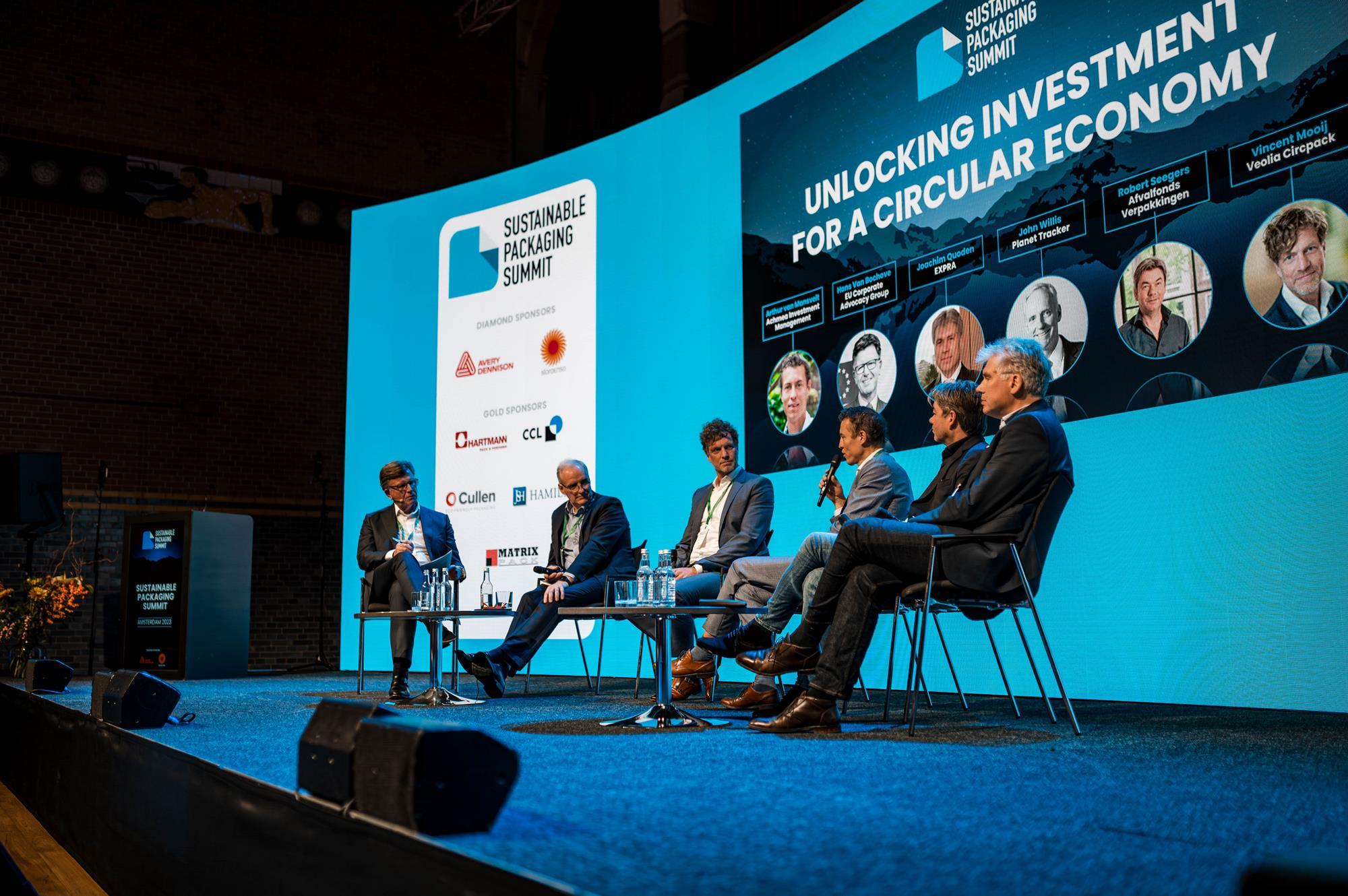
2. Unlocking investment for a circular economy
The purpose of this panel was to explore how more strategic alliance or alignment between industry investors, EPR systems and other players can remove any roadblocks to the development of a circular economy. We heard from the panellists what they believed to be the most important roadblocks, why those roadblocks are there and what could be done to remove them.
Some key learnings were:
We need to move away from linear financing tools: Due to current regulations in the financial system investors are still able to make short-term profits by financing unsustainable activities. What is needed are regulations that are geared towards more forward-thinking financing tools to support more sustainable projects.
How to remove the unfair bias towards big brands: There’s currently no true pricing system that fully makes the polluter pay, which is to the disadvantage of green innovations that come with higher development costs and a consequent need for higher investments. The risk for these kinds of innovations is not ‘priced in’.
One suggestion from the panel is that it would make sense to reallocate some of the trillions of dollars paid in fossil fuel subsidies each year. In other words, ‘the realignment of money’ rather than finding ‘extra’ funds.
Encourage more data-sharing: Accounting bodies are now pushing for more data on sustainability, but some companies are still reluctant to release this. From the investor viewpoint, the Corporate Sustainability Reporting Directive (CSRD) will help circumvent this so investors can better understand how companies intend to reach their targets towards reducing virgin plastics or making their packaging recyclable.
Companies can’t wait for government investment: Government funding can be intermittent and slow to arrive at best. Realistically, the money to affect real change in the coming years will have to come from industry.
For this to happen, brands and retailers must find a way to digest the cost and try to integrate it into the product or service so the consumer is paying the true cost of a product. This will of course mean being more transparent with the consumer about where those costs are coming from – even if this means the EPR fee is included on the price tag.
A secure supply of recyclate will depend on regulatory backing: It’s widely recognized that there is still a significant dearth of good-quality recyclate. Current EPR systems often have tenders for collecting waste, which is inherently insecure as ownership can differ and new tenders have to be made on a regular basis.
Furthermore, producers are not required by law to use recyclate – they can still switch to virgin plastics and many do because supply is unsteady. Regulation is therefore key to unlocking investment in a solid recycled material supply infrastructure.
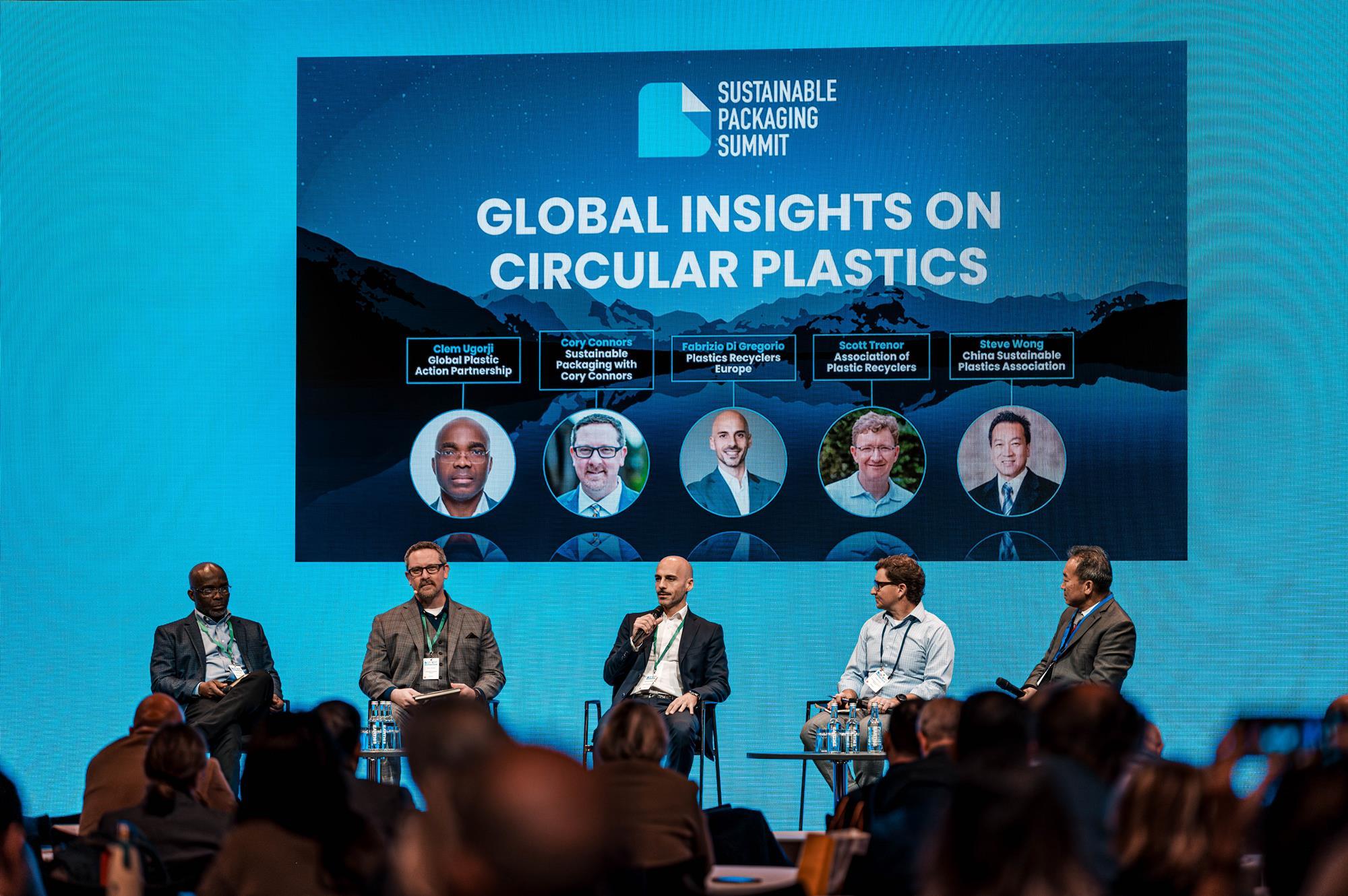
3. Global insights on circular plastics
The world is now producing twice as much plastic waste as two decades ago, driven partly by growth in emerging markets. It’s been estimated that the world produces about 350 million tons of plastic waste a year, and about half of that is single use plastic. Only 9% is successfully recycled.
And while global production of plastics from recycled content has more than quadrupled, this still only accounts for 6% of total global plastics production. Clearly, more sweeping changes are needed to increase the amount of recyclate available, create more efficient recycling infrastructures, discourage the use of virgin plastics and develop more viable alternatives, such as bioplastics and biodegradables.
This panel included representatives from North America, Asia, Africa and Europe, who discussed the different global approaches to plastic circularity, the specific challenges faced by different regions and how we are moving towards a Global Plastics Treaty.
Here we have some of the key points and observations to be taken from this discussion:
Regulatory fragmentation is hindering circularity in all continents: In Europe, there are very disparate rules when it comes to recyclability and the infrastructure is also variable. There is a need for standard, Europe-wide testing protocols behind the design for recycling guidelines. Further, there is still widespread downcycling of plastics (for example for construction) which is not ideal: the industry and regulators need to work towards a higher percentage of packaging-to-packaging recycling which means improving recycling infrastructure and investing in advanced technologies. North America has, according to the panel, between 9000 and 10,000 different recycling programmes – creating confusion which ‘hurts participation’.
Various organizations in Africa, including the World Economic Forum’s GPAP and the Africa Secular Economy Alliance, are addressing this issue by working towards common recycling standards across the continent, particularly for the ‘low-hanging opportunity’ of food-grade recycled plastics.
Opportunities and learnings from Africa: Africa is the continent with the highest growth rate in terms of plastics consumption and is expected to contain around 26% of the world’s population by 2050, which presents obvious challenges but also opportunities. On the challenges side, we can list the weakness of the regulatory institutions on the continent; and the lack of a market for recycled plastic, leading to large amounts of plastic waste being exported rather than forming the basis for a home-grown recycling industry and supporting employment. On the opportunities side, the panel used the example of South Africa; its industry has self-regulated and today it has a higher recycling rate than Europe.
Path to reducing virgin plastics: It often comes down to cost: in the US, for example, it is much cheaper for companies to produce virgin plastics so there is less financial incentive to build a market for recyclates. A virgin plastic tax – as has been established in some European countries – would be one obvious way to address this.
Need for a global design for recycling standard: Many countries still lack robust collection systems for flexibles. One way to address this is to ensure every piece of material is designed with end-of-life in mind – but these design features should be as applicable in Europe as they are in Asia, North America or Africa. One approach could be for global companies to narrow the variety of packaging options they need to serve the markets. To support this, it would also be desirable for the set-up of recycling plants across the world to be standardized.
Do we need a ‘bottom-up’ approach to design and regulation? When it comes to collaboration on design for recycling, the panel agreed that recyclers and packaging designers – rather than the regulators themselves – should be leading the discussion on design guidelines to ensure the raw recyclate itself is of the necessary quality for reuse and recycling.
Global Treaty considerations – collective accountability: Plastic waste is a global problem and the solution should mean eliminating boundaries between continents to ensure efficient material flow. The panel agreed that the Global Treaty for Plastics should ensure a level playing field whereby businesses are held accountable for their activities across regions. Negotiations must focus on ensuring, for example, that commitments by Coca-Cola, Nestle, PepsiCo etc. can be appliable across the world and held to the same standards. All systems – whether that’s harmonization on recycled content, EPR, collection – must be mandatory but also, at the same time, offer some kind of financial incentive to encourage adherence.
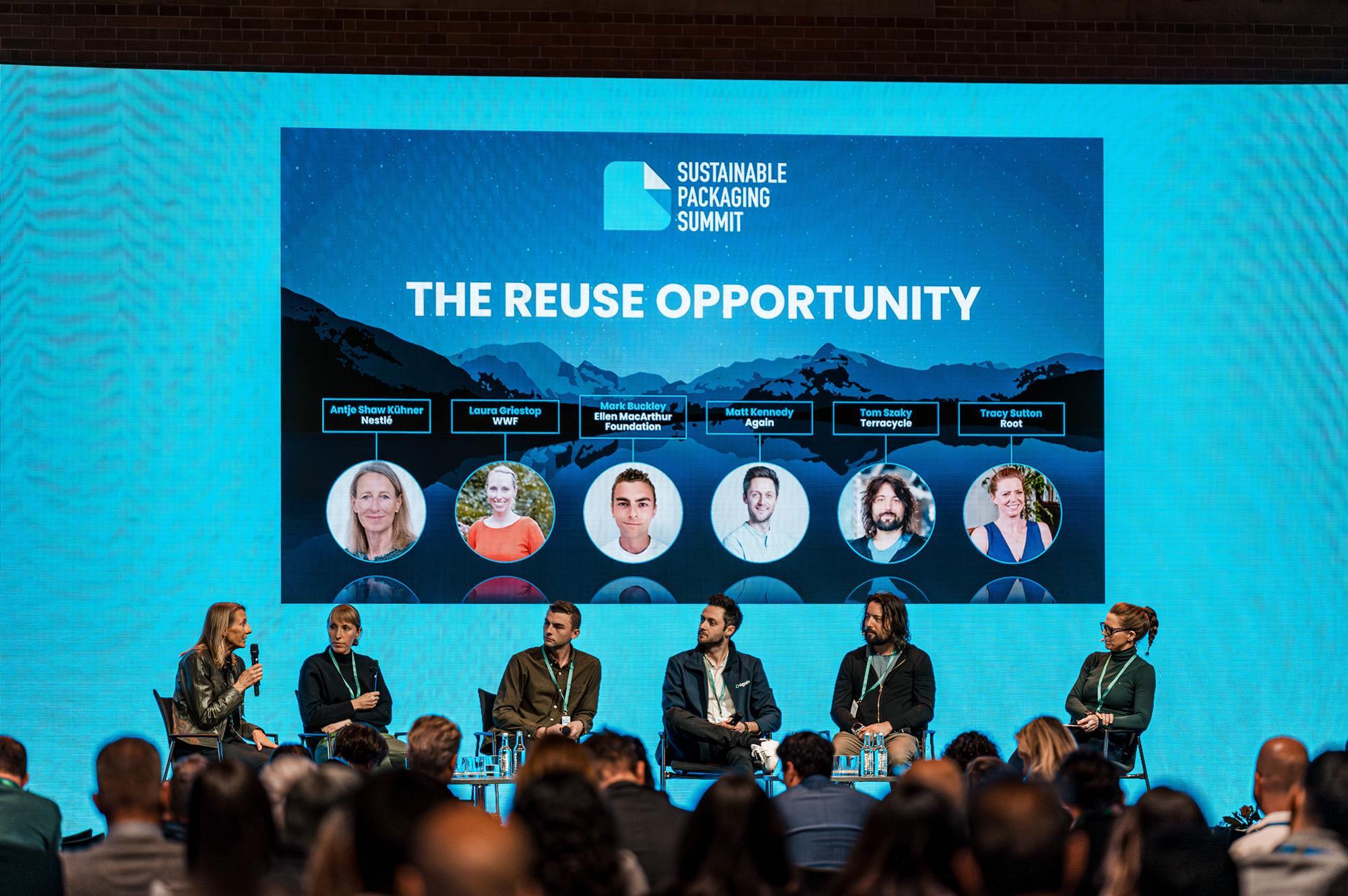
4. The reuse opportunity
Reuse is not just a marketing exercise. The Reuse/Refill panel at last year’s summit emphasized its importance as a vital tool to help the industry reduce its overall packaging footprint. Policy is focused around making single-use more economically unfavourable as well as encouraging reuse itself.
In addition to the policy, there is work being done on the industry side. The most recent report from the Ellen Macarthur Foundation’s Global Commitment highlighted that 2% of signatories have reusable packaging in circulation. This is a start, but much needs to be done to increase this percentage and put forward the business case for reuse. It is encouraging to see the many pilots from industry actors of all sizes, but too often they don’t lead to any systemic change.
The following key takeaways highlight the opportunities that emerged from the panel, the next steps the value chain can take and the enabling conditions we need for these.
Value chain needs to ‘take ownership’ of reuse: While wider EPR legislation is necessary, reuse isn’t solely the responsibility of brands; in order to move forward we need the entire value chain to collaborate and be proactive on implementing reuse.
How to build greater customer participation: Finding ways to scale up reuse models – itself a challenge – is only part of the battle. We also need customers to partake in the system and one way to do this is to ensure it’s consistent and standardized across the board. If consumers can see the same reuse / refill setups across all stores or all delivery systems, this will encourage buy-in and get the high return rates we need.
When it comes to refill systems such as concentrates, making these a wider success really comes down to retailers and brands working together to make these viable for customers. Well-communicated global standards on safety would also go some way to reassuring consumers.
Consider logistics: When we talk about making reuse a success we talk about the need to scale, but for global companies this can mean transporting goods long distances for cleaning / return which is clearly carbon-intensive. We know that reuse works best if business is local, so what does this mean for companies in terms of systems change or looking at less carbon-intensive logistics options?
Kerbside convenience is key: The ‘biggest driver’ of return rate is convenience. Particularly promising areas for kerbside returnable packaging systems are within online grocery orders / delivery and the hospitality sector.
Where should investment in reuse be targeted? Supporting ‘first mover risk’ – whereby a brand wants to lead but doesn’t have the resources to take the risk – is vital to creating change. It is suggested they should be compensated through multi-stakeholder initiatives or governments so that these first movers are actually benefitting from taking these chances.
The panel also pointed out that, in order to create investment, companies operating in this field need to become better at sharing data with potential supporters, giving evidence of where their systems work and what they need to become profitable. And finally, on the broader, systemic scale, there needs to be investment in areas such as sorting, reverse logistics infrastructure, collection, return and washing facilities.
Reviewing competition laws: It is argued that current competition laws are getting in the way of collective action on standardized packaging reuse /refill systems. The industry must lobby to change these laws.
5. Next steps and priorities
Here we have taken a look at just four specific strategic areas. However, at the culmination of the Sustainable Packaging Summit we polled the delegates to seek a consensus, in the light of the discussions they had participated in, on their takeaways from the event. This data both reinforces and complements the key takeaways from our strategic panels.
Finally, we asked the audience to list the most pressing issues the packaging industry, as a community, should focus on next, and how we can mobilize to address these. Certain recurring issues and demands emerged from this poll. We list them below:
- Improving the quality and availability of data so we can make data-driven decisions, better monitor progress and improve transparency.
- Harmonization to create scale where it’s needed.
- Greater collaboration between supply chain stakeholders.
- Greater accessibility to waste disposal (collection).
- Relieving end users from the burden of sorting.
- Education and communication of environmental impacts to the public.
- Different players working together rather than to gain competitive advantage against each other.
The next edition of the Sustainable Packaging Summit, which takes place on 12-13 November 2024 in Amsterdam, will address the action points raised by participants in last year’s event, seeking to progress our understanding and capacity to act. The event will again feature two main streams: the Strategy Stage bringing high-profile keynotes and high-level panel topics; the Innovation Stage will drive the technological agenda, featuring experts in commercialization, progress reports on sustainable materials, start-up pitches, and early-stage R&D.
Supplementary information: List of Strategy Stage speakers
Putting climate at the centre of our strategies
Mark Allen, PepsiCo
Sarah Laidler, Carbon Trust (Moderator)
Maija Aho, Stora Enso
Laura Thompson, Sustainable Packaging Coalition
Dominic Hogg, Equanimator
Unlocking investment for a circular economy
Joachim Quoden, EXPRA
Arthur van Mansvelt, Achmea Investment Management
John Willis, Planet Tracker
Robert Seegers, Afvalfonds Verpakkingen
Vincent Mooij, Veolia Circpack
Hans Van Bochove, EU Corporate Advocacy Group (Moderator)
The reuse opportunity
Mark Buckley, Ellen MacArthur Foundation
Laura Griestop, WWF
Matt Kennedy, Again
Antje Shaw Kühner, Nestlé
Tracy Sutton, Root (Moderator)
Tom Szaky, Terracycle
Global insights on circular plastics
Fabrizio Di Gregorio, Plastics Recyclers Europe
Scott Trenor, Association of Plastic Recyclers
Clem Ugorji, Global Plastic Action Partnership
Steve Wong, Asia-Pacific Sustainable Plastic Alliance
Cory Connors, Sustainable Packaging with Cory Connors (Moderator)
If you liked this story, you might also enjoy:
The Brief: How viable is biorecycling for plastics?
Report: How the top brands are progressing on packaging sustainability
The Brief: Using ocean-bound plastic in packaging – how, why and should we?
Sponsored stories

How ATS-Tanner’s banding solutions align with the new PPWR
ATS-Tanner’s banding solutions aim to reduce packaging waste, provide a practical alternative to plastic and improve recyclability. In

How Rollon’s linear systems provide reliability for tertiary packaging
Rollon believes tertiary packaging machinery must perform without fail, showcased by its recent partnership with AMP Automation to develop palletizing

Discover what’s new at London Packaging Week
Packaging has never carried greater commercial responsibility. It influences how consumers perceive brands, how products perform in increasingly competitive markets

Paperworld Middle East partners with FSC to champion responsible sourcing across the region’s paper and stationery industry
Paperworld Middle East, the region’s leading trade show for paper and stationery products, taking place from 13–15 October

Made for Life: How Sappi reveals what trees make possible
What connects an experienced papermaker, the creators of cactus-based leather, the people conserving forests for future generations, and a

The advantages of all-electric adhesive dispensing in modern packaging
Packaging manufacturers are under constant pressure to increase output, reduce operating costs, improve sustainability, and maintain consistent product quality. One

YUTO won 12 international packaging design awards across three global competitions
Driven by the global sustainability trend, the EU PPWR mandates packaging reduction, recyclable design, and restrictions on single-use packaging.

How rPS Food aims to bring circularity to polystyrene packaging
In this edition of the Spotlight, Coexpan (part of Grupo Lantero) details how its rPS Food enables up to 100%
Read next

Your chance to decide the winner of our 2026 Readers’ Award
The nomination period for Packaging Europe’s 2026 Readers’ Award has ended, the finalists have been selected, and now it’

Nemera launches bi-dose nasal spray solution
Drug delivery device company Nemera has announced its DuoSpray bi-dose nasal spray platform, a ‘non-invasive, needle free’ administration

Coveris develops mono-material sleeve with 30% less material for Dr Beckmann
Coveris has unveiled its mono-material sleeve solution developed for Dr Beckmann, said to use around 30% less material than