

In a rush? Click here to read a short summary of this story
Introduction
This report assesses the progress made by the top six FMCG signatories – L’Oréal, Mars, Nestlé, PepsiCo, Coca-Cola, and Unilever – under the Ellen MacArthur Foundation’s Global Commitment to eliminate plastic waste and pollution.
Key Takeaways
- Progress on recyclable packaging falls short of targets
While recyclable, reusable, or compostable plastic packaging increased to 70% among signatories, no company has yet achieved the 100% goal. Mars trails at just 22%, highlighting industry-wide challenges in scaling viable alternatives.
- Recycled content use rising, but gaps remain
Signatories nearly tripled their use of post-consumer recycled (PCR) plastic in 2023 to an average of 14%. Leaders include L’Oréal at 32% and Unilever at 21.8%, but Mars lags significantly at 1.5%.
- Mixed results on virgin plastic reduction
Since 2018, signatories have avoided 9.6 million tonnes of virgin plastic. Unilever (-17.93%) and Nestlé (-14.98%) made strong reductions, while Coca-Cola, Mars, and PepsiCo have increased their usage.
- Reuse is a major bottleneck
Reusable plastic packaging remains under 1% for most companies, despite pilot initiatives. Scaling reuse requires both innovation and enabling infrastructure – currently lacking in many markets.
- Efforts to eliminate problematic plastics show promise
The top quartile of signatories have phased out PVC and EPS/XPS, a stark contrast to global trends, signaling voluntary commitments can drive market shifts – but only when backed by clear incentives.
- Alignment with the global plastics treaty is crucial
The Global Commitment has laid groundwork for the UN Global Plastics Treaty, set to be negotiated in August 2025. Harmonized, mandatory regulation is seen as essential to unlocking system-wide change.
Conclusion
The top FMCG companies have shown measurable progress, especially in PCR use and virgin plastic reduction, but voluntary action alone won’t deliver on the scale or speed required. With 2025 targets fast approaching and still largely unmet, the sector must double down on collaboration, policy advocacy, and innovation – especially in reuse and infrastructure development. The upcoming Global Plastics Treaty represents a make-or-break opportunity to codify and scale what’s working – and leave no company behind.
Since 2018, more than 1000 organizations have given their backing to the Ellen MacArthur Foundation (EMF) Global Commitment, led by the Foundation in partnership with the UN Environment Programme, to stop plastic packaging from becoming waste. We focus on the top six FMCG signatories’ progress in the key metrics laid out by the Commitment.
The top six FMCG brands – and the signatories as a whole – have made substantial progress within the parameters of the Global Commitment, but key 2025 targets are almost certain not to be met. The world, soberingly, remains ‘off track to eliminate plastic waste and pollution’.
That’s the bare bones of the situation, according to the EMF Global Commitment’s most recent Progress Report. 80 per cent of companies are still not a part of the Global Commitment and are, according to EMF, performing worse than the leading 20%, while enabling policy is still very limited and fragmented. Three pivot hurdles stand in the way of further progress: scaling reuse, flexible plastic packaging in high-leakage countries, and lack of infrastructure to collect and circulate packaging.
On the positive side, apart from the increased use of recycled content and overall reduction of virgin plastic use among signatories – as we will discuss in more detail below – the work of the Commitment has influenced the wider sustainability agenda in other areas.
According to Aisha Stenning, Lead in the Plastics Initiative at the Ellen MacArthur Foundation, “An example of how the Global Commitment has influenced common reporting standards are the Plastic Pacts and the inclusion of plastics disclosure within CDP. These mechanisms extend the reach to tens of thousands of organizations worldwide.”
But it’s clear there is still a huge amount to be accomplished and voluntary commitments such as this, while they have played an essential role, are not a substitute for mandatory regulations. We will also therefore also be discussing the progress of the Global Plastics Treaty, of which the EMF is a key driver.
First, however, we take a look at the progress made by the top six FMCG signatories – L’Oreal, Mars, Nestlé, PepsiCo, The Coca-Cola Company and Unilever – in the key areas laid out by the Commitment and where they are still struggling to meet their goals. To give a short recap, the key challenges are:
- Ensuring 100% of plastic is reusable, recyclable or compostable;
- Increasing the share of post-consumer recycled (PCR) content across all plastic packaging;
- Decreasing the use of virgin plastic;
- Moving from single-use to reusable packaging where relevant and possible;
- Eliminating problematic or unnecessary plastic packaging (such as flexibles).
Individual signatory reports for the reporting period of 2023, for those who want to read about them in more depth, are available here.
Challenge: Ensuring 100% of plastic is reusable, recyclable or compostable
Aisha Stenning told us that reusable, recyclable or compostable packaging increased by four percentage points among signatories between 2022 and 2023, to 70% – but the target of 100% is ‘proving particularly challenging’ and requires the most collaboration across the value chain if it is to be reached.
To give a brief overview of the top FMCG brands’ results on these metrics: L’Oreal increased its share of plastic packaging that is that is reusable, recyclable or compostable to 48% and it has set up action plans ‘to remove or minimize disruptors: focus on formats with recycling streams in practise & at scale. Next step to address all formats (priority on >20ml).’
Unilever’s overall figure stands at 52.7%, while Nestlé has achieved 63.28%, including 83.53% that is ‘designed for recycling’ and 62.48% that is recyclable. PepsiCo is also performing strongly overall, at 77.2%, and The Coca-Cola Company’s figure is still higher, at 99.57% of recyclable primary consumer-facing plastic packaging.
The figure reached by Mars, Inc. in this regard is still at a relatively low 22%. A spokesperson for Mars explained the fundamental challenge they are facing: “We have made a lot of progress, and 61% of our portfolio is now designed for circularity. This includes removing certain packaging formats and materials, moving to mono-materials, switching to paper, and exploring reuse.
But we still have a long way to go, and we have strong plans in place to ensure all our packaging is designed for circularity. Regardless of our redesign efforts, our products will only be fully circular when the necessary waste management, collection, sorting and recycling infrastructure exists at scale, and we are working actively with governments and NGOs to drive this change.”
Challenge: Increasing the share of post-consumer recycled (PCR) content
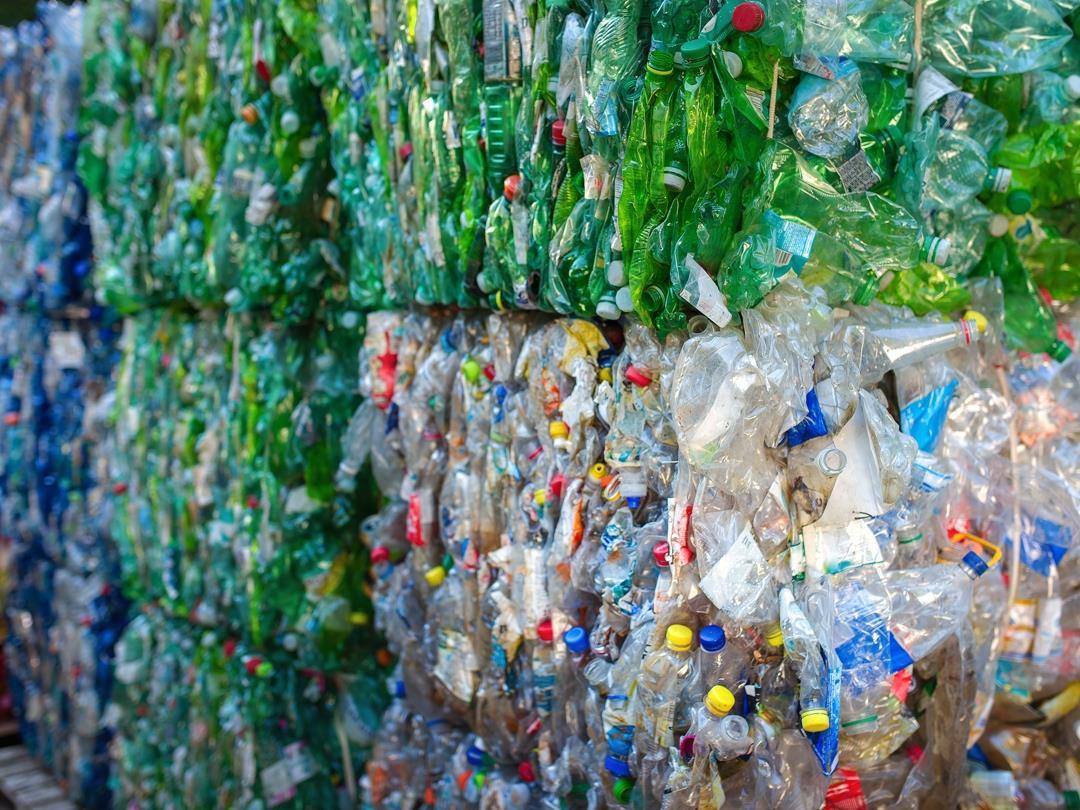
According to Aisha Stenning, “Signatories have increased their use of post-consumer recycled (PCR) for the sixth year running, with an increase of two percentage points between 2022 and 2023. Both brand and retail signatories almost tripled the share of PCR in 2023 to 14%.”
Again, a look at the individual FMCGs’ reports for the last year corroborates this positive trend. L’Oreal’s Level of PCR content in plastic packaging rose to 32%, moving closer to its target of 50%.
Nestlé’s share is at 9.30%, against its target of 30%. According to the company, “During 2023 Waters brands increased recycled content in PET bottles, reaching ~23% globally. In France, Vittel implemented 100% rPET in its bottles, excluding caps and labels. In Thailand, we launched the 1st bottles with recycled PET in the Thai beverage market. In Nigeria, Nestlé PureLife launched bottles with 50% recycled PET, excluding caps and labels.”
PepsiCo’s figure of PCR is at 9.80%, against a slightly lower target of 25%. In 2023, 17.31% of The Coca-Cola Company’s plastic packaging used was sourced from recycled PET (rPET), an increase from 15% in 2022 against its target of 25%. For Mars, the level of PCR content is still at 1.50% against its target of 30%. Finally, the figure reached by Unilever was 21.80%, again against a target of 25%.
All this, says the 2024 Progress Report, has a genuine impact on carbon emissions. “By increasing their use of recycled plastics, signatories are keeping one barrel of oil in the ground every two seconds whilst eliminating the equivalent carbon emissions of a city of nearly 750,000 people.”
Challenge: Decreasing the use of virgin plastics
When we last reported on this topic, overall brand and retail signatories’ aggregated use of virgin plastic had risen since the launch of the Global Commitment; but this trend, it seems, appears to be slowly reversing – at least among some signatories. The situation today, according to the progress report, is that since 2018, signatories have avoided 9.6 million tonnes of virgin plastic, the equivalent of one trillion single-use plastic bags.
Brand and retail signatories have reduced their virgin plastic use by 3% since 2018. By comparison, the plastic packaging market as a whole has increased by 8% in the same period. A third of signatories are on track to achieve their virgin plastic target.
How did the top FMCGs fare in this metric? L’Oreal has actually reduced its use of virgin plastics by 13.39% compared to the 2019 baseline, Nestlé has achieved a reduction of 14.98%, while Unilever reduced its use by 17.93%.
Conversely, Mars has actually increased its use of virgin plastics by 5.37% compared to 2019, while The Coca-Cola Company had increased is use by 5.85%. PepsiCo has also increased its virgin plastic use, by 5.57% compared to 2020.
However, a PepsiCo spokesperson did point out that “Our sustainable packaging journey is ongoing, and we reported in our ESG Summary that in 2023 we reduced our use of virgin plastic derived from non-renewable sources by 4% year over year [1] and increased the amount of recycled content in our packaging to 10% globally.”
Challenge: Moving from single-use to reusable packaging
This, as mentioned above, is one of the three biggest pivot hurdles identified by EMF slowing progress. There is much focus on how the various elements of the supply chain can work together to implement such innovations on wider scale.
We can see from the individual FMCG reports that brands are still struggling to meet reuse targets. Firstly, L’Oreal launched 10 pilots over the reporting period but its share of reusable packaging is still only at 5%. The figures by Mars are lower still – while it has launched three reuse pilots over the reporting period its actual share of plastic packaging that is reusable sits at 0%. As of 2023, PepsiCo’s product lines using reusable plastic packaging was also at 0%, but it has four pilots in place.
Elsewhere, Nestlé’s share of reusable plastic packaging is currently at 0.8%; however, according to the company’s report, “In 2023 we launched 6 new tests in Indonesia, Australia, Portugal and Germany (four Refill and two Reuse). And for our Waters category, we continue to expand with reusable glass bottles and HOD delivery systems. In B2B Reuse our business in China launched reuseable shipping cases, and reuseable pallet wraps to reduce single use cardboard and plastic applications.”
According to the Coca-Cola Company’s report, meanwhile, aside from its five current reuse pilots, “0.17% of our plastic packaging is reusable. We offer returnable packaging options in 100+ markets. Returnable glass and plastic bottles are a top priority in countries with established reuse infrastructures and supply chains, most notably in Asia, Europe, and Latin America.”
Aisha Stenning states in clear terms what action is needed from signatories and legislative bodies.
“Businesses should scale refill solutions and concentrate products, collaborate at scale on return models, and advocate for reuse policy in key markets in which they operate. Policies such as time-bound, sectorial reuse targets; harmonised reuse definitions, metrics, and standards; measures to facilitate the development of shared infrastructure; and economic measures that incentivize reuse (e.g. EPR, taxes, subsidies) can play a major role in mobilising this transition.”
We also spoke to Nestlé’s Jodie Rousell about the company’s progress within the Global Commitment. It’s worth us listing here the eight enabling conditions she says are needed to scale reuse:
- Legislation at the international level for a category-by-category approach to reuse and refill systems for packaged consumer goods. These laws should recognize the differences between foods, beverages, personal care, household products, etc.
- Decarbonization of logistics systems.
- Support for investments to modify industrial infrastructure, e.g. investments in large-scale sorting, reverse logistics infrastructure, standardized pooled packaging, packaging return systems/bins or regional washing facilities.
- Review of competition laws that may hinder a collective approach to standardized packaging pools.
- Implementation of regional or global standards on systems’ hygiene, safety and quality management.
- Retro-planning of a minimum time frame required for the transition.
- Deployment of communications programs to drive consumer acceptance and refill and packing return behaviors.
- Increasing of consumer convenience through innovative business models, ensuring high packaging return rates.
Challenge: Eliminating problematic or unnecessary plastic packaging
Eliminating difficult-to-recycle plastics and simplifying the range of polymers on the market is key.
According to Aisha, “Signatories have significantly reduced their use of some of the packaging items and materials commonly identified as unnecessary or problematic. Since 2020, the top quartile brand and retail signatories have completely eliminated their use of PVC and EPS/XPS in business-to-consumer packaging for FMCGs, compared with a global market 6% increase and 4% reduction, respectively.”
But while governments have been driving progress by introducing mandatory targets and by establishing much-needed Extended Producer Responsibility (EPR) schemes (of which more are essential), Aisha highlights that policymakers must continue to provide direction and supporting conditions as this is one area where voluntary commitments can only go so far.
“The lack of alignment on potential solutions — alternative delivery models, material substitution, recycling — will be accepted across the industry and in policy, is a key hurdle for making the major investments these solutions require. Policymakers can clarify what outcomes will be incentivised and how the enabling systems for those solutions will be developed together with industry.”
How is the Global Commitment aligned with the Global Plastics Treaty?
So far we’ve seen how FMCGs have been responding to the goals of the Global Commitment since its inception. But as we’ve said, while business-led commitments have essential for taking the first steps towards transparency and accountability they are not a substitute for mandatory regulations around plastics pollution.
Much of the work of the Global Commitment, therefore, has become interlinked with the development of the UN Global Plastics Treaty, which envisions a harmonized, global framework covering the full life cycle of plastic from design to disposal. (Packaging Europe has covered in much depth since negotiations began.)
“Global policy will create the conditions to help those leading the market overcome the key barriers to meeting their targets whilst simultaneously moving towards industry-wide participation, ultimately allowing proven solutions to scale much more quickly,” says Aisha Stenning.
“The treaty represents a once-in-a-generation opportunity in this fight against plastic waste and pollution. If ambitious global rules are put in place in addition to improved infrastructure and the promotion of business models such as reuse and refill, we may realise the opportunity to address plastic pollution on a global level.”
Nestlé’s Jodie Roussell further emphasizes the importance of the Global Commitment in laying the groundwork for the treaty – showing how synergies between voluntary and mandatory targets can be powerful. “The Global Commitment work shows that the policy proposals of the Business Coalition for a Global Plastics Treaty are realistic and have already been implemented by a small group of companies on a voluntary basis.
“It is entirely possible. The most ambitious proposals discussed in the context of the Treaty negotiations would ultimately need to be written into national law, and then ultimately implemented by business, country by country. This is where the value of harmonized regulation comes in, driving economies of scale with global norms and standards.”
At the time of writing, the terms of the treaty have yet to be agreed upon – the next International Negotiating Committee (INC meeting), INC-5.2, will be held at the Palais des Nations in Geneva from 5th – 14th August 2025.
To recap briefly, the previous session in Busan in November 2024 left a lot of questions still to be answered. Should the committee work towards a compromised treaty including ‘low-ambition’ countries (mainly those with oil interests) or go for a much more ambitious treaty without the involvement of those players. Have issues such as EPR or phase-outs of harmful plastic s and chemicals been given enough consideration in the current draft text? We will see if these and more are answered in August.
The Global Commitment, as we know, has been instrumental throughout the process. It laid the foundations for the Business Coalition for a Global Plastics Treaty (of which all six FMCGs we discussed above are members) which brings together 275 businesses and financial institutions committed to bringing the treaty into being. The coalition is convened by the Ellen MacArthur Foundation and WWF, in collaboration with aligned businesses and supported by strategic NGO partners.
“The Progress Report highlights the need for both focused action and legally binding global rules to overcome these industry-wide challenges,” said a spokesperson from Unilever. “That’s why Unilever is working with industry partners to develop viable, scalable alternatives that reduce plastic waste, and also calling for a high ambition UN plastics treaty that creates a level playing field for all businesses.”
Next steps: How do we maintain momentum?
The Global Treaty will be a vital step forward, but at this point we should also add a further caveat from Aisha – that “Regulation will not solve everything, given the highly complex nature of plastic and packaging waste.”
In future, EMF believes that we should be thinking in terms of an ‘ambition loop’ through which business action and government policy become mutually reinforcing. In other words, “Voluntary action from business will remain vital as a complement to long-term policy change – it will ensure progress is pushed further and faster. By demonstrating what’s possible, the largest FMCG brands have accelerated whole markets, like recycled content. They can continue to accelerate the transition to a circular economy for plastics by working together in areas like reuse, that require a critical mass of companies to embrace.”
Moving forward, FMCG signatories have a specific role to play within the wider ecosystem of the Global Commitment through advocacy, lobbying for governments to set legally binding rules and measures to drive change on a global scale.
[1] Absolute tonnage of virgin plastic derived from non-renewable sources increased by 6% measured versus a 2020 baseline. Stat from PepsiCo’s 2023 ESG Summary.
If you liked this story, you might also enjoy:
Reuse vs. single use – which is better for the environment?
Sustainable Innovation Report 2025: Current trends and future priorities
What can the world learn from South Korea’s world-leading performance in plastics circularity?
Sponsored stories

How ATS-Tanner’s banding solutions align with the new PPWR
ATS-Tanner’s banding solutions aim to reduce packaging waste, provide a practical alternative to plastic and improve recyclability. In

How Rollon’s linear systems provide reliability for tertiary packaging
Rollon believes tertiary packaging machinery must perform without fail, showcased by its recent partnership with AMP Automation to develop palletizing

Discover what’s new at London Packaging Week
Packaging has never carried greater commercial responsibility. It influences how consumers perceive brands, how products perform in increasingly competitive markets

Paperworld Middle East partners with FSC to champion responsible sourcing across the region’s paper and stationery industry
Paperworld Middle East, the region’s leading trade show for paper and stationery products, taking place from 13–15 October

Made for Life: How Sappi reveals what trees make possible
What connects an experienced papermaker, the creators of cactus-based leather, the people conserving forests for future generations, and a

The advantages of all-electric adhesive dispensing in modern packaging
Packaging manufacturers are under constant pressure to increase output, reduce operating costs, improve sustainability, and maintain consistent product quality. One

YUTO won 12 international packaging design awards across three global competitions
Driven by the global sustainability trend, the EU PPWR mandates packaging reduction, recyclable design, and restrictions on single-use packaging.

How rPS Food aims to bring circularity to polystyrene packaging
In this edition of the Spotlight, Coexpan (part of Grupo Lantero) details how its rPS Food enables up to 100%
Read next

Your chance to decide the winner of our 2026 Readers’ Award
The nomination period for Packaging Europe’s 2026 Readers’ Award has ended, the finalists have been selected, and now it’

Nemera launches bi-dose nasal spray solution
Drug delivery device company Nemera has announced its DuoSpray bi-dose nasal spray platform, a ‘non-invasive, needle free’ administration

Coveris develops mono-material sleeve with 30% less material for Dr Beckmann
Coveris has unveiled its mono-material sleeve solution developed for Dr Beckmann, said to use around 30% less material than