
PPWR Compliance Starts on the Factory Floor: Why Packaging Data is the Missing Piece
About the webinar PPWR is not just introducing new packaging requirements. It is raising the importance of accurate, traceable and

Introduction
This report provides a comprehensive overview of the current landscape of deposit return schemes (DRS) across Europe. It highlights why DRS implementation is rapidly accelerating, especially in light of upcoming EU mandates aimed at boosting collection rates for plastic bottles and cans, critical for advancing packaging circularity.
Key Takeaways
Conclusion
The report underscores that DRS is indispensable for Europe to meet its ambitious 2029 collection targets. While implementation hurdles exist—from consumer behaviour to regulatory alignment—the successes of mature schemes offer a clear blueprint. Urgent, well-designed rollouts paired with improved data integrity and infrastructure investment are critical.
Anyone attuned to these things will be aware of the loudening buzz in Europe’s packaging sphere around deposit return schemes (DRS). At the time of writing, almost 20 countries in Europe now have live DRS schemes and more are in the process of implementing them.
The purpose of our report is two-fold: to give a general status overview of the situation in Europe with regards to DRS implementation – which countries have it, which are in the process – but also to discuss the galvanizing factors behind increasing DRS implementation, what may have slowed progress up to now and why it is vital to the future of packaging circularity.
Why the increased discussion of DRS over recent months? It is tied, to a great extent, with the question of collection rates and, predictably, the PPWR is looming behind this: while many Member States have long had successful DRSs in place, the PPWR mandates 90% collection rates for plastic bottles and cans up to 3 litres by 1 January 2029 using mandatory deposit return schemes (DRS) unless a member state has achieved a minimum 80% collection rate through a separate system in 2026 and can present a path to reach minimum 90% collection rate.
We reported last year that all 27 Member States had already fallen behind their legally binding collection and recycling targets. (Although let’s remind ourselves it’s not all hopeless news; Plastics Recyclers Europe published the latest iteration of the PET ‘State of Play’ report in spring 2024, together with other associations of the PET value chain. It shows that the geographical areas of DACH [Germany, Austria, and Switzerland[, the Nordic countries, and the Baltics achieved collection rates of over 77% in 2025, with Benelux close to reaching this.)
Why the focus on collection figures?
The emphasis on collection rates has intensified in light of the EU’s revised calculation methods for collection and recycling. Indeed, this has already led to significant discrepancies between reported vs. actual figures, such as for example in the case of Spain. Ecoembes, the body in charge of managing packaging waste in the country’s beverage industry, claims a 71% separate collection rate for small plastic bottles (2021), but according to a report by Eunomia published in May 2024, the actual figures are much lower.
A representative from Eunomia elaborated: “Ecoembes reported a separate collection rate of 71.1% for 2021 for PET SUPD Bottles. Eunomia was commissioned by Zero Waste Europe to undertake an independent assessment of the preliminary calculations by Ecoembes on the separate collection rate for PET single-use plastic bottles. Eunomia identified that this estimate is far too high, and instead arrived at a best estimate of 36%, far below the Spanish targets for 2023 and 2025.”
They continued: “The amount of PET SUPD bottles placed on the market in Spain did not account for those that are not officially reported – so called ‘free-riding’. Eunomia’s study proposes 15% as a credible figure for the amount of undeclared material, according to the ‘Study on fraud in the field of extended producer responsibility (EPR) of household packaging in the Spanish market’ commissioned by the Spanish environment ministry MITERD to the consulting firm ENT (published in December 2022).”
When we spoke to Ecoembes they were keen to stress there had been no – as some have suggested – ‘manipulation’ of the data. “All operational figures published by Ecoembes come exclusively from the different regions of Spain and waste operators and are subject to constant audits throughout the entire process. Once collected, these figures are sent each year to the Spanish government (Ministry of Ecological Transition), which reviews and endorses the information before submitting it to Eurostat.
“At Ecoembes we have been calling for a long time for a European standardization of the recycling rate calculation methodology, just to avoid discrepancies in figures between different countries and thus put an end to suspicions of manipulation. Commission Implementing Decision 2019/665 is precisely intended to resolve these problems, as it unifies the calculation methodology throughout all the EU countries.”
Be that as it may, the Eunomia report and resulting furore has acted as a ‘wake-up call’ for the Spanish government, as it has now mandated the implementation of DRS.
And Spain, it should also be noted, is not alone in this regard. A report published by Za Zamiata and Zero Waste Europe suggests that in Bulgaria, official recycling statistics may be overly optimistic.
Bulgaria’s official reports to Eurostat claim an above-average recycling rate for plastic packaging waste (50.6% in 2019), but according to the report data suggests that many municipalities are failing to meet the EU’s 50% recycling target and over half reported rates below 10% in 2019.
With reports such as this becoming more common, one doesn’t need to have great powers of divination to understand that we are likely to be seeing an acceleration of DRS in countries that may thus far have been reluctant to implement.
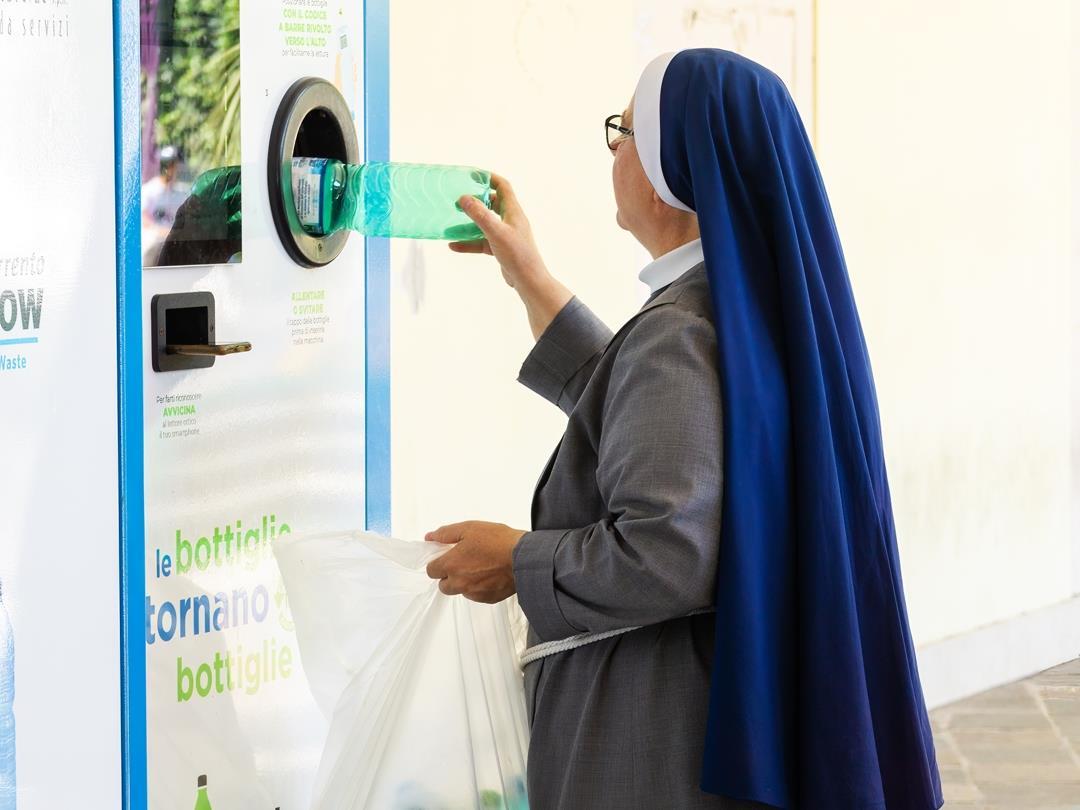
At the time of writing, DRS schemes are in place in Sweden, Germany, Norway, Denmark, The Netherlands, Croatia, Estonia, Finland, Iceland, Slovakia, Latvia, Malta, Romania, Hungary, Republic of Ireland and Austria.
In this section we will look in more detail at just a few of these countries that have implemented it successfully, any issues that have arisen, and which are in the process of implementing.
Successful schemes currently in place
Some EU countries have DRS schemes reaching back decades, meaning they have plenty of data to draw on to illustrate the correlation with improved collection rates. Sweden pioneered its use in 1983 and has continuously updated its own system in the years since.
Earlier this year, for example, we reported that Sweden’s Deposit Return System (DRS) operator Pantamera (Returpack) confirmed that more than 2.8 billion PET bottles and aluminium cans were returned in 2024 – a 6% increase on the previous year, with every person in Sweden recycling 271 containers on average. It also stated that Sweden’s deposit return rate reached 87.6% last year, just short of the 90% target. In September 2025 it will increase its deposit value (from 1 to 2 SEK for cans and small plastic bottles, and from 2 to 3 SEK for large plastic bottles).
The success of the various DRS schemes can be attributed in large part to increasingly sophisticated digital systems. Germany’s DRS, for example, launched in 2003 and today covering nearly all single-use drink cans and bottles made from aluminium, glass and plastic, has been managed by RLG by Reconomy which offers IT systems to manage compliance and data collection, among other things. The country has achieved a return rate of 98%, by making it easy and convenient for consumers to return their containers.
Norway also has a successful and well-established DRS scheme. This is driven by an element unique to Norway: environmental taxation imposed by the Norwegian government. There is a basic tax for beverage producers on all single-use containers, plus a variable environmental tax that is reduced as return rates increase.
Containers with a 95% return rate or more are exempt from the environmental tax, creating a financial incentive for producers to participate in the DRS. Across Norway, the deposit return system is managed and run by Infinitum, the not-for-profit Central System Administrator.
Another notable success story is Lithuania. Its DRS was launched in 2016 and during its first year of implementation, the collection rate of drinks containers reached 70% and succeeded to improve by 20% during the second year to reach a 90% collection rate in 2017. The latest reported overall collection rates (2023) reached 92.3%.
Predictably, though, the implementation of DRS throughout Europe has not been entirely controversy-free. In Slovakia, the scheme has seen remarkable success with a collection rate in the first year (2022) of 71% and second year an even higher rate of 93%. Even so, in mid-2024 the Slovak Ministry of Environment proposed amendments to modify the national legislation regarding DRS to move it under state control, citing concerns that under the current regime it will ‘not achieve its established goals’.
Industry associations have expressed concerns that state intervention will compromise the transparency and independence of the scheme (see, for example, an open letter to this effect). As yet, these proposed changes have not been implemented but it could set an unwelcome precedent.
According to Nicholas Hodac, Director General of UNESDA: “We are not going to speculate on the intentions of the Slovak government but we as an industry have expressed serious concerns with those amendments. The reality is that the Slovak Deposit return scheme functions and indeed it has become a reference point for countries that are looking at introducing a deposit return scheme.”
New and on the horizon
Finally, we take a brief look at the more recently established DRS schemes, as well as those soon to be implemented as the PPWR deadlines move ever closer.
The Republic of Ireland - amid some initial confusion on the part of consumers – launched its DRS in early 2024 which is operated by Re-turn and has apparently seen a positive reception. Hungary also launched its new deposit return scheme (DRS) for single-use drink containers around this time, in a collaboration between TOMRA and central system administrator MOL Hulladékgazdálkodási Zrt. (MOHU). Encouragingly, in May 2025 Aldi Hungary reported that consumers have returned around 140 million items of single-use packaging via in-store REpont machines.
Most recently, on 1 January 2025, Austria became the 17th EU Member State to launch a deposit return scheme (DRS) for single-use PET and aluminium drink packaging. The DRS includes PET bottles and metal cans, from 0.1 litres to 3 litres in size. Consumers pay a deposit of €0.25, which is refunded when they return the empty drink container for recycling to a store selling deposit-eligible containers or other high-traffic areas.
Portugal is set to launch its national Deposit Return Scheme (DRS) for single-use beverage packaging in 2026, with non-profit SDR Portugal as scheme administrator and Sensoneo as IT solution provider. According to Sensoneo, while Malta launched its own DRS in November 2022, Portugal’s implementation will serve as a model for larger neighbouring nations such as Spain, France, and Italy. Another country due to launch their its schemes is Poland, projected October 2025.
Elsewhere, proposals have been drawn up for a Czech DRS system but as yet there is no specific date or concrete plans to implement this.
Is anything holding back DRS implementation?
Given the clear correlation between improved collection rates and the establishment of DRS schemes, it is perhaps surprising that so many European Member States are only now in the process of establishing them while others have yet to do so. Until you reflect that nothing is ever so straightforward when it’s a case of weighing up aspects such as identifying the ‘most sustainable’ solution, cost, convenience and consumer attitudes.
Some of the main roadblocks (and, more crucially, potential routes to address them moving forward) include:
What is needed is clearer, more standardized labelling and sorting information throughout Europe – something which UNESDA, among others, is actively lobbying for. Reverse vending machines such as those produced by Tomra also help consumer buy-in. These machines are equipped with advanced recognition and counting technologies for drinks containers. Automating makes the return process convenient, accurate and efficient for both consumers bringing back containers and the sites serving as return points.
Another possible way to address this is digital deposit return schemes (DDRS) such as those proposed by the DDRS Alliance – in fact several industry experts we’ve spoken to have expressed support for this. These use existing collection infrastructure, employing unique codes on beverage packaging through which consumers can be reimbursed automatically via an associated app. Such schemes have been trialled in some areas (we reported, for example, on a pilot in Belgium) but as yet these have not been fully implemented anywhere in Europe.
It is undeniably a complex system to implement at first and it is likely that retailers will be impacted most by this because they have to put in place the return systems. When it comes to brands, who are responsible for collection through current EPR systems, discussing DRS can seem like an admission that the current EPR system is not working.
“Contrary to EPR,” says Nicholas Hodac, “the DRS systems are not compatible with each other, so DRS Country A cannot “eat” a bottle from country B, whereas our EPR systems can easily manage the packaging which is privately imported by our inhabitants from another country.
Routes to address this include: Implementation of the existing legislation, for example Art 8a of the Waste Framework Directive, to ensure that all EPR and DRS systems are following the same standards; implementing it following best practices and stopping national experiments which are obviously not working; and investing in state-of-the-art sorting and recycling plants.”
Ultimately, it’s not a case of either / or when it comes to DRS and EPR – both are key to a functioning circular economy. “We should be much more open and innovative to see how we can combine the advantages of a deposit approach while not strongly harming the existing EPR system,” according to Expra, the extended producer responsibility alliance.
“We are advocating for better design-for-recycling in the products placed on the European market,” said a Plastic Recyclers Europe spokesperson. Products that are designed to be recycled at the end of their useful life will be more compatible with state-of-the-art sorting and recycling technologies, which ensures higher recycling of products overall.
“Plastics Recyclers Europe also supports an increased, separate collection of plastic waste, as it guarantees better quality of the final recyclates, allowing for their uptake in high-end applications. In this regard, the measures that need to be taken are the increase and harmonization of collection systems across the EU along with the new infrastructure, which will lead to a more stable and uniform supply of input materials to recycling plants.”
“If you introduce a DRS,” says an Expra spokesperson, “you are taking out one of the most valuable parts of the joint collection and recycling stream and establish ing an additional infrastructure just for a small part of the whole packaging stream. Of course it costs additional money to set up and maintain the DRS while making the overall collection system more expensive.”
No two DRS schemes are the same, of course, so according to Expra “the job of individual governments is to evaluate on a neutral basis using facts and figures. The decision should not be based on commercial interests on one of the stakeholders, especially not on the commercial interests of a machine equipment provider and the lobby input should be transparent and fair so that you know who is speaking in which commercial interest and not hidden by using the “coat” of someone else.”
And the overall costs may not necessarily be as high as some fear, depending on how the system is managed. Norway’s deposit return system, for example, is the responsibility of the country’s beverage producers – they pay 100% of the net costs for the system.
However, unredeemed deposits, revenue from the sales of container materials and other revenues (mainly from interest) are enough to cover the largest proportion of the costs – in 2021, for example, almost 95% of the expense was covered by these streams, with only 5.4% paid through an EPR fee from producers.
Can DRS help Europe meet its 2029 targets?
Given the current infrastructure in place across Europe, is the 90% bottles and cans collection target by 2029 a realistic one – and is DRS crucial to achieving this?
“With the collection rate for beverage bottles at 75% in 2022, the objective of 90% by 2029 is feasible at the European level if further implementation of DRS collection systems is applied in the countries that are currently discussing it,” says Plastic Recyclers Europe. “At the country level, the achievement of this 90% collection rate is likely to be missed if no urgent action is taken.”
This view is also shared by Eunomia: “A well-designed DRS is a proven way of achieving separate collection rates of 90% and higher. DRS also provides very high-quality data - every single beverage container placed on the market and returned is counted, so you can be absolutely sure of the level of separate collection being achieved.
So yes, the target is a realistic one. But Member States also need to take a good look at the quality of data currently being generated by existing schemes, and ensure they are confident that they are making decisions based on the right numbers.”
It is encouraging to note that industry organizations, such as UNESDA, Metal Packaging Europe and Plastic Recyclers Europe among others, are fully supportive of their implementation. Perhaps even more important is that many brand owners are in fact now shifting from the initial reluctance to support DRS to recognizing the central role it will inevitably play moving forward.
DRS alone is not the magic potion for building a true circular economy throughout Euorpe, but it’s a pretty vital ingredient of said potion. Of course, as Nicholas Hodac reiterates, “A lot will depend on the actions that are taken within the next two years because setting up a deposit return scheme is not something that happens overnight. We have to ensure that it’s well designed, because if it’s not well designed, it’s not convenient for consumers, and if it’s not convenient for consumers, it will not achieve its result.”
If you liked this story, you might also enjoy:
The ultimate guide to the Packaging and Packaging Waste Regulation in 2025
How are the top brands progressing on packaging sustainability?
Everything you need to know about global packaging sustainability regulation in 2025
The key to increasing the use of reusable packaging in supermarkets

ATS-Tanner’s banding solutions aim to reduce packaging waste, provide a practical alternative to plastic and improve recyclability. In

Rollon believes tertiary packaging machinery must perform without fail, showcased by its recent partnership with AMP Automation to develop palletizing

Packaging has never carried greater commercial responsibility. It influences how consumers perceive brands, how products perform in increasingly competitive markets

Paperworld Middle East, the region’s leading trade show for paper and stationery products, taking place from 13–15 October

What connects an experienced papermaker, the creators of cactus-based leather, the people conserving forests for future generations, and a

Packaging manufacturers are under constant pressure to increase output, reduce operating costs, improve sustainability, and maintain consistent product quality. One

Driven by the global sustainability trend, the EU PPWR mandates packaging reduction, recyclable design, and restrictions on single-use packaging.

In this edition of the Spotlight, Coexpan (part of Grupo Lantero) details how its rPS Food enables up to 100%

Drug delivery device company Nemera has announced its DuoSpray bi-dose nasal spray platform, a ‘non-invasive, needle free’ administration

Coveris has unveiled its mono-material sleeve solution developed for Dr Beckmann, said to use around 30% less material than

Prevented Ocean Plastic is a finalist in this year’s Sustainability Awards with its project seeking to recycle polypropylene (PP)

If PPWR forces us to rethink packaging anyway, why stop at compliance? Peter Stael, owner and partner at Across-Consult,