

In a rush? Click here to read a short summary of this article
Introduction
Plastic packaging demand in Africa is growing fast, but waste management systems have not kept pace – leaving most plastic in landfills, dumpsites, or the natural environment. This report looks at how scaling packaging recycling and reuse could cut pollution, create jobs, and improve living standards, drawing on case studies from across the continent.
Key Takeaways
-
Plastic production has risen from 15 million tonnes to over 350 million tonnes globally in 50 years, with Africa seeing rapid growth in packaging use due to low costs and versatility.
-
In Ghana, packaging makes up 60–70% of plastic consumption, yet less than 10% is recovered or recycled, partly due to the absence of food-grade recycling standards.
-
Corporate and community-led initiatives, such as ECCBC’s World Without Waste programme, have created local collection networks, empowered waste pickers, and piloted scalable return systems in Guinea and Morocco.
-
Social enterprises like Gambia’s NRIGG and Senegal’s Cofisac and Fumoa combine recycling with health services, training, and income generation, particularly for marginalised women.
-
The Afri-Plastics Challenge has funded solutions including Togo’s Green Industry Plast (turning waste into construction materials) and Nigeria’s Chanja Datti (supporting waste pickers and producing recycled plastics for manufacturing).
-
Partnerships like ALPLA and Re-Purpose in South Africa aim to expand waste collection networks, supply large-scale PET recycling plants, and create hundreds of jobs.
Conclusion
Africa’s plastic packaging challenge is both an environmental and social issue – but it also presents opportunities. Stronger recycling systems, clear regulatory standards, and partnerships between governments, industry, and communities could transform waste into economic value. The most effective models combine environmental benefits with job creation, health improvements, and local empowerment, offering a blueprint for a more circular economy across the continent.
Plastic production in Africa has surged from 15 million tonnes to 350+ million tonnes in the past 50 years – most of which ends up in landfills and dumpsites. In this report, we take a look at how tackling packaging waste in African countries could help to improve living and environmental standards.
The African Circular Economy Alliance is a government-led coalition of African nations aiming to accelerate Africa’s path to a circular economy that delivers economic growth, jobs and positive environmental outcomes.
Its ‘Five Big Bets’ for the continent’s path to circularity are food systems, converting food waste to organic fertilizer, for example; packaging, such as recycling plastic; electronics, including recycling and collection facilities; fashion and textiles and built environment.
The Alliance states that in 50 years, global plastic production has surged from 15 to 350+ million tonnes – and plastic packaging demand in Africa is growing due to low costs and multiple application areas. It suggests that recycling could mitigate the environmental effects but must be scaled to have a significant impact.
According to an infographic created by the Alliance, 13% of municipal solid waste in Africa is plastic, and dumped instead of recycled, and 90% of waste in African countries is disposed of in uncontrolled dumpsites and landfills.
Last year as part of our podcast series, Packaging Europe spoke to Clem Ugorji, founder and lead advisor at Circularium Africa Advisory - a partnership working to join up policies, programmes and partnerships to enable growth and sustainable development – and a consultant to the World Economic Forum (WEF) and the Global Plastic Action Partnership. In conversation with our editor at large, Elisabeth Skoda, he discussed the circular economy, plastic action, and the challenges the industry faces in Africa and beyond.
The World Economic Forum and Global Plastic Action Partnership contracted Circularium Africa to deliver a case study on trade, circular economy and plastic action in Ghana. Outlining some of the key findings, Ugorji stated that Ghana was producing more plastic waste than it had the capacity to manage, with packaging accounting for about 60-70% of plastic consumption in Ghana - and yet less than 10% of these packaging plastics are being recovered and recycled.
When asked how Ghana could create a sustainable plastic waste recovery and recycling system that could enable it to cycle out of the pollution issue and be able to transform it into opportunities for economic development, Ugorji said:
“In a market like Ghana, there isn’t even a regulation or approval standard for food-grade recycling that has been adopted by the country. The absence of that standard means that companies creating within that market cannot use recycled plastics for product production. Creating a market for recycled plastics would help to unlock some recycling rates.”
Building on the growing demand for plastic packaging, the need for plastics recycling and waste management and the absence of food-grade recycling standards, we take a closer look at the role of plastic packaging in African countries, how a circular economy might be facilitated and how packaging can impact people’s living standards.
Back in 2022, we interviewed the Equatorial Coca-Cola Bottling Company (ECCBC), a finalist in that year’s Sustainability Awards, to learn more about its work with communities in Guinea and Morocco to improve collection and recycling systems.
As part of its World Without Waste programme, the company aims to collect and recycle one bottle or can for every one its sells and use at least 50% of recycled material in its packaging by 2030.
ECCBC said it aims to support programs improving waste collection systems and recycling networks in its territories and encourage their use because across Africa, public waste collection systems were “generally weak and often non-existent”.
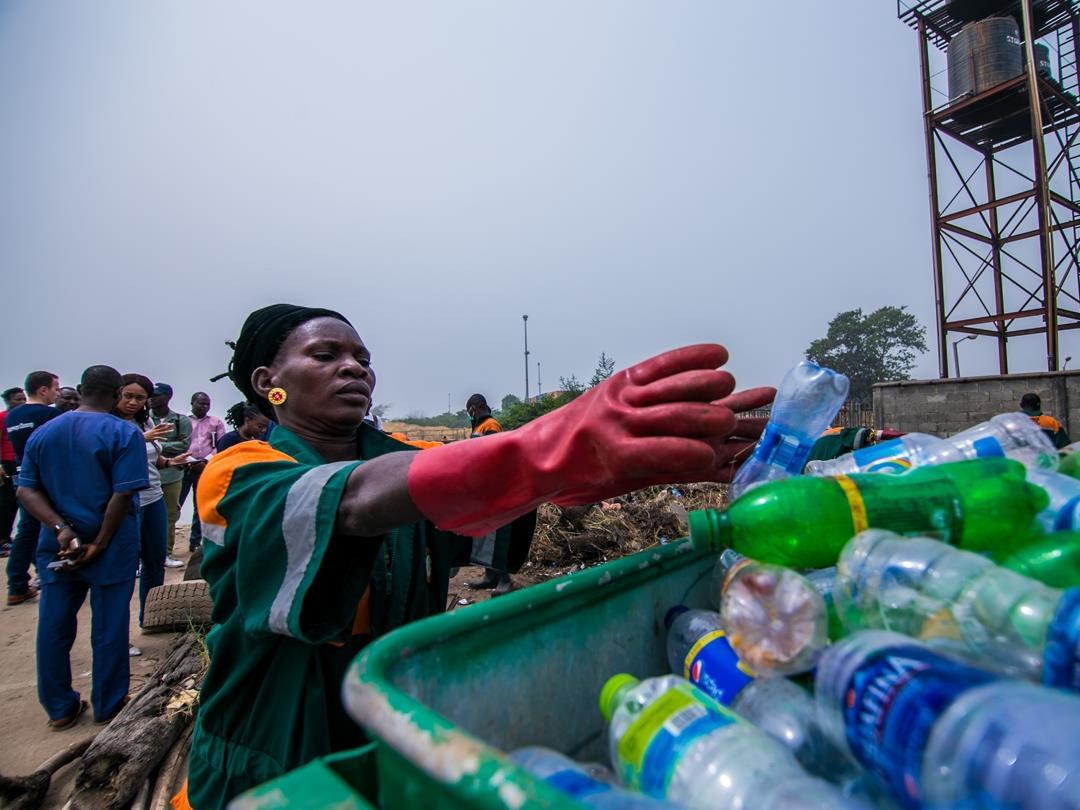
The initiatives are said to make a difference by creating collection networks able to sort and recycle packaging whilst empowering the waste picker community, creating green jobs and conducting campaigns to raise awareness.
ECCBC highlighted the Recycling Conakry project in Guinea and the network of collection points created in Essaouira (Morocco). The Recycling Conakry project worked on widespread introduction of waste pickers to mitigate the waste in the region, collecting plastic beverage containers and aluminium through a door-to-door collection process with a community of 600 waste pickers.
In Morocco, a network of collection points was created between consumers, cafes, restaurants, retailers, and schools for bottles after consumption. Managed through an app, the project was a pilot model that can be scaled to other cities.
How can managing packaging waste and recycling improve people’s living standards?
Part of the Aga Khan Development Network, the Aga Khan Fund for Economic Development (AKFED) promotes entrepreneurial activity and supports private sector projects in Senegal, with the profits reinvested in development projects. The Fund is involved in packaging services through Industrial Promotion Services (IPS) companies including Cofisac and Fumoa, based in Dakar, Senegal.
According to AKFED, both companies improve quality of life in their work areas through the IPS group solidarity fund used to prevent and detect HIV, TB and malaria, care for workers sick with AIDS, and establish health insurance, distribute mosquito nets and organise blood donations.
In 2020, Sacred Groves spoke to Isatou Ceesay about her community recycling project, Njau Recycling and Income Generation Group (NRIGG), which employs 1,100 people in four separate communities in the Gambia.
Created on the basis that many of the items poorly disposed of by Gambian communities have reuse value, NRIGG employs marginalised women to make recycled bags, mats, purses and jewellery for resale at markets or through the charity’s site from reclaimed items including plastic bags and plastic bottles.
The organisation also trains unemployed women to be community waste and recycling experts, training villagers in composting and recycling, kitchen gardening and the societal benefits of planting trees.
Last year, the Afri-Plastics Challenge provided funding for various African recycling businesses. Run by Challenge Works and funded by the government of Canada, it aims to reduce plastic waste on land, in the ocean, and in and around the African continent.
One of the funding recipients was Green Industry Plast – Togo based in Lomé, which creates collection units and sorting facilities for plastic waste in collaboration with local authorities in Togo’s major cities.
As well as reducing the amount of pollution in the natural environment, the solution aims to utilize conversion machinery to produce bricks, paving slabs, and whiteboards for use in schools.
CEO Gado Bemah remarked: “Up to 40% of households in Lomé dump their rubbish in the natural environment – it is a public health menace and destroying the Togolese coastal and marine ecosystem.”
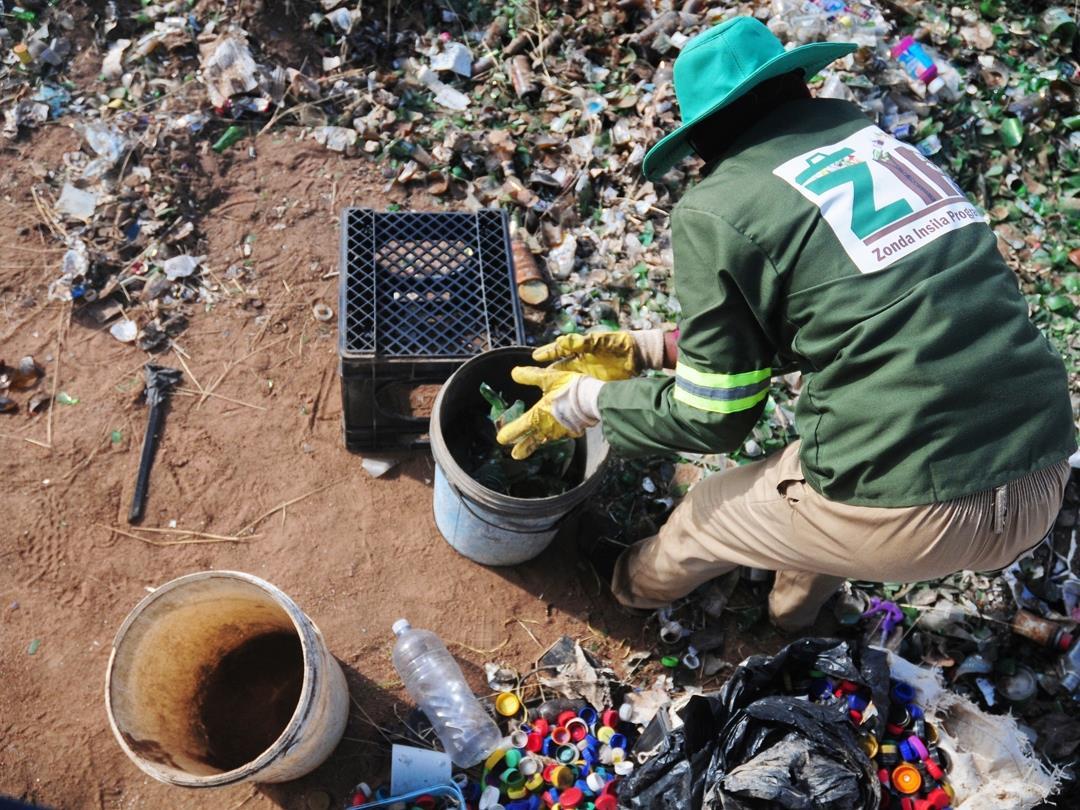
Another recipient is Chanja Datti, which developed an in-house end-to-end process for plastics waste recycling involving the direct purchase of collected plastic from waste pickers and aggregators, in an effort to support marginalised groups.
Recycling hubs operate across Abuja. Purchased waste is transferred to the company’s aggregation, processing, and manufacturing plant, where it is then processed into post-consumer recycled plastics to be sold to manufacturers.
Recycling business Ukwenza VR utilizes VR technology to demonstrate the journey discarded plastic takes at end of life to consumers, hoping to raise awareness of the environmental damage caused by plastic waste and encourage consumers to dispose of their plastic waste effectively.
Looking to the future, this year saw ALPLA and Re-Purpose form a strategic partnership to improve local waste collection and supply ALPLA’s PET recycling facility in South Africa, while creating new jobs for disadvantaged people in local areas.
Re-Purpose intends to provide its machinery and baling experience to develop collection models from the source, introducing collection programmes to buy-back centres, waste pickers, and schools.
ALPLA’s plant will receive a €60 million investment, with over 35,000 tonnes of rPET set to be produced there from the beginning of 2025. Based in Durban, Re-Purpose has four material recovery facilities around the KwaZulu-Natal province and intends to create “hundreds of jobs” through its collection programmes.
The collaboration plans to generate jobs in neighbouring provinces with the potential to eventually expand throughout South Africa.
If you liked this story, you might also enjoy:
The ultimate guide to the Packaging and Packaging Waste Regulation in 2024
How are the top brands progressing on packaging sustainability?
Sustainable Innovation Report 2024: Current trends and future priorities
Everything you need to know about global plastic sustainability regulation
Sponsored stories

How ATS-Tanner’s banding solutions align with the new PPWR
ATS-Tanner’s banding solutions aim to reduce packaging waste, provide a practical alternative to plastic and improve recyclability. In

How Rollon’s linear systems provide reliability for tertiary packaging
Rollon believes tertiary packaging machinery must perform without fail, showcased by its recent partnership with AMP Automation to develop palletizing

Discover what’s new at London Packaging Week
Packaging has never carried greater commercial responsibility. It influences how consumers perceive brands, how products perform in increasingly competitive markets

Paperworld Middle East partners with FSC to champion responsible sourcing across the region’s paper and stationery industry
Paperworld Middle East, the region’s leading trade show for paper and stationery products, taking place from 13–15 October

Made for Life: How Sappi reveals what trees make possible
What connects an experienced papermaker, the creators of cactus-based leather, the people conserving forests for future generations, and a

The advantages of all-electric adhesive dispensing in modern packaging
Packaging manufacturers are under constant pressure to increase output, reduce operating costs, improve sustainability, and maintain consistent product quality. One

YUTO won 12 international packaging design awards across three global competitions
Driven by the global sustainability trend, the EU PPWR mandates packaging reduction, recyclable design, and restrictions on single-use packaging.

How rPS Food aims to bring circularity to polystyrene packaging
In this edition of the Spotlight, Coexpan (part of Grupo Lantero) details how its rPS Food enables up to 100%
Read next

Your chance to decide the winner of our 2026 Readers’ Award
The nomination period for Packaging Europe’s 2026 Readers’ Award has ended, the finalists have been selected, and now it’

Nemera launches bi-dose nasal spray solution
Drug delivery device company Nemera has announced its DuoSpray bi-dose nasal spray platform, a ‘non-invasive, needle free’ administration

Coveris develops mono-material sleeve with 30% less material for Dr Beckmann
Coveris has unveiled its mono-material sleeve solution developed for Dr Beckmann, said to use around 30% less material than