

In a rush? Click here to read a short summary of this report
Introduction
This report looks at how Halloween’s growing commercialisation has made it one of the most wasteful holidays of the year, driven by single-use plastics in sweets, costumes, and decorations. It explores practical steps companies and consumers can take to make the celebrations more sustainable without losing the fun.
Key Takeaways
-
Packaging waste is severe: The average trick-or-treater produces nearly half a kilogram of packaging waste, and most of it is hard to recycle.
-
Costume waste is another big issue: UK consumers throw away the equivalent of 83 million plastic bottles’ worth of costume waste each year, with 85% of outfits ending up in landfill.
-
Brands are testing better materials: Companies like Nestlé, Adapa, and Sappi are rolling out paper-based sweet wrappers, while Purple Planet Packaging offers recyclable and compostable seasonal cups.
-
Reusable and refillable options are gaining ground: Initiatives such as Nestlé’s refillable Quality Street tins and reusable trick-or-treat bags show how design can encourage repeat use.
-
Recycling schemes exist but aren’t a long-term fix: TerraCycle’s and Rubicon’s candy-wrapper programmes help reduce waste, but the real shift must come from better packaging design at the source.
-
Consumers can take simple actions: Buying loose sweets, making homemade treats, reusing costumes, and repurposing household items for decorations all help cut down waste.
Conclusion
Halloween doesn’t have to mean overconsumption. Progress is being made in sustainable packaging and product design, but lasting change depends on both industry leadership and consumer choices. By rethinking materials and habits now, businesses and households can help make every future Halloween a little less scary for the planet.
Halloween is almost upon us, and Packaging Europe asks the question: is overconsumption the only way to celebrate? In the latest edition of the Brief, we consider viable ways for businesses and consumers alike to enjoy the spooky season without leaving a trail of packaging waste behind.
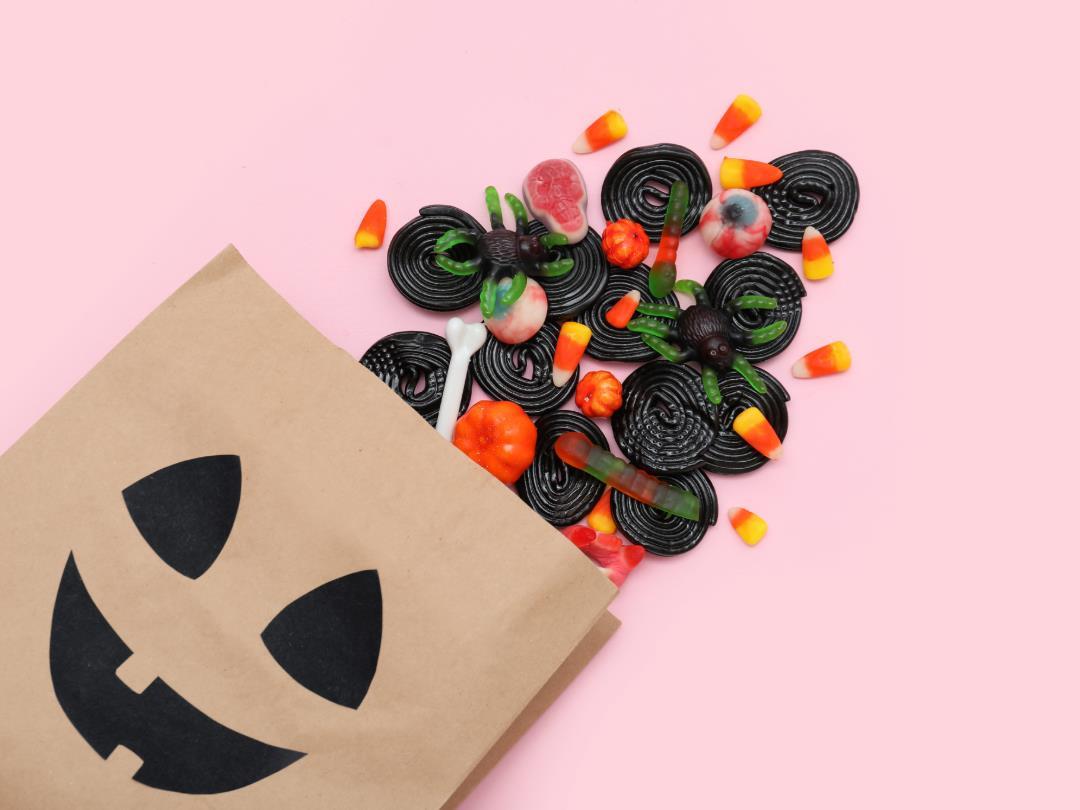
Almost every aspect of Halloween centres around single-use plastic. Confectionery immediately springs to mind, with Business Waste estimating that the average trick-or-treater generates around 450g of packaging waste. Author and journalist Lisa Morton sets the figure at half a kilogram. Regardless of the specific figure, many of these edible goods will be sold in mixed-material, hard-to-recycle wrappers.
However, the surge in pollution goes beyond just boiled candies or chocolates. Hubbub and Fairyland Trust previously concluded that, among British consumers, costumes alone generate the equivalent weight in plastic to 83 million Coca-Cola bottles – yet Business Waste warns that 40% of them are only worn once, and around 85% are thought to end up in landfill.
The impact of the disposable plastic products themselves – decorations, pumpkin carving kits, single-use cups and plates, and more – may seem to outweigh their packaging. The National Retail Federation warns that consumers will spend a total of $13.1 billion on seasonal products this year, with more shoppers than ever making purchases before October even begins; this trend has been linked to a growing perception of Halloween as a month-long ‘season’, rather than a single day.
Yet most of these objects will come in packaging of their own, be it plastic packets, cardboard boxes, sleeves, labels, and/or stickers. All of this contributes to the staggering amount of waste generated, especially when many consumers replace their Halloween goods every year.
It begs the question: is all this consumption an inevitable part of the holiday’s traditions? Must we avoid celebrations altogether, or can we find a less wasteful middle ground?
Less tricks, more treats
Hummingbird International links up to 30% of Halloween-related plastic packaging waste to sweets. In cases where conventional wrappers are truly unavoidable, waste management companies are attempting to improve the public’s access to flexible plastic collection processes.
Rubicon’s seasonal Trash or Treasure campaigns (previously styled as Trick or Trash for the Halloween period) saw boxes delivered to schools, businesses, and community organizations via the UPS Carbon Neutral Shipment programme. These boxes could be filled with used candy wrappers, then shipped back to a recycling processor to generate plastic pellets for new products.
While Trash or Treasure was paused last year, TerraCycle runs a similar service. Its Zero Waste Boxes lineup features a version intended for Halloween treats in flexible packaging, foil-lined wrappers, and blister packs, alongside a variant for packets and wrappers in general. Also utilizing ‘carbon-neutral’ UPS shipping, the company underlines its advanced third-party accreditation and trackable recycling history.
Nevertheless, initiatives like these will become less necessary if producers and distributors lead the way with circularity-minded packaging design. Selecting more sustainable formats would then be a feasible choice for consumers, especially for high-consumption traditions like trick-or-treating.
Paper formats are becoming increasingly common in the confectionery sector. Producers like Nestlé, Adapa, Constantia Flexibles, and Sappi are spearheading the switch into fibre-based twist-wraps for individual sweets, while Mondelēz is beginning to transition its multipacks into paper packets.
Seasonal products can take a similar approach. For instance, Purple Planet Packaging supplies foodservice providers with special-edition double-wall cups decorated with pumpkin, ghost, bat, and black cat motifs. Each is made with Delipac board, which is certified as recyclable, biodegradable, and compostable. CEO Mark Farr recommends the cups for pumpkin spice lattes, hot chocolates, and mulled drinks.
Up-and-coming formats could reduce waste further still; Nestlé takes the stage once again with returnable steel containers for bite-sized chocolates and refills for pre-bought Quality Street tins. These solutions are not yet permanent, but packaging-free approaches may be worth considering during a holiday where stockpiling sweets is part of the process – and can even persist through other seasons, with Quality Street refills already being implemented during the Christmas period.
The trick-or-treating tradition unlocks further opportunities for manufacturers of bags, buckets, and sacks. Consumers might be persuaded to switch to reuse if appealing and customizable decorations, from glow-in-the-dark components to personalized text, can create a sentimental attachment to a particular container.
This might lead them to store their reusables for future Halloween celebrations, or even continue to use them after the holiday ends. TLP Packaging cites the Promotional Products Association International’s figure that one reusable bag can generate over one thousand impressions in its lifetime. A Halloween-themed bag can then serve as a ‘mobile billboard’ for a brand if it is reused to carry groceries, school supplies, and other belongings at other times of the year.
The same creativity can apply to other seasonal goods. Wherever possible, costumes and décor could be contained and shipped in easy-to-recycle or reusable formats; as 31% of consumers buy their outfits online, this should also apply to secondary delivery packaging – and initiatives like Amazon’s Ships in Product Packaging programme can help narrow e-commerce packaging down to its essential components.
All these solutions are a starting point, but each relies on the acceptance and participation of consumers. Single-use plastics are readily available and convenient, so until alternative concepts become more mainstream, we must depend on, but also encourage, the general public to pay attention to their packaging choices.
‘Exorcising’ caution
With 85% of UK consumers thought to have purchased bags of individually wrapped sweets last year, City to Sea recommends substituting these solutions with goodies sold loose in a single bag, or else a larger treat portioned out into smaller pieces – for example, a chocolate bar broken into squares.
Alternatively, it joins organizations like Veolia in encouraging households to hand out homemade goodies. Foods like cookies, cupcakes, bite-sized pies, chocolate bark, and candy apples can be made with common household ingredients, which can then be stored for future use in day-to-day recipes. Many baking essentials can be bought in fibre-based bags or boxes, so this approach avoids the excess of individually wrapped, hard-to-recycle solutions.
Some might be tempted to cling to plastic wrappers as a safety net, given the urban legends surrounding intentionally contaminated treats (according to Today’s Elise Solé, there has only ever been one documented case of poisoned Halloween candy in the United States, yet the rumours persist) – or, more recently, health concerns in the aftermath of the COVID-19 pandemic.
Both fears have been debunked. Sociology and criminal justice professor Joel Best says he is “yet to find” a credible instance of a child being harmed by candies collected via trick-or-treating; and, even during the height of COVID-19, UC San Diego Health reassured the public that infection through the treats themselves was “low”.
On a different note, parents and partygoers can avoid the temptation to buy a whole new costume for every celebration. Clothing can be stored and reused, passed on to others, and replaced through second-hand shopping or renting to avoid unnecessary waste from single-use packets, boxes, labels, and tags.
WWF raises the similar possibility of using household items – unused bags, buckets, pillowcases, et cetera – to carry candy during trick-or-treating expeditions. These can be decorated and reused over multiple years for a more sentimental touch.
Some organizations go so far as to suggest that leftover packaging can be directly repurposed into Halloween costumes. SSI PKG provides a list of popular children’s characters that can be recreated using cardboard boxes, including those from Minecraft, Transformers, and Mario Kart. More general ideas include combining bubble wrap sheets and LED lights to resemble a ghost.
Consumers can also decorate their homes with tombstones, ghosts, or signs made from cardboard boxes. Drawing faces on empty plastic milk jugs and filling them with lights can be used to create glowing ghosts. Mesh bags can be reimagined as spider webs. Polystyrene peanuts can even resemble worms.
This might seem less wasteful on the surface, but we should be careful not to justify the overconsumption of packaging at other times of year, or to contaminate any materials that might otherwise be recycled. Repurposing an end-of-life material might avoid packaging waste from new purchases, but too much alteration can take recyclable substrates out of the loop and lead to ‘downcycling’.
Ultimately, there is no way to avoid packaging altogether in today’s world. Physical and financial access will impact consumer participation in certain solutions. Even so, there are always opportunities to avoid excess – and a holiday so widely celebrated by children and adults alike can be a valuable teaching moment for sustainability-minded behaviours.
Rubicon still offers educational materials for all ages while its Trash or Treasure programme remains on hold, but the public doesn’t need expert-level knowledge of circular infrastructure to make environmentally conscious decisions (although more awareness never hurts). Packaging and product manufacturers can take the first step by making alternative solutions available and convenient; sellers and media publications can raise awareness of what’s on offer, and consumers can make informed choices about their own consumption.
The waste crisis is a frightening concept all year round, and our efforts shouldn’t begin and end in October. Still, it is an opportune time to rethink traditional ideas of convenience and necessity, and to keep our planet in fighting shape for many Halloweens to come.
If you liked this story, you might also enjoy:
The ultimate guide to the Packaging and Packaging Waste Regulation in 2025
How are the top brands progressing on packaging sustainability?
Everything you need to know about global packaging sustainability regulation in 2025
The key to increasing the use of reusable packaging in supermarkets
Sponsored stories

How ATS-Tanner’s banding solutions align with the new PPWR
ATS-Tanner’s banding solutions aim to reduce packaging waste, provide a practical alternative to plastic and improve recyclability. In

How Rollon’s linear systems provide reliability for tertiary packaging
Rollon believes tertiary packaging machinery must perform without fail, showcased by its recent partnership with AMP Automation to develop palletizing

Discover what’s new at London Packaging Week
Packaging has never carried greater commercial responsibility. It influences how consumers perceive brands, how products perform in increasingly competitive markets

Paperworld Middle East partners with FSC to champion responsible sourcing across the region’s paper and stationery industry
Paperworld Middle East, the region’s leading trade show for paper and stationery products, taking place from 13–15 October

Made for Life: How Sappi reveals what trees make possible
What connects an experienced papermaker, the creators of cactus-based leather, the people conserving forests for future generations, and a

The advantages of all-electric adhesive dispensing in modern packaging
Packaging manufacturers are under constant pressure to increase output, reduce operating costs, improve sustainability, and maintain consistent product quality. One

YUTO won 12 international packaging design awards across three global competitions
Driven by the global sustainability trend, the EU PPWR mandates packaging reduction, recyclable design, and restrictions on single-use packaging.

How rPS Food aims to bring circularity to polystyrene packaging
In this edition of the Spotlight, Coexpan (part of Grupo Lantero) details how its rPS Food enables up to 100%
Read next

Your chance to decide the winner of our 2026 Readers’ Award
The nomination period for Packaging Europe’s 2026 Readers’ Award has ended, the finalists have been selected, and now it’

Südpack unveils mono-PP pouch solution for yoghurt drink market
Südpack has launched a recyclable, mono-material polypropylene (PP) flexible pouch aimed at the drinkable yoghurt market. The company identifies

Nemera launches bi-dose nasal spray solution
Drug delivery device company Nemera has announced its DuoSpray bi-dose nasal spray platform, a ‘non-invasive, needle free’ administration