
PPWR Compliance Starts on the Factory Floor: Why Packaging Data is the Missing Piece
About the webinar PPWR is not just introducing new packaging requirements. It is raising the importance of accurate, traceable and

Introduction
As packaging regulations tighten globally, the recycling industry is under pressure to deliver higher-quality recyclate, better traceability, and improved circularity. This report explores how intelligent sorting technologies, including digital watermarking, AI-driven analytics, and advanced sensor systems, are emerging as critical tools for meeting these demands and unlocking the next phase of packaging recycling.
Key Takeaways
Conclusion
Intelligent sorting is rapidly becoming a cornerstone of modern packaging recycling, particularly for complex materials and high-quality recycled content applications. While no single technology will solve the sector’s challenges alone, the combination of AI, digital watermarking, advanced analytics, and improved recycling infrastructure is reshaping how packaging is collected, sorted, tracked, and reprocessed. The companies and regulators that invest early in interoperable systems, traceability, and scalable recycling ecosystems are likely to be best positioned for the next phase of the circular economy.
It’s becoming ever-more important for the packaging industry to push for and invest in sophisticated sorting technologies to ensure not only that packaging is recyclable in principle, but actually meets the necessary conditions of a circular economy in practice as well.
After all, metrics such as recyclability and PCR content are increasingly regulated; in the EU alone, the Packaging and Packaging Waste Regulation (PPWR) states that all packaging will need to be recyclable by 2030, producers will be obliged to pay extended producer responsibility (EPR) fees, and strict mandatory minimum recycled content targets will need to be met.
And there are many challenges to address in order to meet regulatory requirements, including ongoing difficulties in collecting, sorting and recycling flexibles, achieving food- and medical-grade PCR and maintaining traceability across increasingly complex supply chains, to name just a few.
Intelligent sorting technologies can help address these by:
Advanced sorting of packaging waste has moved far beyond traditional mechanical sorting and NIR technologies, which struggle to distinguish between food / non-food, complex multilayer or coloured plastics. Today these incorporate advanced optical sorting, AI analytics and digital watermarks, among others.
We take a look at some of the most widely talked-about advanced sorting technologies available to meet the demands of the various packaging formats and types, examining the recent advances in the field and the enabling conditions required to scale them to the levels needed to meet regulatory demands.
Digital watermarking: The HolyGrail
We start here because, as long-term readers of Packaging Europe will know, we have been following the story of the HolyGrail project – the aim of which is to prove the technical and economic viability of digital watermarks for accurate sorting of packaging waste – since its beginnings in 2016. Since then, the project has moved through phases 2.0 and 3.0 to successful industrial testing on non-food PET bottles, flexible PP and PE packaging, and four different types of rigid packaging.
For those who are unfamiliar, a brief overview: the HolyGrail is driven by AIM (the European Brands Association) and supported by the Alliance to End Plastic Waste. It brings together over 130 stakeholders from across the value chain, including brand owners, retailers, packaging converters, sorting machinery manufacturers, recyclers and even EPR organizations.
Digital watermarks are imperceptible codes the size of a postage stamp. They cover most of the surface of the packaging, in such a way that at least one marker can be automatically detected when an object passes on a conveyer belt, ‘regardless of its orientation’. These marks contain detailed information on the packaging and its content (e.g. food or non-food; SKUs; material type) and can be detected and decoded by optical sorting devices using near-infrared spectroscopy.
Digital watermarking – in the case of the HolyGrail trials this technology was supplied by the digital watermarks technology supplier Digimarc – can allow for precise separation of even soiled materials in real time. Furthermore, because it provides detailed, accurate data on the pack and its contents it can result in higher-quality recyclate than would previously have been available through traditional sorting methods – thereby widening the field to produce food-grade plastics as well as sorting different grades of flexibles.
Another benefit of digital watermarking for sorting is the opportunity it offers for traceability and therefore for brands to meet their EPR obligations. By providing a kind of digital ‘proof of origin’ certificate for recycled materials, consumer goods companies can present evidence-based data on the products they put onto the market. In fact, this is arguably as vital long-term as the sorting process itself.
Another solution employing digital watermarking is eco2Veritas, a spin-off of Greenback Recycling Technologies, which is a traceability solution designed to verify and track the recycling of plastic packaging. It acts as an operational platform to connect supply chains with physical waste recovery. It also uses digital watermarking to ensure recycling claims are authentic.
As stated in a report by Eunomia, Advanced Sorting for Circularity, while “All advanced sorting technologies could offer increased traceability…. it is reasonable to conclude that this would be greater with digital markers than with object recognition.”
The R&D HolyGrail 2.0 Initiative was successfully concluded in March 2025. At the same time, the next stage was launched: HolyGrail 2030 - Circular Packaging, aimed at proving the economic viability of smart sorting and reprocessing into high-quality recyclates for all packaging chain stakeholders.
‘The right sorting technology’
But digital watermarking and traceability solutions such as eco2Veritas can only work alongside the right accompanying sorting technology. According to Richard Akkermans, R&D Senior Leader of HolyGrail Consortium member Mondelēz International: “The main achievement [of HolyGrail] is the proof that intelligent sorting works to a high degree of accuracy. No real surprises, just confirmation that the physical sorting technology needs to keep in sync with the improved detection technology!
“By working with the Producer Responsibility Organization (PRO) FostPlus in Belgium to centralize watermarking licenses, it has been relatively straightforward to then work with technology provider Digimarc, artwork houses and packaging convertors to incorporated verified watermarks into high volume flex packaging SKUs.”
The HolyGrail project has worked with several machinery providers to provide proof of concept, including most notably Pellenc ST and TOMRA. For example, after semi-industrial tests at the ARC – Amager Resource Center in Copenhagen, the Pellenc ST sorting unit prototype equipped with a Digimarc module was successfully validated at scale with average 99% detection, 95% ejection and 95% purity rates.
In more recent developments, in May 2025, Pellenc ST and Polytag announced a partnership to integrate UV tracking technology for material recycling with smart sorting solutions. This collaboration aims to enhance the capabilities of sorting facilities to track, identify, and sort packaging using invisible UV watermarks based on open GS1 standards, contributing to the broader HolyGrail 2.0 goals.
Again, by embedding smart data at barcode level directly into packaging materials, the collaboration aims to ‘empower waste management companies and brand owners with control over the recycling journey of their products, ensuring packaging stays within the circular economy’.
AI and deep learning
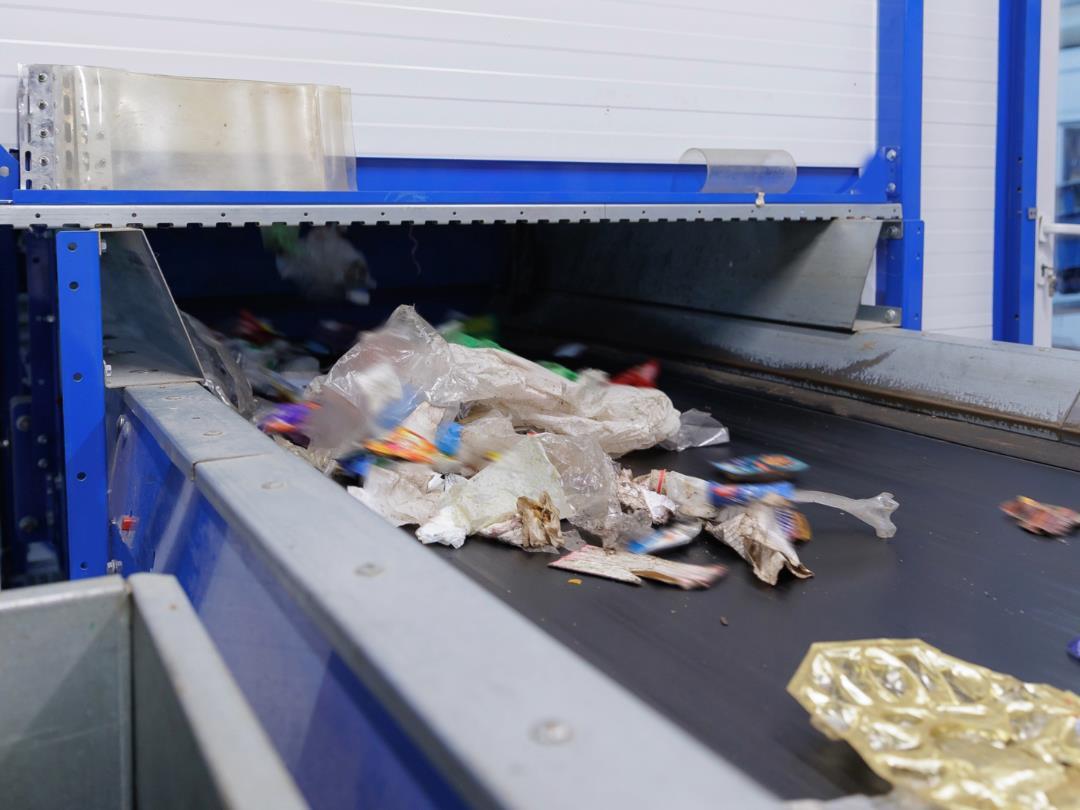
As the third piece of the puzzle, advanced sorting also relies on AI deep learning technologies to interpret data, analyze and categorize items on conveyor belts (although it should be emphasized that this is an extension of widely-used senor-based sorting such as NIR, not simply a replacement).
There are many examples of how deep learning is already being applied – and not just for digital watermarking. Pellenc ST, for instance, has demonstrated how AI and NIR technologies can be successfully combined – in this case specifically for sorting waste paper – through CNS BRAIN, which applies artificial intelligence, deep learning, and NIR/VIS technologies to paper streams in order to boost detection accuracy, improve sorting performance, and save energy.
It’s also notable that the industry is moving from single-machine AI to unified AI platforms. Earlier this year, TOMRA revealed its new AI platform from PolyPerception and three deep learning applications for its GAINnext technology – tackling ‘previously impossible’ tasks such as distinguishing between food-grade and non-food-grade PET – coinciding with TOMRA increasing its investment in PolyPerception to a 51% majority stake.
PolyPerception’s new platform marks the evolution of its AI-powered Waste Analyser solution, designed to improve sorting performance through end‑to‑end material tracking. According to the company, the platform’s natural language interface allows operators to ‘chat’ with their plant data in plain language, asking questions such as ‘How did changing the settings on the recovery line affect our purity?’. The platform understands the context and provides immediate natural language answers accompanied by data breakdowns.
The platform also features two search methods to help plants respond to changing material streams. With the similarity search, operators can right-click a problematic object to instantly identify every other visually similar item in the stream, which can be used for spotting fire hazards like batteries without the need to train a new AI model. Through the text and brand search, users can search for specific brands or object types to see what is passing through the facility in real time.
Another platform is Greyparrot’s Deepnest, which has already been trialled by companies such as Unilever and Amcor, and uses AI to give brands data on how their packaging is managed throughout recycling systems.
According to a Greyparrot spokesperson, “This type of comprehensive insight, backed by real-world data, into the waste journey of their products and packaging has never been available to brands before. Using Deepnest, brands and packaging producers can see exactly how the current material, pattern, shape and size of their packaging affects the journey through waste flows. This is critical information for brands who want to optimise recyclability of their products.
“The Deepnest platform then provides practical design recommendations that brands can use to stress test their R&D packaging improvements. It enables brands to properly quantify and model the impact of these packaging decisions. This can range from a smaller design change (e.g. such as shrinking the sleeve size), to a larger shift that will affect a brand’s entire supply chain.”
Next steps: enabling conditions
The ways in which waste materials are handled are already very different to even 10 years ago. It’s clear that intelligent, AI-driven sorting and analytics will be the standard in future – at least for challenging applications like flexibles, food-contact and pharmaceuticals. We can expect to see brands designing packaging based on the needs of real-world recovery data and traceability.
But there are, inevitably, still bottlenecks. What enabling conditions – both regulatory and infrastructural – are needed to scale intelligent sorting, fulfilling the aims of initiatives such as the HolyGrail?
Speaking about the HolyGrail in particular, Philippe Gendebien, Business Development Manager at Fost Plus, tells us: “Its success is linked to the effective combination of smart sorting & advanced recycling technologies, such as delamination/decontamination & dissolution. Chemical recycling is a complementary option for circularity of polyolefins. At Fost Plus & within HolyGrail we believe both are needed to ensure availability of food safe recycled content and a competitive market.”
Richard Akkermans adds: “In the longer term, confidence that EFSA approval of recycled plastic from new technologies will be granted is the main enabling condition. The willingness is starting to show and the recycling trials in 2026 should go a long way to assure the whole value chain about what data will be required to prove consumer safety.”
“If sufficient quality can be achieved and a viable business case established at the required scale,” adds Philippe Gendebien, “PROs such as Fost Plus – together with regional and European PROs, with support from EXPRA (the Extended Producer Responsibility Alliance) and CEFLEX – would be prepared to support investments in sorting and recycling infrastructure. The target timeline is 2029, to ensure readiness by 2030.”
Finally, we asked Russell Avens of snack brand Pladis Global (itself a part of the HolyGrail consortium) what he would say to those brands still reluctant to invest in these new technologies – and whether there are benefits to early adoption.
“Joining HolyGrail 2030 has both strategic and practical benefits. It gives companies the chance to help shape the technical and commercial foundations of circular packaging, rather than wait for the market to settle around them. Partners also get access to cross-value-chain collaboration, early insight into how intelligent sorting is evolving, and a voice in the practical issues that will determine scale-up – from feedstock quality and data to food-grade recycled polypropylene and future requirements under PPWR and the Digital Packaging Passport.
“The opportunity is to learn earlier, influence the standards, and be better prepared for where packaging regulation and infrastructure are heading.”
The success of the HolyGrail alone has demonstrated not just that advanced sorting is effective in real-world conditions, but also the importance of cross-value chain collaboration to bring about a transition to a new industry standard for waste processing.
But none of these technologies alone is the panacea: rather, as we have seen, a range of solutions, from digital watermarking to optical sorting and advanced AI analytics, among others, must continue in future to operate in tandem and be targeted to the needs of different materials and recycling objectives.
If you liked this story, you might also enjoy:
The ultimate guide to packaging innovation in 2026
Packaging and Packaging Waste Regulation: what to know in 2026
Everything you need to know about global packaging sustainability regulation

ATS-Tanner’s banding solutions aim to reduce packaging waste, provide a practical alternative to plastic and improve recyclability. In

Rollon believes tertiary packaging machinery must perform without fail, showcased by its recent partnership with AMP Automation to develop palletizing

Packaging has never carried greater commercial responsibility. It influences how consumers perceive brands, how products perform in increasingly competitive markets

Paperworld Middle East, the region’s leading trade show for paper and stationery products, taking place from 13–15 October

What connects an experienced papermaker, the creators of cactus-based leather, the people conserving forests for future generations, and a

Packaging manufacturers are under constant pressure to increase output, reduce operating costs, improve sustainability, and maintain consistent product quality. One

Driven by the global sustainability trend, the EU PPWR mandates packaging reduction, recyclable design, and restrictions on single-use packaging.

In this edition of the Spotlight, Coexpan (part of Grupo Lantero) details how its rPS Food enables up to 100%

Drug delivery device company Nemera has announced its DuoSpray bi-dose nasal spray platform, a ‘non-invasive, needle free’ administration

Coveris has unveiled its mono-material sleeve solution developed for Dr Beckmann, said to use around 30% less material than

Prevented Ocean Plastic is a finalist in this year’s Sustainability Awards with its project seeking to recycle polypropylene (PP)

If PPWR forces us to rethink packaging anyway, why stop at compliance? Peter Stael, owner and partner at Across-Consult,