

In a rush? Click here to read a short summary of this article
Introduction
This report weighs up the pros and cons of retrieving plastic waste from the ocean, especially where collection methods involve artificial intelligence. Using the non-profit organization The Ocean Cleanup as a case study, it dives into the environmental benefits and drawbacks of AI waste tracking, considers other methods of preventing pollution in the sea, and evaluates whether these approaches are valuable to the packaging industry.
Key Takeaways
- Between 50 and 75 trillion pieces of plastic and microplastics are thought to have accumulated in the world’s oceans. Much of the waste on the ocean’s surface comes from the fishing industry, whereas plastic packaging typically sinks to the seabed.
- Organizations like The Ocean Cleanup are attempting to collect ocean waste. The non-profit is starting to embrace AI as a means of tracking plastic pollution hotspots without relying on ships.
- While using AI is expected to increase the amount of plastic collected by 60% and reduce emissions from collection vessels, the Ocean Cleanup’s approach has been questioned. Criticisms include the environmental implications of AI hardware and data centres, the remaining CO2 emissions related to boat travel, the difficulty of retrieving microplastics, and the health and safety risks for marine life.
- Collecting legacy plastics from the ocean is also thought to overlook the core issue of plastic overproduction on land. An alternative approach is to retrieve plastic waste from rivers before it reaches the ocean. Organizations like UNEP are using AI to locate accumulation zones, while The Ocean Cleanup and the Waterfront Partnership of Baltimore harness solar power and river currents to capture waste.
- These methods still don’t address excessive manufacturing, but in some cases, the collected waste can be recycled into other products. However, this raises questions about the circular economy and downcycling. The retrieved plastics are sometimes too contaminated to recycle or compost, leading to incineration to generate energy.
Conclusion
The packaging industry is unlikely to rely on ocean plastic as a source of recyclate, given the likelihood of contamination and low quality. Ultimately, if producers focus on closing their own plastic loops, less of their packaging will end up in the ocean and require collection.
Efforts to collect plastic waste from the ocean are growing in popularity, and machine learning is emerging as a tool to monitor waste hotspots. But should we bring existing waste back to shore? Should AI ever play a role in it, and what does any of it mean for packaging? We dive deeper in the latest edition of the Brief.
By now, most of us will have come across WWF’s warning that the amount of plastic in the Earth’s oceans could outweigh fish by 2050. Between 50 and 75 trillion pieces of plastic and microplastics are estimated to have accumulated in the seas; the European Environment Agency indicates that plastic packaging and small plastics items constitutealmost 80% of all plastic waste, and it is suggested that 8-11 million tonnes of plastic leak into the ocean every year.
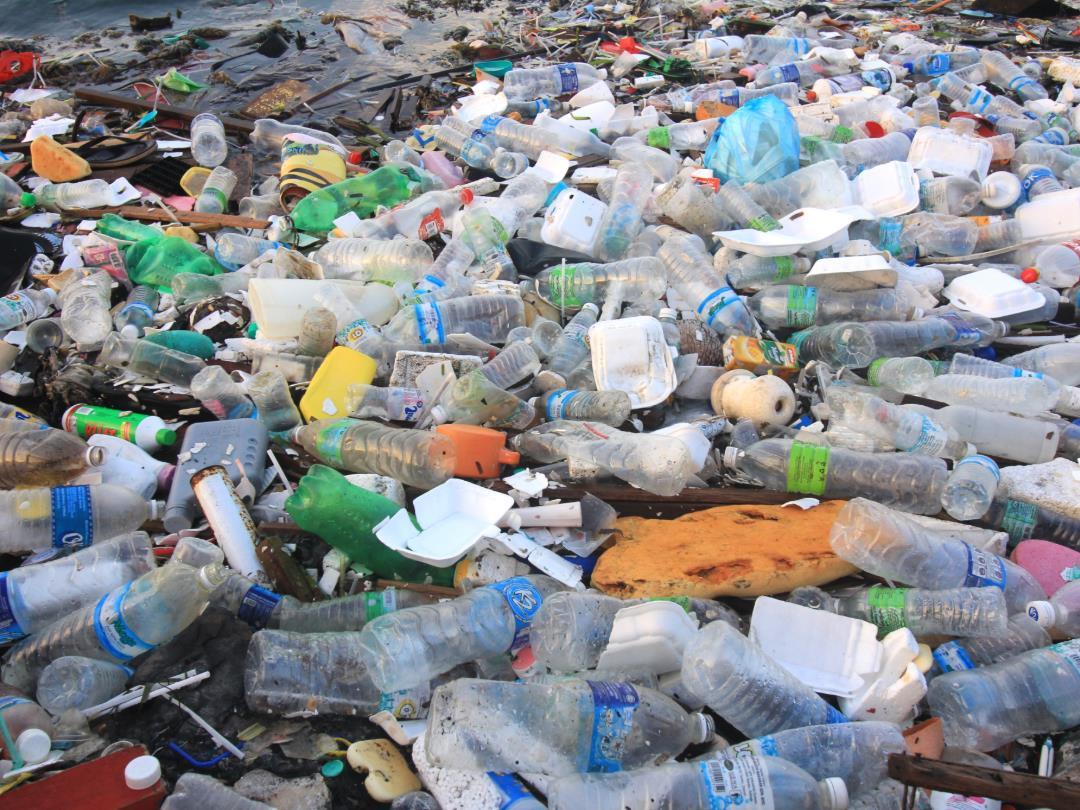
From an environmentalist standpoint, our impulse might be to retrieve this waste and bring it ashore – but this is much easier said than done. While 269,000 tons of plastic floats on the surface of the ocean, according to National Geographic, research attributes 61% of open water pollution to fishing gear like synthetic ropes, strings, threads, buoys, and nets. Packaging and wrappers are considered to be ‘relatively scarce’ at this level, instead filling with water and sinking to the seabed (plastic bags and bottles join beverage cans among the most common offenders).
Given their exposure to tides and sunlight, this kind of pollution is bound to break down. Dianna Parker from the National Ocean Service (NOAA) Debris Program describes areas of extreme build-up, or ‘garbage patches’, as a ‘peppery soup’ of plastics in various sizes and states of decomposition; while larger fragments of plastic may still be present, estimates suggest that around 92% of plastics on the ocean’s surface take the form of microplastics and fall below five millimetres in size.
This means it is never as simple as sailing into the open water and encountering whole, floating plastic packages, especially when the world’s oceans are so large. According to Parker, it would take sixty-seven ships one year to clean up less than 1% of the North Pacific Ocean. Factor in that the seas are in constant motion, and cleanup operations are faced with an ever-changing landscape – especially when the influx of plastic waste never stops.
Can AI make a dent?
As with many problems the modern world faces, artificial intelligence has been proposed as a solution. Machine learning and AI-based algorithms are expected to track moving hotspots and identify offshore plastic accumulation before a cleanup vessel sets sail – an outcome that observation methods like drone photography have fallen short of in the past.
In theory, this approach could help ocean waste collectors optimize their routes and capture the maximum amount of plastic in one journey. The ideal outcomes would obviously be to lessen plastic’s impacts on the natural environment, but also reduce transport-related emissions along the way.
One of the forerunners in this space is The Ocean Cleanup, a non-profit organization harnessing technology to combat ocean plastics. By installing AI-powered cameras on existing cargo ships, it uses object detection software to capture, process, and identify large objects floating beyond the borders of exclusive economic zones. The resultant information is registered on a database, which then contributes to a visualization map of polluted areas.
This approach is gaining traction. Back in July, The Ocean Cleanup partnered with Amazon Web Services in pursuit of an AI-powered detection system and cloud infrastructure to track plastic accumulation and facilitate predictive modelling.
Robin de Vries, lead on the organization’s Automatic Debris Imaging System (ADIS), explains that manual and on-site observation was the previous basis of the company’s research: “The current datasets were built using conventional methods (trawls) that are very labour-intensive, or less conventional methods (airplane) that are very costly and complex to organize.
“New technology and tools that use artificial intelligence are helping us to create detailed maps of plastic densities in remote ocean locations,” he continues. “Remote sensing could become a new tool to monitor floating ocean plastic continuously and systematically in offshore regions.
“Knowing how much and what kind of plastic has accumulated in the ocean garbage patches is especially important. This knowledge determines the design of cleanup systems, the logistics of hauling plastic back to shore, the methods for recycling plastic, and the costs of the cleanup.”
Claiming to have collected over 11,000 tons of floating plastic last year, the company aspires to retrieve 90% of all ocean waste by 2040. Implementing AI is anticipated to drive a 60% increase in the amount of plastic collected without increasing costs – but it has also proven to be controversial.
All artificial intelligence requires hardware, so metals must be mined and transported to build components. Not only do environmental (and potentially political) complications arise, but training a single AI model is believed to consume thousands of megawatt hours of electricity, evaporate valuable freshwater resources into the atmosphere, and emit hundreds of tons of carbon.
None of this hardware lasts forever, and its maintenance and disposal contribute to the ongoing generation of electronic waste, sometimes leaching hazardous substances like mercury and lead. So, too, do the data centres responsible for hosting this technology consume vast amounts of energy, largely generated by burning fossil fuels, and drain local freshwater supplies to keep their electronics cool.
Golestan (Sally) Radwan, chief digital officer of the United Nations Environment Programme (UNEP), admits that the available data on AI’s environmental impact is limited but “concerning” nevertheless, adding: “We need to make sure the net effect of AI on the planet is positive before we deploy the technology at scale.”
Ideas of best practice have started to emerge. For instance, optimizing software models can apparently lessen the computing power required and reduce water consumption. Even so, critics of The Ocean Cleanup’s methods question whether all these risks are justified, especially when they potentially outweigh the benefits.
Given the established scarcity of large plastic waste in the sea – the organization’s own research suggests that only 6% of the so-called Great Pacific Garbage Patch consists of macroplastics – some are uncertain whether this approach is particularly effective. Company founder Boyan Slat seems to think so, telling the BBC that “everything big starts small, right?”
Marine biologists sometimes disagree, and a handful have gone so far as to accuse The Ocean Cleanup of staging video footage to exaggerate its own impact. Whether or not this allegation is true, doubts have arisen about the organization’s cleanup method itself, and whether the introduction of AI could exacerbate its shortcomings.
Is our focus misplaced?
Two slow-moving boats are used to pull a U-shaped barrier through the ocean, capturing floating waste to return to land, ostensibly to be recycled into new products and sold to fund future cleanup efforts.
In previous expeditions, these two vessels were calculated to emit 600 metric tons of CO2 in thirty days. While an AI-powered database is set to avoid unproductive journeys – and one paper argues that carbon emissions from the cleanup process are ‘significantly lower’ than the potential long-term impacts of microplastics on carbon sequestration, although the effects on sea-air carbon exchange remain unclear – relying on high-emissions data centres risks cancelling out the benefits.
The Ocean Cleanup aims to develop a system that isn’t towed by large boats, and until then, declares its commitment to carbon offsetting while collaborating with its shipping partner Maersk to consider more sustainable fuels. Still, concerns extend to the barrier screen itself. It is reportedly made from polyurethane, which can flake under UV rays and the force of the tide – ultimately contributing to the kind of microplastic pollution that this collection method cannot account for.
Additionally, much like trawl fishing, the barrier solution could inadvertently capture wildlife, both in the screen itself and any fishing nets captured along the way. Beyond the obvious risks of injury or death for creatures like sea turtles, floating organisms known as neuston can grow on plastic debris itself, and not all can swim by themselves. Questions have been raised over whether their displacement could deplete vital food resources for other animals, including birds, and disrupt local ecosystems.
The Ocean Cleanup upfronts its use of underwater cameras to identify protected species. As part of its work with Amazon Web Services, it plans to use cloud-based infrastructure to bolster its detection systems and lessen reliance on human observers, who are otherwise required to monitor the footage 24 hours a day.
Yet an overarching argument is that bringing legacy plastics to shore does not tackle this kind of waste at its source: overproduction on land and the subsequent leakage into rivers. The Ocean Cleanup itself attributes nearly 80% of plastic waste in the ocean to around one thousand rivers worldwide, and while the optimal solution would be to produce less waste in the first place, other preventative measures include capturing waste before it can enter the sea.
Stemming the flow
Some river-focused solutions still utilize AI. Back in 2021, UNEP helped launch the CounterMEASURE project, which harnesses machine learning, drone imaging, geographic analysis, and citizen science to identify entry points and waste hotspots. This data is passed on to partner organizations and governments for use in legislation, protocols, campaigns, and training sessions for civil servants and local authorities.
Others are more reliant on natural factors. The Waterfront Partnership of Baltimore operates conveyor belt systems known as the Mr. Trash Wheel Family, which use solar power and the Jones Falls stream’s natural current to collect pollution autonomously. So far, the original Mr. Trash Wheel model holds a collection record of 38,000 pounds in a single day.
Sadly, though, the waste is often considered too contaminated to be recycled or composted. The Waterfront Partnership instead passes its plastic on to be incinerated for electricity, or else allows volunteers to turn the unsalvageable waste into artwork.
The Ocean Cleanup takes a similar approach. Its Interceptor Original, in particular, is described as 100% solar-powered, and relies on the natural current to retrieve plastics. The wider Interceptor range offers various high- and low-tech solutions for different river widths, depths, flow speeds, debris composition, and other variables.
So far, the company claims to have saved 29 million kilograms of waste from entering the ocean, and to capture between 1% and 3% of the world’s river-borne plastic emissions. Like the Waterfront Partnership, it turns its yield into new products; PET waste retrieved by Interceptor 006 in the Rio Las Vacas, Guatemala, was blended with other recycled plastic to produce vinyl records for a limited-edition Coldplay LP, and it has previously sold sunglasses made of recycled ocean plastics.
Perhaps these aren’t such cut-and-dry examples of downcycling when the plastic has long been contaminated and is unlikely to be suitable for further use in primary food or beverage packaging, for instance. Yet the question remains: what will these products subsequently become? Are they of high enough quality to establish their own loops, especially in the packaging space, or are we delaying an inevitable journey to landfill?
Combating the havoc plastics wreak on our waterways is a well-intentioned cause and likely has its benefits, and AI may help or hinder the environmental benefits of cleanup efforts. In any case, the argument for producing fewer plastics in the first place is a compelling one. Degraded pollution, potentially covered in organisms, is not our industry’s most reliable source of recyclate – thus why ocean plastics often become consumer products over packaging.
At least for our purposes, producers are more likely to find success by closing their own loops, whether by recycling their packaging into more of the same kind or introducing multi-use formats. In doing so, less of their output is likely to find its way into the ocean in the first place.
If you liked this story, you might also enjoy:
The ultimate guide to the Packaging and Packaging Waste Regulation in 2025
How are the top brands progressing on packaging sustainability?
Everything you need to know about global packaging sustainability regulation in 2025
The key to increasing the use of reusable packaging in supermarkets
Sponsored stories

How ATS-Tanner’s banding solutions align with the new PPWR
ATS-Tanner’s banding solutions aim to reduce packaging waste, provide a practical alternative to plastic and improve recyclability. In

How Rollon’s linear systems provide reliability for tertiary packaging
Rollon believes tertiary packaging machinery must perform without fail, showcased by its recent partnership with AMP Automation to develop palletizing

Discover what’s new at London Packaging Week
Packaging has never carried greater commercial responsibility. It influences how consumers perceive brands, how products perform in increasingly competitive markets

Paperworld Middle East partners with FSC to champion responsible sourcing across the region’s paper and stationery industry
Paperworld Middle East, the region’s leading trade show for paper and stationery products, taking place from 13–15 October

Made for Life: How Sappi reveals what trees make possible
What connects an experienced papermaker, the creators of cactus-based leather, the people conserving forests for future generations, and a

The advantages of all-electric adhesive dispensing in modern packaging
Packaging manufacturers are under constant pressure to increase output, reduce operating costs, improve sustainability, and maintain consistent product quality. One

YUTO won 12 international packaging design awards across three global competitions
Driven by the global sustainability trend, the EU PPWR mandates packaging reduction, recyclable design, and restrictions on single-use packaging.

How rPS Food aims to bring circularity to polystyrene packaging
In this edition of the Spotlight, Coexpan (part of Grupo Lantero) details how its rPS Food enables up to 100%
Read next

Your chance to decide the winner of our 2026 Readers’ Award
The nomination period for Packaging Europe’s 2026 Readers’ Award has ended, the finalists have been selected, and now it’

Nemera launches bi-dose nasal spray solution
Drug delivery device company Nemera has announced its DuoSpray bi-dose nasal spray platform, a ‘non-invasive, needle free’ administration

Coveris develops mono-material sleeve with 30% less material for Dr Beckmann
Coveris has unveiled its mono-material sleeve solution developed for Dr Beckmann, said to use around 30% less material than