

In a rush? Click here to read a short summary of this report
Introduction
The fashion industry’s problem with packaging sustainability is multifaceted and deeply tied to its overall environmental footprint. While fast fashion’s impact through overproduction and textile waste often makes headlines, packaging is an under-recognized yet significant contributor to pollution, emissions, and landfill waste—especially in the context of booming e-commerce.
- E-commerce exacerbates waste: Online shopping creates nearly 5x more packaging waste than in-store retail. Much of this waste is not recycled due to poor infrastructure or consumer non-compliance.
- Low transparency & misleading metrics: Tools like the Higg Index have come under fire for assessing only partial lifecycle stages. Many labels and certifications are self-reported, paywalled, or lack third-party verification. This results in greenwashing and prevents consumers from making truly sustainable choices.
- Systemic infrastructure gaps: Current waste management systems cannot effectively support compostables, circular plastics, or reuse schemes at scale. Lack of standardized regulations or collection systems worsens the issue.
- Consumer behaviour & reuse barriers: Despite growing interest in sustainable options, actual consumer behaviour lags behind. Return rates for reusable packaging are too low to justify large-scale rollouts in most B2C models.
Conclusion
The idea that there’s no shame in making mistakes or going back to the drawing board is a key one for brands to take on board as they navigate and weigh up all the different elements that go into measuring the overall environmental impact of their packaging. Fashion has a long way to go in all respects, but it’s positive to see all these different forces and angles of innovation at play.
What is the fashion industry’s problem when it comes to packaging sustainability – and what are the major routes to positive change? We explore these questions, with essential input from Georgia Parker, innovation director at Fashion for Good – a platform for sustainable innovation in fashion.
What is fashion’s problem with packaging sustainability?
When we talk about sustainability at Packaging Europe, very often we’re focused on the FMCG sector, or pharmaceuticals. But the fashion industry is notoriously one of the biggest polluters; the Hot or Cool Institute says the sector needs to cut its greenhouse gas emission by at least half from 2018 levels by 2030 if it wants to meet the Paris climate goals.
And while, in this world of fast fashion, the media focus tends to be more on the over-production of the garments themselves and the materials they are composed of, packaging is also a major contributor to emissions, waste and pollution.
The swelling of e-commerce has only added to this: research from South Korea found that online spending now generates 4.8 times more packaging waste than in-store spending and we all know that recycling rates are still nowhere near where they should be to deal with all this extra waste.
In this first section, we look at some of the issues surrounding the fashion industry’s relationship with packaging and the challenges brands must navigate to improve their environmental performance (not an optional thing these days, we should add).
Metrics and labelling schemes not fit for purpose
We don’t want to discuss the specific problem of greenwashing and lack of transparency in the fast fashion industry in any great detail here or list all the many, many well-known culprits (this was covered in one of our previous articles).
The latest Fashion Transparency Index report stated that “Once again, overall progress on transparency in the global fashion transparency remains too slow, and brand performance varies greatly. The average score of the world’s largest fashion brands creeps up by 2 percentage points to just 26%. Alongside record highs this year, 18 major brands score a 0% rating, up from 17 brands last year.”
We are also not talking about the environmental benefits of converting packaging waste to clothing, although this has its champions and detractors. But what we can say is that it is still a major issue and no brand, however well-intentioned, is faultless.
The fault may not all be with the brands themselves; one problem is a lack of transparency in the metrics, certification schemes, reporting tools and labels used when selling clothing which may worsen or even facilitate greenwashing (this report analyses just 10 of these, including WRAP, bluesign, EU Ecolabel and the Ellen MacArthur Foundation).
Dr Alana James, Assistant Professor in Fashion at Northumbria University, has highlighted this issue. “One common product-labelling tool within the industry was the Higg Materials Sustainability Index.
Introduced in 2011, the Higg Index was a rating system used by several large brands and retailers to determine and report the global warming impact and water consumption of different products, among other environmental measures.
The approach adopted by the index was challenged by the Norwegian Consumer Authority for limiting its assessment to only certain phases of a product’s lifecycle, such as the sourcing of materials. As a result, the index was suspended in June 2022.”
Other issues she highlights with reporting include brands self-reporting without being verified by an impartial third party; vested interests from the funders of the tools and indices; paywalls with many tools, which can exclude small businesses and limit their coverage; and a lack of any official baseline to assess the acceptable thresholds of any one product’s environmental footprint.
The legislative landscape
The revised PPWR and an increased emphasis on extended producer responsibility (EPR) is likely to galvanize fashion brands into rethinking their approach to packaging. The main elements of this to affect the fashion sector are: all packaging must be recyclable in an ‘economically viable’ way by 2030; mandatory recycled content levels will be set for all kinds of packaging; and reuse targets will also be put in place.
Furthermore, within three years and six months of its entry into force, packaging must feature a label conveying information about its material composition, and, for reusables, a QR code or other type of digital code carrier within four years.
The main paths to sustainable fashion packaging
In this section, we look at the ways in which the fashion value chain is working to reduce its environmental footprint. But it’s important to stress here, says Georgia Parker, that what works for one brand won’t necessarily work for another.
“When we look at all of the different work that we’ve done across recycled, recyclable, compostable, reusable packaging over the last five years, I think what’s been really interesting is there is no best fit or one size fits all when it comes to packaging solutions.”
Below are the main areas that brands in this space are working in today.
Reusables
Increasing uptake of reuse is a huge topic across the entire packaging industry, whichever sector we are talking about. And yet, when it comes to fashion, single-use (mainly LDPE mailers) is still very much the norm.
This will become a problem, particularly if we bear in mind that, in Europe, thanks to the above-mentioned PPWR, 10% of e-commerce transport packaging must be reusable by 2030 and 50% by 2040.
A 2021 report by Fashion for Good puts the case for reusables, stating that there is a ‘clear impact case, as well as myriad associated benefits. However, specific actions must be taken by all stakeholders in the value chain to ensure that reusable packaging scales in an environmentally and economically viable manner’.
These actions, in brief, include consumer education, collaboration across the supply chain, and innovation to optimize product and reuse processes.
The first of these actions – consumer education – is particularly important because, says Georgia, “one of the big challenges around reusable packaging has been that there can sometimes be a disconnect between what the consumers says they would do and what they actually do [the ‘value-action gap’.]
We also spoke to Michael Newman, CEO of reusable packaging services provider Returnity, about the challenge of consumer behaviour. “Reusable packaging for e-commerce shipments costs more than single-use, limiting adoption.
“This is compounded by the fact that consumers don’t return the empty packaging at the rates necessary to lower resource use. Though consumer interest in reuse continues to rise, there has not been a meaningful change in their actual behaviour once they receive the packaging.
“We believe the dialogue around reuse is ignoring the elephant in the room; there is little evidence that consumers will return empty packaging at the 90%+ rates necessary to enable reusable packaging to drive meaningful reductions in packaging impact. Stakeholders need to have honest - and difficult - discussions with a cross-section of consumers to determine the true costs and timelines necessary to get reuse rates above 90% for shipping packaging.”
Thus far, reusable B2C packaging has mainly only been workable in closed settings, such as corporate cafeterias or concerts. Is there really a workable way for this to extend to the wider fashion value chain? Georgia believes there is scope for this, citing a successful polybag collection pilot run in 2020 by Fashion for Good at selected London stores.
One area in which reusable packaging can be successfully used in fashion is in transit. For example, says Mike Newman, “Retailers are increasingly turning to Returnity’s Last Box [a reusable shipping box that apparently lowers the economic, operational and environmental impact of a retailer’s inventory fulfilment] to optimize their retail logistics.
“Vuori expanded to a full deployment after a successful pilot, and we are now in pilot and scale-up with retailers and logistics firms that will utilize our packaging system for millions of monthly shipments.”
Elsewhere, fashion brand Ganni has been using RePack’s returnable recycled plastic packaging for e-commerce orders, rental systems and internal staff orders.
This is not to say that there are no examples of B2C reusable fashion packaging: it can work when a company’s business model is inherently circular. A case in point is the fashion rental brand Nuuly, which has introduced its own reusable, recyclable tote made from recycled plastics for renters to return their clothing in.
Circular plastics
With the world now producing twice as much plastic waste as two decades ago, every sector has its part to play in addressing this. We have seen many high-profile brands make gestures towards this, for example: Forever 21 states that ‘many of its stores’ package products in ‘100% recyclable and reusable’ plastic and paper bags; Urban Outfitters says it is partnering with Polyloop to pilot closed-loop plastic recycling at its distribution centres; Boohoo Group announced in 2023 that all its customer garment packaging would be reusable, recyclable, or compostable within the year, while any remaining plastic would contain over 50% recycled content.
But we still don’t yet know how these stated good intentions will play out in practice, and some of these same brands are also, of course, mired in greenwashing controversies.
For fashion, perhaps the biggest and most visible polluter when it comes to plastics is LDPE polybags, with an estimated 18 billion produced every year to store, transport and protect clothing and footwear. Their production, use and end-of-use have a significant impact: conventional virgin polybags have a high carbon footprint and low recycling rates across the globe. But it’s not simply a case a phasing them out: in 2014, Patagonia experimented with completely eliminating the use of polybags. The results were disappointing as the brand realised it wasn’t possible to ship products without a plastic polybag without damaging them to the point where they became unsaleable.
Fashion for Good believes we should therefore be focusing not on eliminating all plastic polybags but on creating a circular system for them.
“Back in 2019,” says Georgia, “we kicked off a big project in this space in which we mapped out the different technology solutions that already existed and where there might be innovation gaps, and we identified three key levers to reduce virgin plastic waste.
“The first one was reducing plastic through process innovation – looking at automation within the DCs, seeing how we could reduce the amount of plastic waste at source. The second was seeing how we could close the loop on existing plastics, and within that, we had two workstreams: one that looked at how could we recycle the current PE poly bags, and one at how we could incorporate higher percentages of recycled content into new poly bags.”
You can read their comprehensive white paper which goes into great detail on the topic of polybags, alongside other routes such as reuse and compostables. Three of the points with regard to polybags this report highlights are:
- Brands and retailers should look for opportunities to reduce the total amount of material in polybags.
- Brands should work together to make a closed-loop system a reality.
- Brands should source currently used plastics from bio-based drop-ins and/or recycled content, where appropriate. Doing this will support the recycling value chain, and replace virgin, fossil-based LDPE with a lower-carbon alternative.
In line with this goal of closing the loop on poly bags, Fashion For Good was involved in a pilot project with Cadel Deinking (now owned by Erema Group), which explored a solution aiming to reduce the use and impact of virgin polybags in the fashion industry through looking at the entire package. Orchestrated by Fashion for Good in partnership with adidas, C&A, Kering, Otto Group and PVH Corp. Key successful outcomes reported from the project were:
- The ‘bag-to-bag’ concept is truly circular. Waste was collected from the brands and used as an input for Cadel Deinking’s recycling process to produce polybags that met the Pilot stakeholder’s specifications.
- The polybags incorporated 100% recycled content: 80% post-consumer & 20% post-industrial.
- Fast-track LCA conducted using the eco-cost methodology (Delft University of Technology methodology) indicated that circular polybags may have 1⁄5 the impact of virgin polybags.
Clearly, such wider systemic change is important for multinationals which need a large, steady supply of circular polybags in order to meet their scale requirements. But it’s also worth pointing out that there are some innovative smaller brands working with some interesting niche materials.
For instance, Maggie Marilyn, a fashion brand from New Zealand, uses carbon-neutral mailer bags, made from 80% calcium carbonate sourced from quarry waste and 20% non-toxic recycled resin (HDPE). These ØPACK bags, created by The Better Packaging Company, are said to be waterproof, durable, anti-bacterial and can be reused again and again. Maggie Marilyn encourages its customers to reuse these bags, however it says at the end of their life they can be recycled with soft plastics.
While it would be challenging if not impossible to source such materials on the scale needed for the larger fashion value chain, they certainly have their place and it’s worth continuing to explore the possibilities.
Move to fibre-based
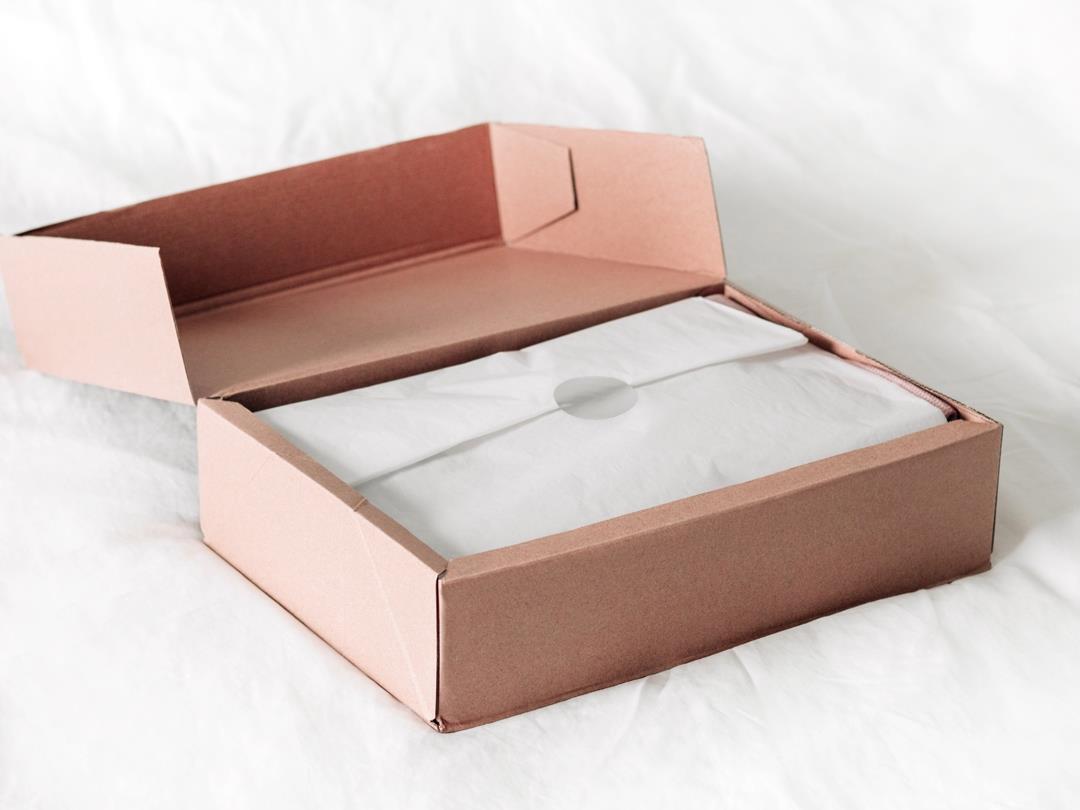
Leaving aside the question of circular plastics, there is also a wider shift towards fibre-based solutions across the entire packaging industry. A survey from alternative polymer producer Aquapak found that 83% of respondent fashion brands and retailers in the UK, US and Australia have replaced some plastic packaging with alternatives such as bioplastics, paper or cellulose.
According to this research, paperboard is the material that 71% of fashion brands and retailers are most likely to use for packaging to replace plastics. instead of plastic for their packaging over the next three years.
Fast-fashion giant Zara, while it has come in for its fair share of controversies, now delivers its online orders in 100%-recycled cardboard boxes made from boxes previously used in stores. Their goal is zero waste in their stores, offices and logistics centres by 2025.
Ganni has pledged to remove all unnecessary or problematic plastic packaging by 2025. To this end, in 2020 it stopped using plastic retail carrier bags and replaced them with FSC-certified paper bags.
Swedish design house CDLP ships all of its underwear in FSC-certified paper packaging that it says is curbside recyclable and naturally biodegradable. The packaging mimics plastic’s features with a transparent material that it claims to be both waterproof and durable.
The shift to paper – an inherently renewable material that is widely collected at curbside – where possible is regarded by many as a positive trend. But it’s important to bear in mind that paper is not automatically the best material simply for this reason. As always, we need to consider the overall environmental impact of materials and trade-offs in terms of carbon emissions. There are cases in which circular plastics will always be the better choice
The role of compostables
While we should note from the start that the systems for wider adoption of compostable fashion packaging are not in place, there is still increasing interest in this area.
One of the issues with any materials labelled as ‘biodegradable’ and ‘compostable’ – something of which most of our readers will already be aware – is that for many such materials the conditions required for biodegradability, such as heat and humidity, often mean they cannot be composted at home and industrial composting facilities are of course not readily accessible by consumers.
In addition, in the majority of end markets, there is still no separate collection system for compostables. In practice, therefore, they can be no more sustainable than any other material.
A case in point: fashion retailer Cider announced it was using Symphony Environmental’s highly controversial oxo-biodegradable plastics for e-commerce deliveries. These plastics contain a pro-oxidant additive claimed to speed up the decomposition process and prevent leakage of microplastics, but in early 2024 the Court of Justice of the European Union dismissed Symphony Environmental’s lawsuit against the prohibition of oxo-degradable materials in Europe.
All that said, there is some interesting work being done in the field that may bear fruit later. In 2022, Georgia tells us that Fashion for Good launched the Home-Compostable Polybag Project, a pilot to test alternatives to conventional single-use polybags. Orchestrated by Fashion for Good in partnership with C&A and Levi Strauss & Co., this six-month project uses bags from Fashion for Good innovators TIPA Corp. and Greenhope.
These bags are made with bio-based material to lessen fossil fuel consumption and are designed to compost in either home or municipal composting environments. The project aims to find alternative end-of-use for landfill-bound materials, and to provide an at-home option for consumers who do not have access to municipal composting programmes.
And indeed, for smaller brands there are realistic solutions available today. Premium brand Scotch & Soda, for example, has partnered with Tipa since 2021. In 2022, the Dutch fashion brand used 1.46 million compostable polybags. Finisterre uses marine-safe garment bags and mailbags made from unbleached kraft pulp, both of which it says can break down harmlessly in the soil and in marine environments.
Other examples of solutions Georgia suggests we keep an eye on include Cellophane and NatureFlex film from Futamura – bio-based cellulose films which are created from an FSC-certified wood-pulp feedstock, the latter of which is certified compostable.
In addition, Polyvinylaclohol (PVA or PVOH) is a fossil-based polymer that can dissolve in water under certain conditions. By formulating it in a different way, it can also be made into a film which it is thought could be durable enough for retail packaging.
Concluding thoughts
We’ve taken a look at some of the key elements of a more sustainable supply chain. But, as always, we also like to focus on the future and how brand owners can put these principles into action, as well as any other important areas the value chain should be considering.
We asked Georgia Parker to sum up the advice she would give. She suggests that the route a brand might go down with its packaging really depends on it first having an honest conversation about what the end destination is.
“Compostable packaging works where the correct composting infrastructure is in place, but you also need to be able to have collection and logistics if you’re looking at reusable or recyclable. If a brand’s packaging is mainly B2B, then there’s lots of opportunity to leverage reusable packaging because you have a nice closed-loop process where you can effectively capture that reusable packaging, get it sent back to the provider and have that quite streamlined process.
“Or for example, if you were looking at creating a pure collection stream for recycled or recyclable packaging, it’s much easier if you were collecting poly bags or packaging at the DC for example rather than at the consumer level to be able to get that pure waste stream for recyclability.
“Another main point is that you need to be clear on the problem you’re solving for. Is it that you want to move away from virgin feedstocks? Is it that you want to solve for end-of-use? Do you want to avoid packaging ending up in landfill? What’s the end destination, and what are the potential unintended consequences of implementing a new solution?”
Returnity’s Mike Newman agrees that not all solutions are created equal – and nor should they be.
“Progress is critical, and we should encourage experimentation and investments in long-term change. But brand owners and retailers need to do a better job differentiating between projects that create progress today - like packaging weight reductions, integrating more recycled content, designing for recyclability, etc. - and projects that will require significant changes in consumer behaviour to succeed. Grading them on the same scale - and not being transparent about when and how they will break through - is holding back momentum.”
Finally, it’s important to understand that the path to sustainability is not a smooth one; it involves dialogues and often, yes, disagreement. We can use the example of German online fashion retailer Zalando. Inditex – the owner of the Zara brand, among others – requested that Zalando replace all plastic bags for Zara clothes with cardboard or paper alternatives, but Zalando refused, claiming it simply could not run its logistics operations without the plastic polybags.
The dialogue between the two spanned over a year, with Zalando claiming that rather than replacing plastics it has been looking into different options such as folding clothes differently or reducing the thickness of plastic bags.
“This is a really great example where I know both of them are leaders in this space,” says Georgia, “but even between them, there were differing approaches and opinions on what their commitments were. I think it is really exciting to see this kind of interaction and it’s also important to say that it’s very rare for a brand or retailer to get it right first time.”
The idea that there’s no shame in making mistakes or going back to the drawing board is a key one for brands to take on board as they navigate and weigh up all the different elements that go into measuring the overall environmental impact of their packaging. Fashion has a long way to go in all respects, but it’s positive to see all these different forces and angles of innovation at play.
If you would like to hear our podcast with Georgia Parker for more on this topic, click here.
If you liked this story, you might also enjoy:
The ultimate guide to the Packaging and Packaging Waste Regulation in 2024
How are the top brands progressing on packaging sustainability?
Sustainable Innovation Report 2024: Current trends and future priorities
Everything you need to know about global plastic sustainability regulation
Sponsored stories

How ATS-Tanner’s banding solutions align with the new PPWR
ATS-Tanner’s banding solutions aim to reduce packaging waste, provide a practical alternative to plastic and improve recyclability. In

How Rollon’s linear systems provide reliability for tertiary packaging
Rollon believes tertiary packaging machinery must perform without fail, showcased by its recent partnership with AMP Automation to develop palletizing

Discover what’s new at London Packaging Week
Packaging has never carried greater commercial responsibility. It influences how consumers perceive brands, how products perform in increasingly competitive markets

Paperworld Middle East partners with FSC to champion responsible sourcing across the region’s paper and stationery industry
Paperworld Middle East, the region’s leading trade show for paper and stationery products, taking place from 13–15 October

Made for Life: How Sappi reveals what trees make possible
What connects an experienced papermaker, the creators of cactus-based leather, the people conserving forests for future generations, and a

The advantages of all-electric adhesive dispensing in modern packaging
Packaging manufacturers are under constant pressure to increase output, reduce operating costs, improve sustainability, and maintain consistent product quality. One

YUTO won 12 international packaging design awards across three global competitions
Driven by the global sustainability trend, the EU PPWR mandates packaging reduction, recyclable design, and restrictions on single-use packaging.

How rPS Food aims to bring circularity to polystyrene packaging
In this edition of the Spotlight, Coexpan (part of Grupo Lantero) details how its rPS Food enables up to 100%
Read next

Your chance to decide the winner of our 2026 Readers’ Award
The nomination period for Packaging Europe’s 2026 Readers’ Award has ended, the finalists have been selected, and now it’

Nemera launches bi-dose nasal spray solution
Drug delivery device company Nemera has announced its DuoSpray bi-dose nasal spray platform, a ‘non-invasive, needle free’ administration

Coveris develops mono-material sleeve with 30% less material for Dr Beckmann
Coveris has unveiled its mono-material sleeve solution developed for Dr Beckmann, said to use around 30% less material than