
PPWR Compliance Starts on the Factory Floor: Why Packaging Data is the Missing Piece
About the webinar PPWR is not just introducing new packaging requirements. It is raising the importance of accurate, traceable and

A study by CEFLEX and Ghent University finds ‘significant challenges’ in upscaling delamination, deinking, dissolution, and contaminant extraction technologies to meet the Packaging and Packaging Waste Regulation’s flexible plastic recycling and recycled content deadlines by 2030.
Aiming to identify potential benefits and challenges to scaling up these technologies, the partners selected twelve technology providers, alongside over twenty projects or technology developments, for analysis.
Technologies from IVV Fraunhofer, PureCycle, APK, Saperatec, HydroDyn, Keycycle, Smart Coloring, OBBOTEC, and the Industrial Technical Centre for Plastics and Composites (IPC) were chosen as case studies.
The analysis involved examining their potential for full commercial deployment within five years, and whether they could process a minimum of 10-15 thousand tonnes (KTPA) of materials annually at commercial launch. A value creation assessment and consequent investment potential were also considered.
CEFLEX’s Möbius platform was used to map material flows and infrastructure and build a probability model from over 80 inputs and assumptions. Different growth scenarios, market intelligence, academic analysis, and expert judgement from across the value chain were used to calculate the range of recycling capacity required.
Furthermore, an assessment of end market demand for recycled content, both in terms of quantity and quality, was used to split capacity into conventional, physical, chemical, and advanced decontamination recycling methods, which contributed to the selection and assessment of new technologies.
The results suggest that recyclers face ‘significant challenges’ in meeting the Packaging and Packaging Waste Regulation’s requirements – especially the targeted 55% recycling rate for flexible plastic packaging by 2035, with approximately 38% of existing flexible packaging structures said to contain multiple layers and materials that conventional mechanical recycling methods struggle to separate and decontaminate.
Of all the other technologies examined, dissolution was found to have the largest projected capacity at an estimated 250,000T/year by 2030. It is expected to require a ‘medium-level’ CAPEX investment.
Dissolution involves selected polymers being dissolved in specific solvents, then treated to extract a pure polymer. This ‘ultra-pure’ recyclate is suitable for food-contact packaging and other high-value applications, offering enhanced mechanical properties.
With pending business case demonstration and investment commitments in the pipeline, this technology aims to recover high-value polymers from mixed polyolefin waste and increase recycling rates. Smart sorting and regulatory approval for contact-sensitive recyclates are set to streamline its implementation.
However, it is set to require further process engineering improvement to address performance in continuous process and demonstrate the business case for mixed polyolefins.
Delamination is considered a ‘proven’ technology, with construction plants under construction or fully operational in 2024. Europe is anticipated to reach a delamination capacity of 50,000T – 100,000T by 2030, which is set to be backed by a ‘medium-to-low’ CAPEX investment.
It is set to improve recyclate quality for multi-material, multilayer flexible packaging, improving properties such as colour and odour. In turn, it is hoped to raise recycling rates in line with the Packaging and Packaging Waste Regulation, especially if it is combined with smart sorting for dedicated feedstock, polyolefin flake separation, and deinking.
While it is hoped to generate post-consumer recycled plastics that are safe for use in the cosmetics industry, CEFLEX notes that the economic feasibility of delaminating household waste is not yet known.
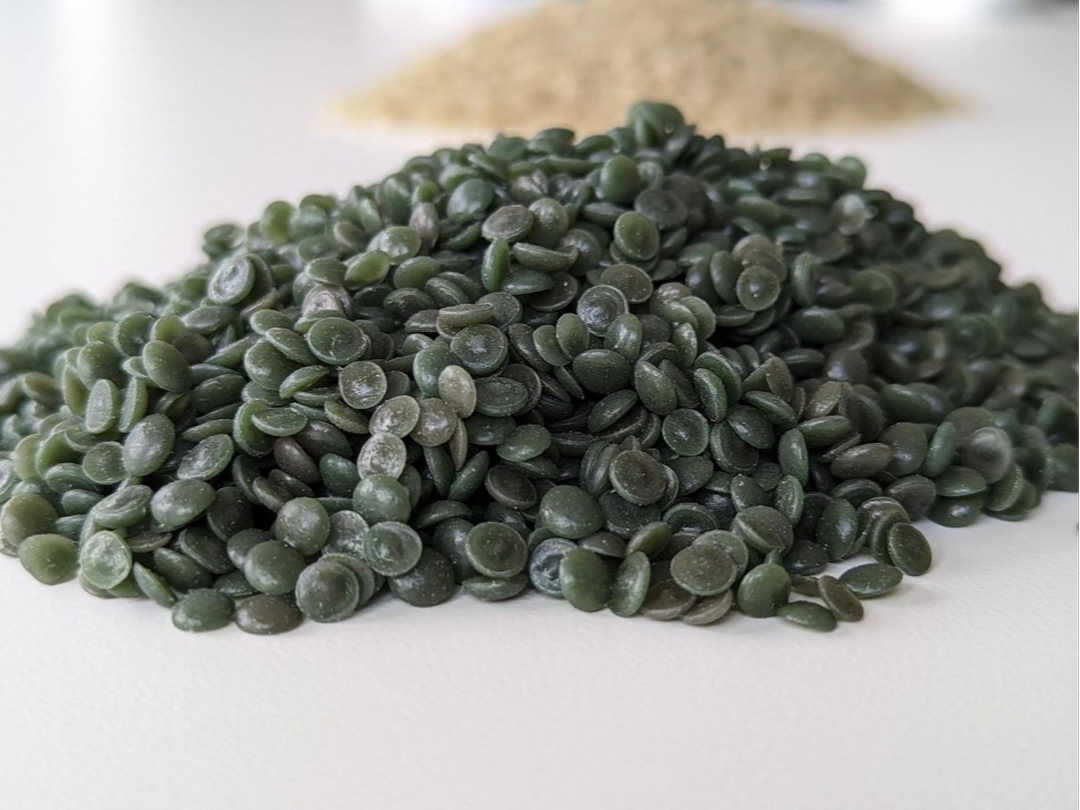
Similarly, deinking is said to improve the colour, odour, and mechanical properties of recycled plastic, enabling the use of recycled materials in contact-sensitive applications while requiring a ‘medium-to-low’ CAPEX investment. Sorting and pre-treatment are expected to maximize its yield.
“Deinking can play a key role in advancing the circular economy for flexible packaging in Europe and Packaging and Packaging Waste Regulation (PPWR) goals,” explains Dana Mosora, senior consultant at CEFLEX. “The business case for these innovations will also become increasingly attractive as specific sorting specification are introduced, maximizing process efficiency.
“This is particularly relevant for achieving CosPaTox-quality recyclates, ensuring safety and high performance for contact sensitive applications.”
Right now, Europe is expected to reach a deinking capacity potential of 50-100KTPA by 2030, but CEFLEX asserts that ‘far more will be needed’ to meet demand – and that further investment in commercial-scale plants is required.
Advanced wet friction washing is described as a ‘ready to go’ technology that removes contaminants and streamlines the extrusion process. CEFLEX suggests that it could serve as an add-on technology to improve feedstock quality for extrusion or chemical recycling, requiring a ‘relatively low’ capital investment – yet it requires feedstock preparation for optimal performance, which could become a roadblock.
Extracting ‘could set a new benchmark’ for food-grade recycled plastics, according to CEFLEX, since it claims to convert mono-material plastic streams into food-contact recycled polyolefins for use in ‘demanding’ applications. Regulatory approval for contact-sensitive recyclates is considered a key enabler.
On the other hand, it is a largely theoretical process at present. A successful demonstration has not yet taken place, nor have scale-up investments been made.
CEFLEX adds that individual technologies do not necessarily improve recycling rates or recyclate quality for every waste stream. For example, deinking is beneficial for recycling printed film waste, but mass-coloured film waste like laminated reverse-printed packaging must be delaminated before deinking is considered effective.
The study concludes that ‘urgent action’ is needed to tackle flexible packaging and bring the listed technologies to commercial scale – developments intended to align with the Packaging and Packaging Waste Regulation’s collection, recycling, and recycled content targets for 2030 and beyond.
Reportedly, providers are targeting scale-ups of between 50,000 and 200,000 tonnes per technology by 2030; dissolution alone is anticipated to reach 250,000 tonnes. Increases like these are thought to require clear regulation, access to suitable feedstock, suitable approval speeds for food-contact-quality recyclates, investment in commercial-scale facilities, and easy integration into existing recycling infrastructure – all of which are described as ‘major roadblocks’ at present.
To achieve the full potential of these technologies, CEFLEX calls for industry-wide collaboration to implement design-for-recycling guidelines more broadly, especially for multi-material and multi-layer flexible packaging; scale investment in recycling infrastructure to fast-track commercial deployment; streamline and clarify regulatory approvals, especially for contact-sensitive applications; and drive advancements in sorting and separation technologies to increase access to high-quality feedstock.
Public-private partnerships, targeted incentives, and other policy and financial mechanisms are also recommended, with the Waste Framework Directive and EU Circular Economy Action Plan among the other measures expected to create a ‘stable and attractive investment environment’.
CEFLEX adds that transitioning from high-quantity to high-quality recycling is ‘the most essential detail’ to achieve higher material circularity and meet format-specific recycling and recycled content targets. It recommends that post-consumer recyclate be generated in line with end market demand and quality requirements.
“Without strategic interventions across the value chain, the industry risks falling short of its commitments,” CEFLEX explains.
“By embracing innovation, collaboration, and strategic investment, the packaging industry can transition from quantity-based recycling to a quality model accelerating the circular economy.
“This shift is not just necessary for compliance – it is a competitive opportunity to lead the way in sustainable packaging solutions that are both economically viable and environmentally responsible. The time to act is now.”
Earlier this year, research by BASF, Endress+Hauser, TechnoCompound and the Universities of Bayreuth and Jena sought to improve the quality of plastic recyclate by identifying the composition of waste during the mechanical recycling process. Funded by the German Federal Ministry of Education and Research, the project utilized AI and spectroscopic methods to identify the chemical structure of recycled plastics.
The Alliance to End Plastic Waste also published its Solution Model playbook, in which it proposed an approach to converting mixed plastic waste into products of value via mechanical recycling – keeping investment and technology requirements minimal to ensure its accessibility for countries with less developed recycling systems.
Since then, Axens and SOREMA have teamed up to provide integrated and optimized solutions for mechanical and chemical recycling, intending to maximize yield and revenues from the waste feedstock to the recycled plastic.
If you liked this story, you might also enjoy:
The ultimate guide to the Packaging and Packaging Waste Regulation in 2025
How are the top brands progressing on packaging sustainability?
Everything you need to know about global packaging sustainability regulation in 2025
The key to increasing the use of reusable packaging in supermarkets

ATS-Tanner’s banding solutions aim to reduce packaging waste, provide a practical alternative to plastic and improve recyclability. In

Rollon believes tertiary packaging machinery must perform without fail, showcased by its recent partnership with AMP Automation to develop palletizing

Packaging has never carried greater commercial responsibility. It influences how consumers perceive brands, how products perform in increasingly competitive markets

Paperworld Middle East, the region’s leading trade show for paper and stationery products, taking place from 13–15 October

What connects an experienced papermaker, the creators of cactus-based leather, the people conserving forests for future generations, and a

Packaging manufacturers are under constant pressure to increase output, reduce operating costs, improve sustainability, and maintain consistent product quality. One

Driven by the global sustainability trend, the EU PPWR mandates packaging reduction, recyclable design, and restrictions on single-use packaging.

In this edition of the Spotlight, Coexpan (part of Grupo Lantero) details how its rPS Food enables up to 100%

Drug delivery device company Nemera has announced its DuoSpray bi-dose nasal spray platform, a ‘non-invasive, needle free’ administration

Coveris has unveiled its mono-material sleeve solution developed for Dr Beckmann, said to use around 30% less material than

Prevented Ocean Plastic is a finalist in this year’s Sustainability Awards with its project seeking to recycle polypropylene (PP)

If PPWR forces us to rethink packaging anyway, why stop at compliance? Peter Stael, owner and partner at Across-Consult,