

In a rush? Click here to read a short summary of this report
Introduction
This report explores whether paper bottles can evolve from niche prototypes into mainstream alternatives to plastic and glass.
Key Takeaways
- Major players are scaling up: Companies like Paboco, Pulpex, and the Bottle Collective are moving beyond prototypes, with some eyeing production in the hundreds of millions.
- Barrier technology remains the main bottleneck: Paper alone can’t hold liquids. Manufacturers are experimenting with polymer linings, spray coatings, and dry moulded fibre to balance functionality with sustainability—each with trade-offs in recyclability and energy use.
- Recyclability is still uneven: While many paper bottles claim to be recyclable, local infrastructure and economic factors often prevent them from being processed correctly. Initiatives using AI and tracking tech (e.g. invisible QR codes) may improve outcomes over time.
- Consumer understanding is limited: Confusion and accusations of greenwashing persist. Transparent communication is essential as many current paper bottles still include plastic components. Building consumer trust hinges on education and honest marketing.
- Carbon footprint is context-dependent: Paper bottles can outperform glass in scenarios with fast turnover (e.g. parties), but aren’t always the lower-carbon option. Innovations like dry moulded fibre significantly reduce production energy compared to wet fibre processes.
- Design differentiation will drive success: As the novelty fades, bottles must reflect brand identity and stand out on shelves. Future breakthroughs like atomic-level coatings could bring near-complete fibre-based solutions—but these remain aspirational for now.
Conclusion
For paper bottles to become a retail norm, the industry must continue investing in smarter barriers, scalable manufacturing, and consumer education. The next 2–5 years will determine whether this innovation reshapes packaging—or remains a premium novelty.
We have been following the evolution of the paper bottle for near-on a decade. In this time, we have observed how it has caught the imagination and attention of the industry in a way that few other packaging innovations have.
After all, if successfully adopted on a mass-scale it represents a real paradigm shift from the glass and plastic bottles are all used to seeing on supermarket shelves. But can it really move beyond niche to mainstream? This is the question we will be asking in this report.
It’s fair to say there was some initial scepticism around this – even the question, why? Paper is renewable, yes, but barrier functionality requires a great deal of cost and engineering to compete on similar terms with glass and plastics.
“Yes, the scepticism makes sense to a certain extent,” says Jamie Stone from PA Consulting, who, together with dry moulded fibre specialists PulPac, have developed their own paper bottle and fibre caps via their joint project, the Bottle Collective. “Paper inherently has no barrier and doesn’t hold moisture particularly well, and so there’s an enormous amount of development to do not only to form shapes, but also to add anything that’s remotely functional as a barrier beyond a few minutes of holdout.
“But the progress though across multiple different companies and developments has been pretty good to the point where I think we can now see line of sight in several places to commercially viable scale production in in the short to medium term future.”
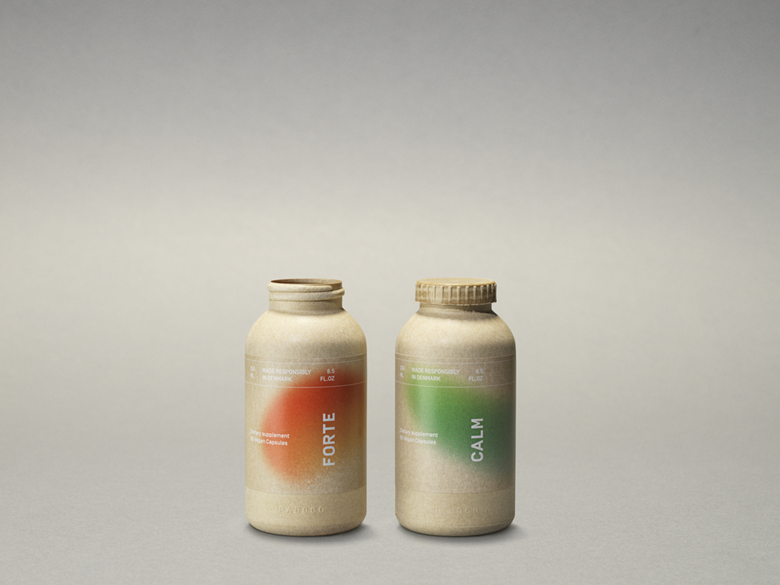
Key players in the paper bottle market
The most significant early pioneers in paper bottle technology are Paboco and Pulpex, although there have been other short-lived projects, mainly focused on proof of concept rather than mass-market adoption, such as Vinnova’s GreenPack. Here is a brief run-through of the current key players.
- Paboco: The Paboco bottle is formed from 85% wet-moulded fibre outer shell with a 15% HDPE barrier. Since its inception in 2010 the initiative has worked with beverage companies including Coca-Cola, Carlsberg and Absolut and last year commenced full-scale production to manufacture over 20 million of its bottles by the end of 2025.
The latest prototype of the bottle also features a paper closure from Blue Ocean Closures, believed to be the world’s first market-ready fibre bottle and cap.
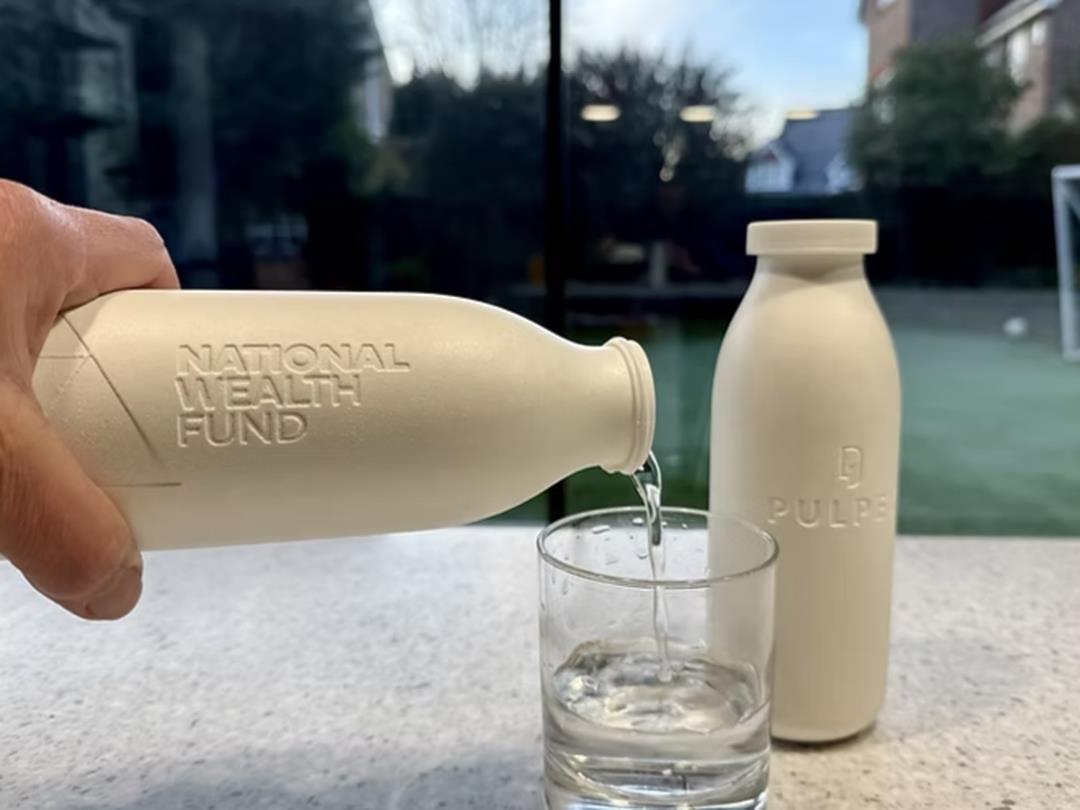
- Pulpex: Earlier this year, the National Wealth Fund (NWF) and the Scottish National Investment Bank led a Series D investment round for Pulpex’s fibre-based bottle, raising £62 million. Like Paboco, the Pulpex bottle is also made from wet-moulded fibre which it says is recyclable in existing paper streams. Some major brands that have worked with Pulpex since the launch of its bottle include PepsiCo, Kraft-Heinz and Unilever.
- The Bottle Collective: A collaboration between PA Consulting and PulPac, unlike Paboco and Pulpex the Bottle Collective uses dry-moulded fibre technology to create recyclable paper bottles. The company has produced the first bottle prototypes, recruited partners and says it is ready to release bottles at scale this year.
- The Absolut Company: Further to its work with Paboco a few years ago, Absolut has been working on its own paper bottle which has been trialled in a limited number of locations across the UK. The company has also trialled an ‘industry-first’ paper-based cap and bottle duo in collaboration with Blue Ocean Closures (BOC), as part of its goal to create a fully biobased bottle.
- Frugalpac: Working with a concept similar to bag-in-box, Frugalpac produces paper wine bottles, made from 94% recycled paperboard and a certified recyclable plastic pouch. The company recently announced that its bottles are now available at Target stores across the US.
But as the years-long efforts to bring the paper bottle to fruition indicates, the ‘perfect’ solution is an elusive thing. The challenge of balancing functionality with an environmental performance to outweigh that of PET or glass is a multi-faceted one – and it’s not the only challenge. For example…
Barrier performance
First and foremost, replacing plastic or glass bottles with paper means – as with any form of paper packaging substitution – developing the necessary barrier functionality to hold and protect the product it contains. We have seen above the different routes the main players in this field have taken, from polymer linings to bag-in-box, but the important thing to remember, says Louise Werner, director of the Absolut Company’s future packaging team, is that it’s always going to be an iterative process with small gains to be celebrated along the way.
“In our case, the vision is to create 100% bio-based bottle, but that’s no small feat. So we knew we had to do it in generations. We started with our first generation, which is a 57% fibre outer with a plastic insert like a balloon blown inside it. For the next generation, the aim is to spray the barrier inside the bottle and this is the application that should really allow us to achieve between an 80-85% fibre outer. Bear in mind that we have alcohol in our bottles which is pretty much a dissolvent, so we’re not there yet, but we’re working on it.”
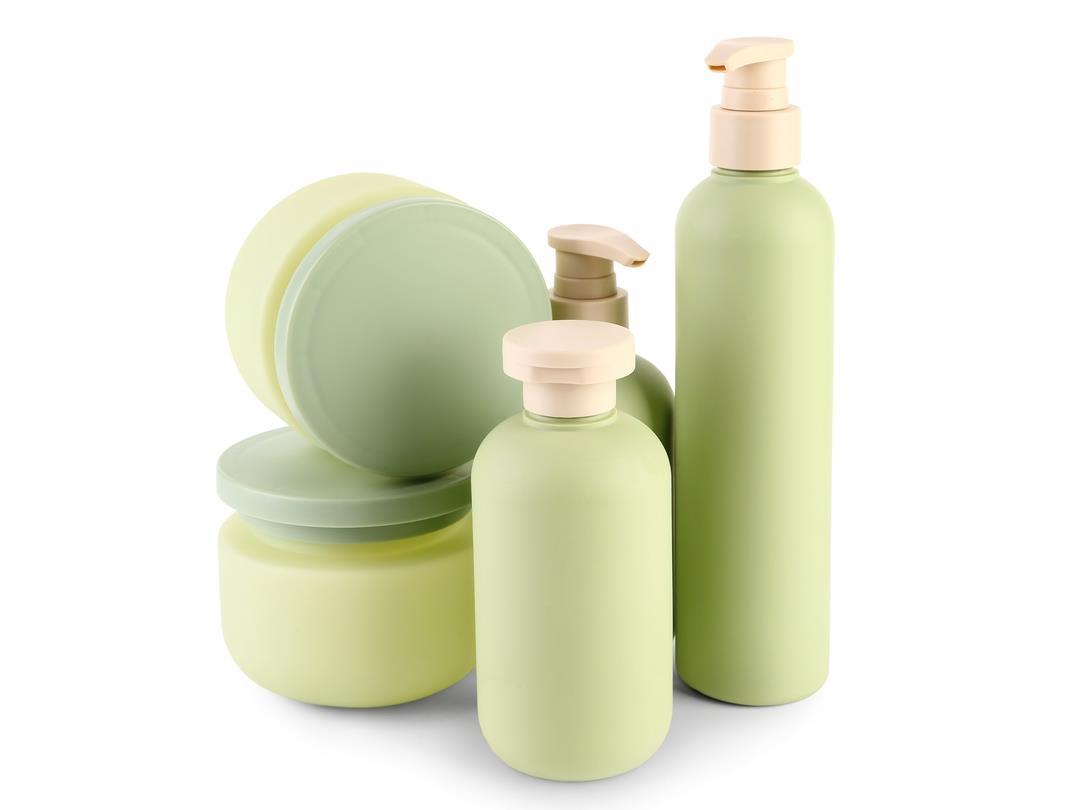
Managing the CO2 footprint
Nobody would claim that paper isn’t more energy-intensive to produce than plastic. That being the case, producers need to find a way to mitigate the carbon intensive production process in other ways downstream too. Understanding the sustainability benefits of paper bottles is also, says Louise, about understanding that in some situations they are the best choice, but it’s important to consider the individual use case.
“You might ask: What’s wrong with the glass vodka bottle? Nothing – glass is amazing and it can keep the product perfect for years, but while it has a longer shelf-life it does of course have a higher carbon footprint than a paper bottle. So if you are, say, buying an Absolut bottle for an occasional cocktail you would be best off with glass; if, on the other hand, you are having a cocktail party for 30 people then the paper bottles are perfect because there’s a high turnaround so we can lower the carbon footprint without, crucially, wasting any of the product.”
Aside from the relative advantages of one entirely different material over another, Jamie Stone was keen to point out the carbon savings that can be made from using dry- as opposed to wet-moulded fibre technology. “With wet-moulded, technology is advancing but it still has the same base – a wet slurry of paper – that needs to be dried once shaped. Drying all that water obviously uses up a lot of energy and it can take up to 90 seconds.
“The dry-moulded fibre base, on the other hand, has no water content which means that at the Bottle Collective, when we’re creating a party, we don’t just inject it in – we can press it into a shape and that happens in about three seconds so it’s orders of magnitude faster. All of this makes it both far more energy- and water-efficient.”
Designed for recyclability
Leaving aside the resource efficiencies that come from improved barrier properties, a paper bottle will not be a feasible long-term solution if it cannot also be recycled in existing streams – something with the latest generation of paper bottles claim to do – even those, such as Paboco’s, with HDPE barrier layers.
It is not just the technical recyclability of the pack that needs to be considered, however: recycling infrastructure can vary considerably over different areas, impacting the number of paper items that will be recycled in reality. A case in point given by Louise Werner is the 2023 pilot Absolut carried out in Manchester, UK.
“The reason we needed to do it in Manchester was because in the UK there are many different of boroughs and each borough has their own contract with the recycler so it’s almost like a spider web of different solutions, different recyclers. You know, who do you talk to and how do you make sure that this paper bottle is recognised for what it is? The paper bottle today could come to a point of recycling and depending on you know how modern that recycling facility is, it could be seen as something opaque and not recognized for what it is.”
Unsurprisingly, there is a buzz around the potential for AI to improve recycling efficiency. To give just one example of the early-stage research in this field, Pulpex and the University of Surrey are using AI-powered computer vision to identify and address imperfections while applying barrier coatings to fibre-based bottles for liquids.
”I have been working with Pulpex Ltd, as a Royal Society Industry Fellow, on an Innovate UK project, and now we are starting an EPSRC Prosperity Partnership project called SustaPack,” says Prof. Joseph Keddie from the Department of Physics at the University of Surrey. ”By applying innovative computer vision techniques powered by AI, the project aims to identify production defects in real-time, optimise materials and processes and achieve 100% reliability in the manufactured products.
”Equally AI is a great tool to enhance the skills of the existing workforce and maximise the efficiency of Quality Control in the factory.”
And according to Eric Näf, director of packaging development at Absolut, “While it’s hard to predict where AI will take us, I think this this is really an area of opportunity when it comes to recycling because one of our ambitions is to create a package that is easy to use and easy to be recycled as paper. But then we need to ensure that there are systems in place to actually detect this as paper so it ends up in the right streams.”
Companies such as Polytag are using invisible QR codes that can be read by recycling machines but, as Jamie Stone cautions, “it only works when it’s in more of the recycling facilities than not. If it’s in one and it’s effective, that’s great, but there needs to be standardization and that will just take time or really major investment.”
Greenwashing and consumer perceptions
One thing brands in particular, as the public-facing end of the paper bottles we buy, will need to address is the need for effective, clear communication with consumers on the benefits and limitations of paper bottle technology.
As Louise Werner put it earlier, this is a process of incremental stages, and each stage reduces the amount of plastic or coating needed for a viable paper bottle. How, for example, do they counter the kind of public furore that might ensue if consumers aren’t clear on why a bottle with a mainly fibre-based outer layer but a thin plastic shell is being marketed as a ‘paper bottle’ – as was the case with Absolut Vodka’s three-month trial in Tesco stores across Manchester in 2023?
“Many consumers will initially not understand that this is only the 1st generation,” says Louise Werner, “so this is where it’s important to start the conversation with them. So they may see a lot of plastic but this is actually the same as, say, your juice box or your milk carton. We have reached 57%.”
To this, Eric Näf adds: “There are many steps to get to a completely fibre-based bottle so we will have to go through a lot of iterations on the way. I think that’s all part of the scepticism on the part of consumers. We therefore have to try to be as clear as possible about what the product is and what to expect from it. We are not saying it has no effect whatsoever on the environment because that would be entirely irresponsible.”
It doesn’t help that, while there are perfectly legitimate paper bottle projects such as that between Paboco and Absolut, there have indeed been reports of genuine greenwashing in this regard.
Jamie Stone suggests that to some extent this is inevitable. “If you take the pulp off and you see what appears to be basically a plastic bottle with a paper jacket on then it’s understandable consumers may be confused about the benefits. So with our bottle, yes, we do use a polymer liner. Sometimes it’s PET, sometimes it’s PEF. We’re also exploring non-oil based polymers and things that go into alginates and beyond. But in each of those cases what we want consumers to understand with our bottle is if you destroyed the pack and took the pulp away, the thing in the middle isn’t a viable product on its own. It’s essentially a carrier bag of liquid, so not something you could sell on a shelf. We try to use the 90/10 policy; so something like a 2.5-3 gramme liner for a 500-600-gramme bottle.
“If you consider what the materials are doing: the pulp is there for structure, the branding – all that stuff that shows you that you want to purchase it – and the security; the liner is there to keep the liquid or the tablets or whatever safe until consumption. In the old days, plastic used to do both those jobs and that is what we are changing.”
Aside from solid linings, he also argues consumers should not automatically assume that all spray coatings – as we might suppose, given the huge weight reduction – are the most sustainable option.
“Clearly they’re a less obvious use of materials which might be assumed to be a positive thing. I’m personally not so sure because that spray coat needs to stick to the fibres in order to create a base to put the barrier on, so you need a primer – maybe two primers – and then some performance coatings. You might end up putting more contamination into the bottle while hiding it away a little bit safer and lowering the ability to get the fibres back, which will by definition make them less recyclable.”
In short: what the science shows and what your average consumer perceives are rarely the same thing. This is where the companies behind these projects must step in to educate.
Joseph Keddie puts it succinctly: ”To combat greenwashing for any paper bottle design, I would ask these questions:
- · Is its carbon footprint lower than for presently-used packaging?
- · Is it fully recyclable with paper?
- · Is it degradable in the environment in not recycled?
The answer is yes for all three questions for the Pulpex paper bottle.”
The longer view
We have now seen what’s currently possible with paper bottle technology and the various hurdles the different producers are contending with as they move from one generation to the next. But which will still be around in 10 years’ time, and is this sector really ready to move beyond niche to mass market?
In the case of the Bottle Collective project at least, Jame is optimistic that things can really ramp up in the near future, particularly given that PulPac has recently secured €20 million in funding from the European Investment Bank to scale its patented dry moulded fibre technology. They are at the 10,000-scale launch at the moment and see no reason why that can’t move to hundreds of thousands and then millions in the next 12-24 months.
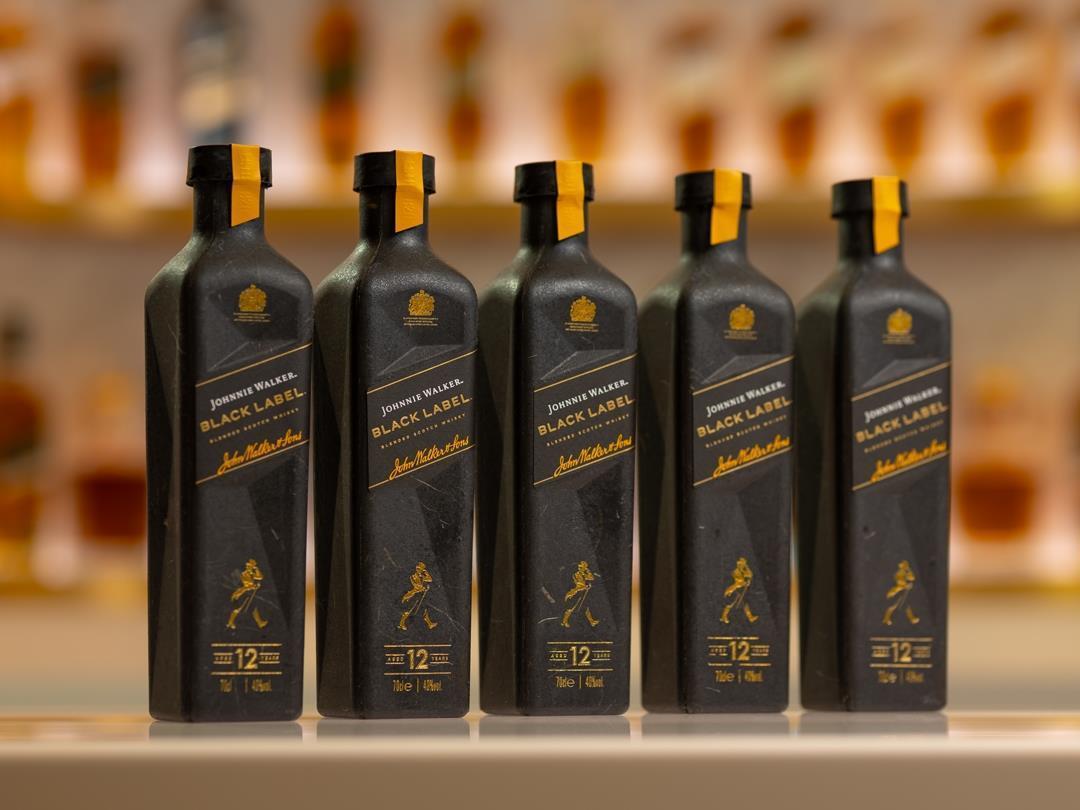
Longer-term, however, different factors may come into play that will shape which paper bottles thrive and which are consigned to the also-rans pile. Once the technology itself is well and truly established and is no longer seen as a novelty, success will likely come down once again to brand differentiation. A ‘standard’ bottle shape and design is not going to be enough.
“If you look at the work with did with Diageo on the Johnnie Walker bottle, it looks like a Johnnie Walker bottle in every aspect, it fits their brand language and we worked with their brand patterns. If you only produce a bottle that looks like a wine bottle then if you fill it with gin it will obviously look like a wine bottle with gin in it. If you look across the look across the industry and over time, so much money has been spent understanding structural brand language as a key brand driver and it won’t go away. So the technology that can deliver it, those will be the ones that will succeed and the ones that will drive a premium.”
(This of course, is quite apart from the obvious and alarming safety implications of having a standard shaped bottle for any kind of liquid product. Gin and orange juice go very nicely together, but not if you happen to be a curious toddler, for example.)
There are also still plenty of technological possibilities to explore in the quest for the most sustainable solution. If you thought the notion of paper bottles in itself was exciting – and presumably a good percentage or our readers will – have a look into something else Jamie Stone brought to my attention during our conversation: spatial atomic layer deposition. This, in simple terms, delivers a form-following high-quality coating at the atomic level.
“Currently this only works on 2D substrates but if it can be developed to work on 3D you will end up with effective barriers at 1% of material thickness, 99% paper. It’s not possible right now but the science shows that we might be able to do it tomorrow.”
In terms of expanding applications, Louise Werner cites refill packaging as an area that may be suited to paper bottles as barrier capabilities improve. Then there is the pharmaceutical sector. Ultimately, it’s extremely positive to see the number of paper bottle projects continuing to enter the market. As with any new concept, it is only through continued exposure from different sources that it will become normalized in the eyes of consumers. If there are only one or two players it will remain niche; tens or hundreds, and you begin to have a retail standard.
If you liked this story, you might also enjoy:
The ultimate guide to the Packaging and Packaging Waste Regulation in 2025
How are the top brands progressing on packaging sustainability?
Everything you need to know about global packaging sustainability regulation in 2025
The key to increasing the use of reusable packaging in supermarket
Sponsored stories

How ATS-Tanner’s banding solutions align with the new PPWR
ATS-Tanner’s banding solutions aim to reduce packaging waste, provide a practical alternative to plastic and improve recyclability. In

How Rollon’s linear systems provide reliability for tertiary packaging
Rollon believes tertiary packaging machinery must perform without fail, showcased by its recent partnership with AMP Automation to develop palletizing

Discover what’s new at London Packaging Week
Packaging has never carried greater commercial responsibility. It influences how consumers perceive brands, how products perform in increasingly competitive markets

Paperworld Middle East partners with FSC to champion responsible sourcing across the region’s paper and stationery industry
Paperworld Middle East, the region’s leading trade show for paper and stationery products, taking place from 13–15 October

Made for Life: How Sappi reveals what trees make possible
What connects an experienced papermaker, the creators of cactus-based leather, the people conserving forests for future generations, and a

The advantages of all-electric adhesive dispensing in modern packaging
Packaging manufacturers are under constant pressure to increase output, reduce operating costs, improve sustainability, and maintain consistent product quality. One

YUTO won 12 international packaging design awards across three global competitions
Driven by the global sustainability trend, the EU PPWR mandates packaging reduction, recyclable design, and restrictions on single-use packaging.

How rPS Food aims to bring circularity to polystyrene packaging
In this edition of the Spotlight, Coexpan (part of Grupo Lantero) details how its rPS Food enables up to 100%
Read next

Nemera launches bi-dose nasal spray solution
Drug delivery device company Nemera has announced its DuoSpray bi-dose nasal spray platform, a ‘non-invasive, needle free’ administration

Coveris develops mono-material sleeve with 30% less material for Dr Beckmann
Coveris has unveiled its mono-material sleeve solution developed for Dr Beckmann, said to use around 30% less material than

Sustainability Awards 2026 Finalist Interview: Prevented Ocean Plastic’s project for food-safe recycled PP
Prevented Ocean Plastic is a finalist in this year’s Sustainability Awards with its project seeking to recycle polypropylene (PP)

PPWR compliance: are we stopping too early?
If PPWR forces us to rethink packaging anyway, why stop at compliance? Peter Stael, owner and partner at Across-Consult,