

In a rush? Click here to read a short summary of this report
Introduction
This report explores the evolving field of edible packaging, highlighting its potential to address the urgent problem of plastic pollution.
Key Takeaways
- The global edible packaging market is projected to grow from $1.1 billion in 2024 to $1.5 billion by 2029, driven by consumer demand for sustainable packaging and plastic waste concerns.
- North America currently leads the market due to advanced industries and strong sustainability trends, while Asia-Pacific is expected to experience the fastest growth.
- Edible packaging offers multiple benefits: reducing environmental waste, enhancing nutritional value through bioactive compounds, and increasing convenience for single-use products.
- Leading materials include plant-based starches, seaweed, proteins, and chitosan coatings, with applications spanning edible wraps, films, coatings, containers, and utensils.
- Despite innovative prototypes and small-scale trials, edible packaging faces major hurdles - food safety, durability, cost, manufacturing scale, and consumer acceptance—that limit mass-market adoption.
Conclusion
Edible packaging holds significant promise as part of a broader solution to the plastic waste crisis, blending sustainability with novel consumer experiences. However, substantial technical, economic, and perceptual challenges remain before it can scale beyond niche markets. Continued innovation, strategic partnerships, and savvy marketing will be crucial to unlock its potential.
The concept of edible packaging is not a new one, even if we only consider that an ice-cream cone is a form of packaging. But in fact the use of edible materials for food preservation actually goes all the way back to the ancient Sumerians in Mesopotamia.
The difference is, we now face a severe plastic pollution challenge the likes of which the ancients could not have comprehended – and modern problems naturally call for modern solutions.
Yet when it comes to modern edible packaging technologies that focus on the development of advanced materials, it’s fair to say they have generally been viewed as a ‘novelty’ than a serious solution to today’s packaging waste problem.
As we will see, there have been many interesting trials over the years – often more in the area of ‘demonstrations’ of what’s possible such as design studio PriestmanGoode’s edible airplane meal tray – yet none have reached mass-market production levels.
But is the narrative changing – or is there a likelihood of this in the near future? Reports do suggest there is sustained interest. According to BCC Research, the global market for edible packaging is expected to grow from $1.1 billion in 2024 to $1.5 billion by 2029 at a compound annual growth rate (CAGR) of 5.6% from 2024 through 2029.
Furthermore, a Research and Markets report finds that North America is currently leading the way in the edible packaging market, accounting for 38.2% in 2024, “due to its advanced food and packaging industries, coupled with strong consumer demand for sustainable and biodegradable packaging solutions.”
Elsewhere, the report predicts that the Asia-Pacific region will see the fastest growth (with a CAGR of 7.1%) during the period 2024-2030.
If we are looking at market drivers for the expected growth in this market, we might cite the increasing consumer awareness/demand for what are perceived as more sustainable packaging solutions, coupled with ongoing concern regarding plastic pollution.
Why might edible packaging be seen as a panacea to these issues? There are various potential benefits, which include, briefly:
- Waste reduction: Because edible packaging is also biodegradable, it could reduce non-degradable environmental waste in landfill and oceans;
- Enhancing nutritional value: Aside from its environmental benefits, edible packaging can also potentially be formulated to include bioactive compounds to actually enhance the nutritional value of consumable packaging. It’s an intriguing prospect and research is ongoing in this area.
- Convenience: For consumers, the notion of a pack that is an integral part of the product and doesn’t need discarding after use could be attractive, particularly for single-use on-the-go purposes.
Applications and materials
Moving on from the general picture to look in more detail at the work being done in this field, it’s worth noting that at present, according to the above-mentioned Research & Markets report, Food & Beverages is the leading end-use sector.
Carol Culhane, President of International Food Focus Ltd, elucidates on what she sees as the most viable applications. “If the purpose of food packaging is to protect the food from contamination and disintegration from point of manufacture to point of consumption, then edible packaging itself must be protected by an outer layer of effective inedible packaging. Most likely, applications of edible food packaging are multiple single-serve containers packaged within an outer protective packaging.
“Researchers and food industry experts all agree that edible packaging will require an outer layer, just like ice cream cones are wrapped in paper and sold in a box. Those outer materials could also be made from compostable or sustainable materials.”
The Ellen MacArthur Foundation tells us that, perhaps fortuitously for this emergent niche, it is the food-related items that are the least likely to be recycled – i.e. sachets, wrappers, and coffee cup lids – that could most feasibly be made from edible or compostable materials. Another strong potential application is wraps for fast food and fresh goods.
Varieties of edible food packaging fall broadly into three categories: products that are a ‘part of the food’, like ice cream cones; films and coatings on items like fruits, which help preserve the food but are not particularly noticeable as packaging; and more novel innovations that can resemble standard paper or plastics, even mimicking some of their properties, but are still edible.
Raw materials most often used in edible packaging include:
- Proteins: Derived from milk, soy, or animal gelatin, proteins are often used to create thin, flexible films for packaging.
- Polysaccharides: Starches from sources like corn, potatoes, and wheat can be processed into edible coatings.
- Lipids: Fats and oils, such as waxes and plant-derived oils, can bestow moisture-resistant properties on food products.
- Algae and Seaweed: With their acknowledged high nutrient content, these materials are being used to create packaging with health benefits.
- Chitosan Coatings: Derived from the shells of crustaceans, chitosan is a natural polymer with antimicrobial properties. Chitosan-based edible packaging can be used to coat fruits and vegetables, extending their shelf life by preventing the growth of harmful bacteria.
The Research and Markets report states that plant based edible packaging, such as starch, cellulose, and seaweed, is currently leading the way, with an estimated share of 73.7% in 2024.
In Carol Culhane’s opinion, “the most viable raw materials are rice and corn, which can be formulated into firstly flexible, and then crispy layers enveloping the food to be contained.”
Case studies from recent years
Here we present just some of the most common formats for edible packaging and real-world examples we have seen on the market over the past few years – some more successful than others.
Edible wraps
- Indonesian-based Evoware develops edible and biodegradable packaging from seaweed for a range of products from food wraps (such as for instant noodle packets and sandwiches) to sachets for sauces. Its founder’s aim was to create ‘a collaborative #RethinkPlastic movement’ while supporting local seaweed farmers in the region.
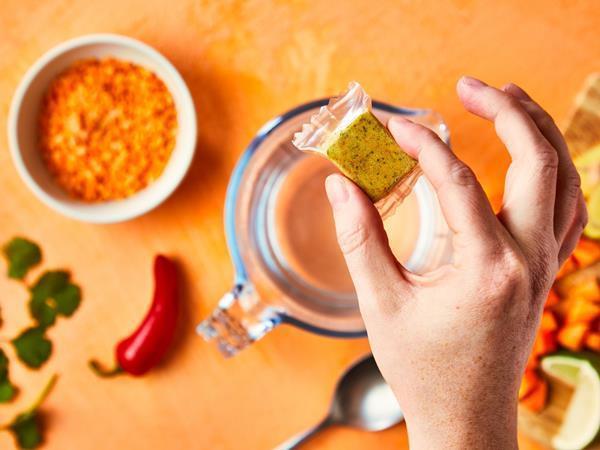
- Back in 2021 Cambridge-based Xampla – a sustainable materials spinout from the University of Cambridge – partnered with meal kit company Gousto to create the ‘world’s first’ edible stock-cube wrapper made from plant protein. According to the company, Morro Edible Film is a direct replacement for plastic, offering the shelf life stability needed, with a much lower environmental impact.
Edible containers/pouches
- One of the most well-known modern examples of edible packaging, launched in 2014, was WikiCells by US-based WikiFoods, Inc. (now apparently out of business). These consist of edible membranes designed to encase various foods and beverages and made from natural ingredients, including fruits and plants. While they have never been widely available (they could mostly be found in restaurants when on the market) they are a good example of what might be possible in future.
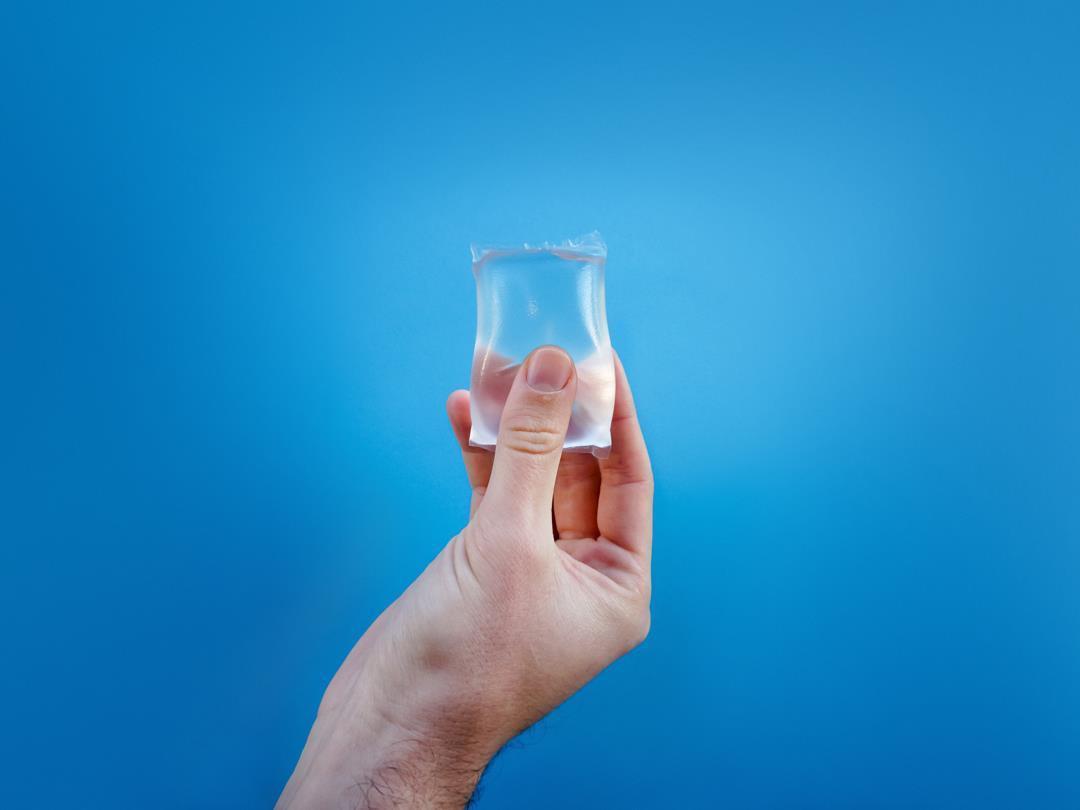
- UK-based Notpla has developed seaweed-based materials for edible containers. Last year, for example, we reported that Citizens of Soil was launching single-serve extra virgin olive pipettes for its Spanish Extra Virgin Olive Oil (EVOO), packaged in Notpla’s plastic-free material made with seaweed. Furthermore Notpla’s Ooho edible membranes have, claims the company, the ability to ‘turn the tide’ on virgin plastics.
Edible films
- In 2024 France-based Lactips introduced CareTips, a milk protein-based packaging film that is edible and water-soluble. To produce this, the company uses casein, a protein derived from milk, that it says is particularly suited to dairy products as an alternative to plastic films.
- US-based JRF Technology is a developer of water-soluble polymer and edible film technology. In 2023 the company received a boost through investment from Ecopol S.p.A., a developer and producer of biodegradable films and delivery systems.
Edible coatings
- US-based Apeel Sciences has developed plant-based edible coatings to extend the shelf life of fresh fruit and vegetables, creating a natural barrier to reduce oxidation and moisture loss. The company hopes its solution can in time significantly reduce the need for plastic packaging in agricultural products. Perhaps the most well-known trial for this product in recent years was with Tesco in 2023, limited to the Peterborough, UK area over a three-month period.
- Swedish company Saveggy also develops plant-based protection for fruit and vegetables, in this case using rapeseed and oat oil. Specifically focused on cucumber preservation, in 2023 the company signed a partnership with Swedish-grown cucumber and tomato producer odlarna.se to create production and packaging lines, and an application technology, for coating with hopes of eventually replacing fossil-based plastic wrapping. As with other solutions in this field, the story is very much an ongoing one.
Edible straws and cutlery
- An example in this area is US-based Loliware, which produces cutlery and straws made of seaweed-based materials which apparently, unlike paper straws, which become soggy, behave like plastics for 24 hours once they are wet. Some big names to have used the straws over the years include Marriott Hotels and Pernod Ricard.
Early-stage research areas
- There is growing research interest in nanotechnology in this field, through which nanoparticles and nanofibres could enhance the functionality of edible packaging using bioactive compounds (antimicrobials or antioxidants) or developing active packaging.
- Processing methods, such as extrusion or compression moulding, are also a focus area as they may enable the industry in future to produce edible films on a wider scale.
- The quest for using edible packs to extend shelf life even further is of course always ongoing, through composite edible coatings, to name just one interesting area of research.
- Referring again to the Research and Markets report mentioned earlier, the pharmaceutical segment is expected to record the fastest CAGR of 6.1% during the 2024-2030 forecast period due to the increasing demand for sustainable and biodegradable solutions in drug delivery and packaging, with researchers working on ways to package single-dose medications or encapsulate active ingredients to improve patient compliance and reduce waste.
Challenges to scaling edible packaging
However, now we come to the inevitable ‘Yes, but…’ section of the article: because of course, to get to a point where these potential net benefits are realized through scale there are a number of substantial challenges around edible packaging to address. Readers will probably have noticed, for example, that the majority of the examples we have given above span a period of several years and none are mass-produced as yet.
One of the main purposes of food packages is to prevent waste. To do this, they need sufficient barrier properties to withstand moisture, temperature fluctuations, UV exposure, tampering and any other environmental factors – all while meeting stringent food safety standards and gaining regulatory approval. The small number of edible packs we have seen on the market thus far are still very limited in their application and more complex products such as liquids or fresh goods remain a problem to be addressed.
“Food manufacturers will never compromise food safety solely for the sake of environmental concerns,” says Carol Culhane. “Edible packaging is, by definition, biodegradable, as it needs to be metabolized by one or more digestive enzymes. Thus, edible packaging is susceptible to one or more of the aforementioned purposes of food packaging. Accordingly, the most effective applications would be single-serve edible packaging containers within an outer protective layer. Examples which come to mind are single-serve portions of cookies, granola bars or cheese. I have not seen much research and development in this application.”
Just as crucially, the industry is undoubtedly a long way from being capable of producing edible packaging at scale and at a competitive cost, compared to fossil-based materials. This may be down to availability of feedstocks, the sheer cost of engineering these complex materials or dearth of necessary manufacturing infrastructure, among other things.
Significantly in this regard, Notpla has recently developed a partnership with equipment specialists Handtmann through which it has developed ‘next-generation machines capable of producing millions of Oohos daily’. According to the company, it is now ‘ready to produce single-use plastic at scale’.
Then there is the question of consumer acceptance. If you ask the average person whether they would eat an ice cream cone, they’d probably say yes, of course, in most cases. An edible wrap …quite possibly (this packaging reporter is not a fussy eater but not everyone can say the same). A bottle? This is maybe starting to test consumer capacity for gastronomic novelty.
The point is, eating the very products that pack your food – as opposed to merely holding it – is still a new concept and most of us take time to embrace the new. So aside from researchers developing the necessary functionality, savvy marketing is also going to be key to making it appealing.
Furthermore, it is not even at all clear that edible packaging – despite its biodegradability – is automatically the most sustainable option as yet. In order for this to be the case, manufacturers would have to prove that the natural resources they use do not compete with food sources or have any other environmental impact as a result of their depletion.
And of course, as with any pack, we must look at the total carbon footprint right from inception – not just what happens at end of life, crucial though it is to do something about the volumes of nonbiodegradable packaging polluting our earth.
Is mass-market edible packaging really possible?
Despite the challenges, edible packaging is an intriguing area of development and there have been some promising solutions from startups across the world. But can the industry truly move this form of packaging beyond the ‘concept’ or the ‘niche’ stage, given that there are still such a relatively low number of examples on the market and research more often than not does not translate to commercialization?
Unsurprisingly, most (myself included) would argue that edible packaging is still nowhere close to replacing plastics as the dominant material of choice. According to Carol Culhane, we are still far from ‘there’: “I first heard of rice-based edible packaging in the 1970s, in undergrad studies. While there remains interest in applications, 50 years on the impracticality and vulnerability of edible packaging limits its widespread use. The concept of edible packaging remains very much that – a concept.”
Even one of the more well-known examples like the above-mentioned Gousto-Xampla partnership has not moved fully beyond the trial phase to full implementation. And edible packaging producers themselves do not necessarily believe they can entirely duplicate the virtues of plastics – rather, the ambition is to enable a significant reduction in its use where edibles are possible.
As a more constructive final takeaway for those interested in joining this field, Carol Culhane offers an outline of the main steps companies can take it they want to work on creating successful edible pack:
- Determine the purpose of the food packaging for the food it is to contain, i.e. is UV protection required?
- Determine if the edible packaging is designed to function as required, to protect the food in question.
- Determine if the composition of the food itself compromises the edible packaging. For example, the food contained within the edible packaging must be dry/low moisture/very low to no water activity. Otherwise, moisture from the food will migrate to the edible packaging, compromising its efficacy.
- Conduct numerous plant trials to determine if the edible packaging can withstand the rigorous processes of production.
- Conduct shelf life tests to determine the efficacy of the edible packaging.
- Conduct a cost-benefit analysis. All of the above are sunk costs until the product is launched.
If you liked this story, you might also enjoy:
The ultimate guide to the Packaging and Packaging Waste Regulation in 2025
How are the top brands progressing on packaging sustainability?
Everything you need to know about global packaging sustainability regulation in 2025
The key to increasing the use of reusable packaging in supermarkets
Sponsored stories

How ATS-Tanner’s banding solutions align with the new PPWR
ATS-Tanner’s banding solutions aim to reduce packaging waste, provide a practical alternative to plastic and improve recyclability. In

How Rollon’s linear systems provide reliability for tertiary packaging
Rollon believes tertiary packaging machinery must perform without fail, showcased by its recent partnership with AMP Automation to develop palletizing

Discover what’s new at London Packaging Week
Packaging has never carried greater commercial responsibility. It influences how consumers perceive brands, how products perform in increasingly competitive markets

Paperworld Middle East partners with FSC to champion responsible sourcing across the region’s paper and stationery industry
Paperworld Middle East, the region’s leading trade show for paper and stationery products, taking place from 13–15 October

Made for Life: How Sappi reveals what trees make possible
What connects an experienced papermaker, the creators of cactus-based leather, the people conserving forests for future generations, and a

The advantages of all-electric adhesive dispensing in modern packaging
Packaging manufacturers are under constant pressure to increase output, reduce operating costs, improve sustainability, and maintain consistent product quality. One

YUTO won 12 international packaging design awards across three global competitions
Driven by the global sustainability trend, the EU PPWR mandates packaging reduction, recyclable design, and restrictions on single-use packaging.

How rPS Food aims to bring circularity to polystyrene packaging
In this edition of the Spotlight, Coexpan (part of Grupo Lantero) details how its rPS Food enables up to 100%
Read next

Südpack unveils mono-PP pouch solution for yoghurt drink market
Südpack has launched a recyclable, mono-material polypropylene (PP) flexible pouch aimed at the drinkable yoghurt market. The company identifies

Nemera launches bi-dose nasal spray solution
Drug delivery device company Nemera has announced its DuoSpray bi-dose nasal spray platform, a ‘non-invasive, needle free’ administration

Coveris develops mono-material sleeve with 30% less material for Dr Beckmann
Coveris has unveiled its mono-material sleeve solution developed for Dr Beckmann, said to use around 30% less material than

Sustainability Awards 2026 Finalist Interview: Prevented Ocean Plastic’s project for food-safe recycled PP
Prevented Ocean Plastic is a finalist in this year’s Sustainability Awards with its project seeking to recycle polypropylene (PP)