

In a rush? Click here to read a short summary of this report
Introduction
This report examines the current state of accessible packaging in the consumer goods industry and the urgent need for inclusive design. As more brands begin recognizing the importance of catering to people with disabilities, packaging still often falls short – limiting consumer independence and excluding millions from full participation in everyday commerce.
Key Takeaways
- Disabled consumers face daily exclusion due to inaccessible packaging – 65% report limited purchasing choices, while 90% are affected at the decision-making stage by poor design or unclear information.
- Smart technologies are leading the way, with tools like NaviLens and Zapvision enabling blind and partially sighted consumers to access key product information via smartphones, both in-store and at home.
- Ergonomic design matters, as shown by P&G’s Ariel ECOCLIC box and Unilever’s Degree Inclusive deodorant, which prioritize ease of use for people with limited dexterity or single-handed use needs.
- Tactile features and symbols offer practical solutions, such as L’Occitane’s use of Braille and P&G’s open-source system of tactile product identifiers – critical for those who can’t rely on vision or digital tools.
- Lack of regulation is a major barrier – without legal standards for accessible packaging, progress depends on voluntary corporate action, which often falters without clear ROI or external pressure.
- Sustainability and accessibility must align, as inaccessible designs risk excluding disabled people from participating in recycling and circular economy efforts.
Conclusion
Accessible packaging must become the standard – not the exception. While industry innovation and consumer collaboration are promising, meaningful progress hinges on stronger regulation and a shift in mindset: inclusive design benefits everyone. Brands that invest now in accessibility position themselves to serve a larger, loyal customer base while doing the right thing—ethically, socially, and commercially.
The industry has focused more on inclusive design over the past few years, but there is still some way to go before all packaging can be deemed truly accessible to all. Victoria Hattersley reports.
It’s not a controversial statement to say that people with disabilities are consistently let down by the systems in place around them. Travel can be at best stressful, at worst traumatic; accessible public toilets are often insufficient or non-existent; clothing can be tricky to fasten (and woe betide anyone who wants to look stylish while also finding something that they can put on in the morning and still get to work on time).
Too often the world does not provide the access required to meet the needs of all, whatever their level of ability. And it’s not that we lack the resources or the capabilities to put these systems in place – it’s that it’s still, even today, not prioritized. So many disabled people I have spoken to say they are not necessarily held back by the disabilities themselves – rather by the world around them that has still not adapted in the way it should.
The packaging industry has historically been no different in this regard and in many respects it still has a long way to go. Research from Open Inclusion, commissioned by the Business Disability Forum, found that 90% of disabled consumers were affected at the decision-making stage of purchases by either limitations of design, limitations in available information, or how information was presented.
It also found that 65% of disabled consumers who took part in the research said they felt that their choices were limited on a daily basis due a lack of accessibility or inclusion. There is still little in the way of legal requirements for accessible packaging: the ISO standard for accessible design and ease of opening provides some useful guidelines, but this is voluntary only.
Quite apart from the fact that this is clearly unacceptable from a social and ethical standpoint, it makes very little business sense. According to the World Health Organization, an estimated 1.3 billion people, or 16% of the world’s population, experience significant disability, and thanks to an aging population and the rise of uncommunicable diseases this figure can only increase. Why neglect such a vast percentage of your potential customer base?
Challenges around accessibility
Aside from the obvious need for legislation – of which more later – it falls on brands and the wider industry to take the initiative in this arena by actively investing in more accessible packaging, and it’s fair to say that some progress has been made (although it’s not necessarily a ringing endorsement to say the situation is better than it used to be).
Some of the innovations we have seen, a selection of which we will describe below, demonstrate what can be achieved with creativity, imagination – and of course, listening to the needs of those who will be using the packaging. (The slogan ‘nothing about us without us’ is used for a reason.)
The issues around packaging for disabled people broadly fall into a few main categories, although inevitably these will overlap for many:
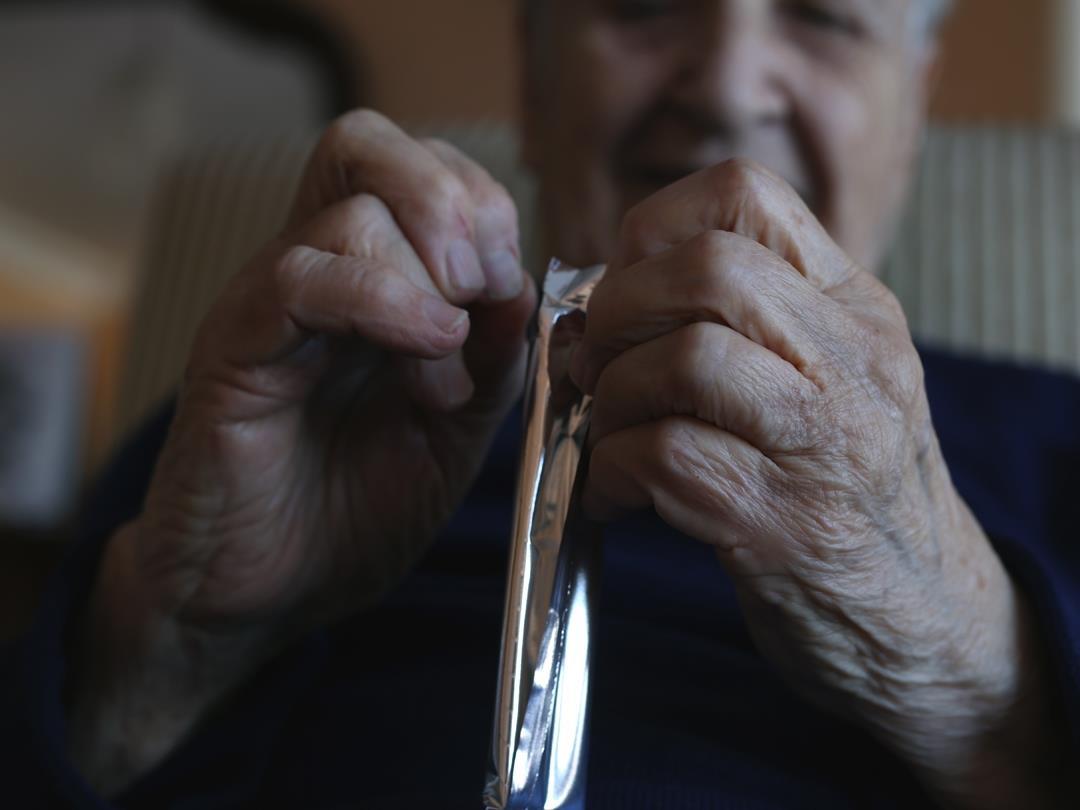
- Difficult to open packaging, requiring strength or dexterity;
- Lack of tactile or auditory cues to identify products;
- Small, or hard-to-read fonts on labels;
- Complex resealing mechanisms.
But there is more to consider than even this, says Diane Lightfoot, CEO of the Business Disability Forum (whose free-to-enter annual Disability Smart Awards, incidentally, are open to businesses of any size until 17 January 2025, so do look into this). “It is not only people with physical disabilities who can experience barriers.
Inaccessible packaging can also present problems for people with neurodiverse conditions. For people with dyslexia, the language used or the layout of text or text on the packaging may be challenging. For people with autism, the familiarity is often important, so a sudden change or redesign of packaging – even for a favourite product - can make that product inaccessible.”
She mentions Britvic as a good example of a brand that has looked to meet the needs of neurodiverse consumers in the design of the new sports cap on its Fruit Shoot bottles, launched early in 2024.
Britvic had moved from a coloured to a clear bottle in 2021 and this had proven difficult for some children with neurodiverse conditions who found the sudden change and unfamiliarity of the packing difficult to navigate. This time, Britvic worked with the National Autistic Society to create an easily recognisable product and to help customers anticipate the change.
Key paths to packaging accessibility
When it comes to developing solutions to these challenges, the most successful have without doubt been those in which the brand has worked with the disabled community right from the outset and at every design stage.
“We are definitely not at the point yet where all brands are working with disabled people from the outset when developing their products and packaging but the good news is that things are moving in the right direction,” says Diane. “Two-thirds (65%) of disabled consumers that we asked felt that the businesses they used are starting to recognise the importance of accessible and inclusive products and services.”
Below, we take a look at some of the key routes that brands have been taking to improve packaging accessibility, and some of the success stories of recent years according to the disabled community.
Intelligent solutions
It’s taken the industry and the wider public a while to embrace them, but in recent years, smart technologies – as in all aspects of our daily lives – have been key to the development of more inclusive packaging solutions. NaviLens is one case in point: Designed to support the visually impaired, the free-to-use system employs codes on packs, similar to QR codes, that can be scanned with mobile cameras to give the necessary information about the product and the pack.
John Worsfold, head of Solutions Innovation at RNIB, commented on the significance of this technology: “Technology such as NaviLens is a game changer and allows blind and partially sighted people to independently identify and access key information on packaging. This is why we’re so pleased to collaborate with brands such as SMA Nutrition on our ongoing mission to highlight how the industry can raise its game and make packaging more accessible.”
We’ve reported on the use of this technology by a number of brand owners. SMA Nutrition has announced it will be putting the codes on all its product packaging, to give its customers ‘a higher level of independence when making choices regarding their children’s feeding’.
Always Discreet has also partnered with NaviLens in a pilot initiative to enable women living with sight loss experiencing bladder leaks to find the right products on-shelf. Another recent example is the meat-free food brand Quorn, which in 2023 announced it would be using NaviLens codes for packaging across its entire product range.
In a similar vein, Zappar’s Zapvision Accessible QR (AQR) solution for blind or partially sighted people, introduced in 2022, has been gaining momentum across the FMCG sector. These codes can make necessary product and packaging information available to everyone, regardless of their level of vision. Zapvision has been implemented by Unilever on all packs of Persil laundry detergent across the UK.
That said, according to Allan Mabert, a consumer panel member from the Research Institute for Disabled Consumers (RiDC), who is himself registered blind, we shouldn’t necessarily think about these solutions as focused on improving in-store accessibility.
“Realistically, if you use a white cane, you have a guide dog, it’s very difficult to have your phone out and do those things, plus pick up that product and put it in a basket or a trolley. Almost impossible, in fact. Where this technology really comes into its own is when that product is at home in your own environment, and then you can use your device to obtain that information easily.”
AI will also, of course, be playing its part in the development of accessible packaging. Indeed, in 2024 Unilever announced that, in partnership with Be My Eyes, it will be expanding its used of Zappar’s AQR to provide AI-powered virtual assistance for blind and visually impaired consumers via a free app.
These codes will now be applied to Colman’s Singapore Noodles Meal Maker packaging. Via their smartphones, consumers will be connected to a volunteer on hand to read and describe cooking instructions; or to a virtual AI-chat bot, which uses Chat GPT-4 capabilities to answer questions surrounding the recipe or cooking process.
Ergonomic, intuitive design
For a package to be accessible, the design itself must also be easy to open and close, and simple to handle and dispense afterwards – regardless of ability. This can include tear strips, handles or pop open designs, for example. Users should also be able to open them one-handed.
A much-cited example or these principles in action is Proctor & Gamble’s Ariel ECOCLIC laundry capsule box – one of the winners of our 2023 Sustainability Awards as well as the winner of the Disability Smart Inclusive Product Design Award that year.
According to Samatha King, vice-president of R&D at the company, “the challenge was balancing child safety with making the packaging easy and intuitive for all adults to open, so that those with dexterity and joint issues could still use it. We found our solution through extensive consumer testing when our team observed how our adult and child consumer testers held and interacted with the prototypes.
“The ECOCLIC opening system was re-designed in line with an adult handspan. We incorporated an audio-cue ‘click’, letting consumers know the pack is safely closed and providing reassurance to those with sight issues.” Aside from the above, this was yet another product to incorporate NaviLens on-pack.
To reiterate an earlier point – because it’s worth restating again and again – it’s also crucial that any new pack designs are developed in collaboration with the disabled community. If we look at some of the most successful accessible packaging of recent years, this has been the case.
Unilever’s Degree Inclusive deodorant, for instance – a hooked container with enhanced grip placement designed for one-handed usage – was created in partnership with the Muscular Dystrophy Association, non-profit organisations Open Style Lab and The Lighthouse Chicago, and a panel of engineers, designers and occupational therapists. Indeed, all of the examples we have given above were developed in dialogue with members of the disability community.
Moving from FMCG to the gaming arena, PlayStation has developed new packaging for its customizable PS5 controller kit for players with disabilities, designed to be openable with one hand. The Access controller comes in a box featuring loops that can be pulled from the left or right side.
These are intended to facilitate easy opening and allow consumers to slide the controller out of its packaging. On the inside of the pack are additional loops and a single layer of slots for the various kit components, including 19 interchangeable button caps and three stick caps – aiming for easy identification and access.
Tactile features
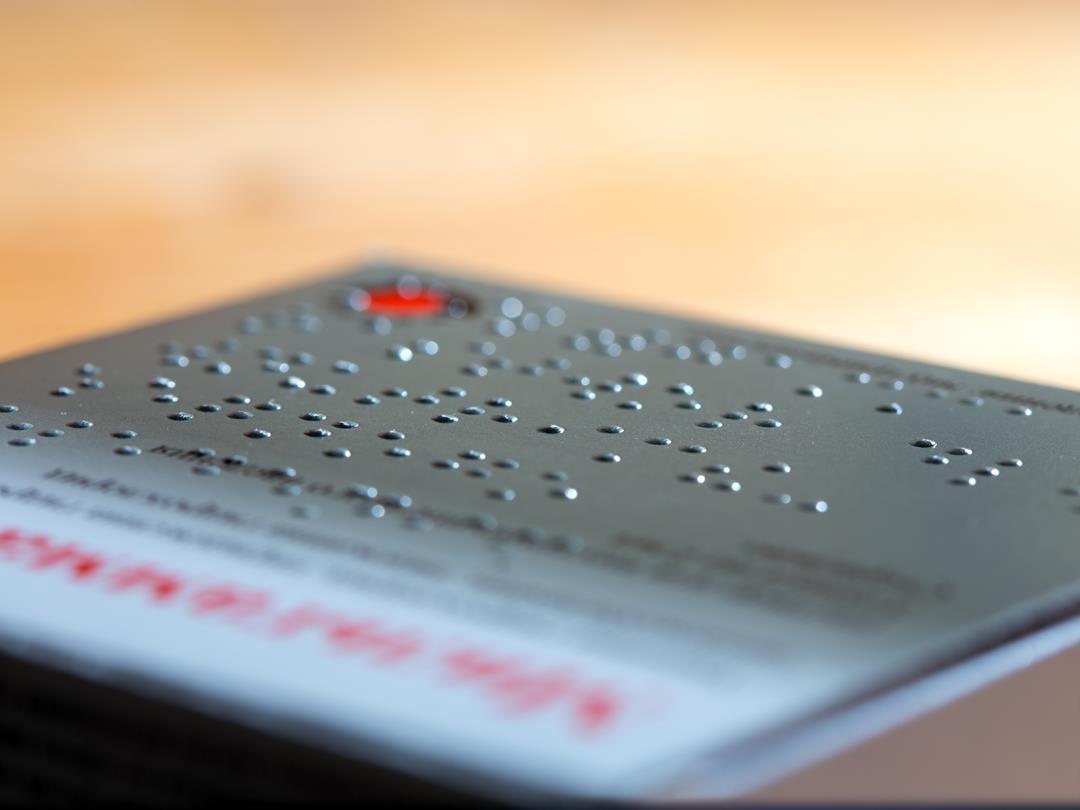
Braille or tactile symbols for those with no or reduced sight are also an important element of accessibility. The above-mentioned P&G ECOCLIC box, for instance, features a tactile marker, shaped like a washing machine, to signpost that the box contains laundry detergent. Meanwhile, the Microsoft Surface Adaptive Kit uses tactile symbols to enable users to identify critical keys, ports and cables, as well as Braille and QR codes.
To get the consumer viewpoint, we turned again to Allan Mabert. He was keen to highlight the work of the French personal care brand, L’Occitane, which is committed to including Braille on its packaging wherever possible.
“To give an example, the information on their shower gel bottle is written in good-quality Braille and it has a flip-up lid so you don’t have to totally unscrew it, which makes a huge difference to blind or partially sighted people. But importantly, not all their tactile markings are Braille so you don’t necessarily have to be a Braille reader to benefit from them; after all, sadly, I think less than 10% of blind people today, at least in the UK, can read Braille.
“Something as simple as having a textured ‘S’ on a bottle for ‘shampoo’, or a ‘C’ for conditioner can also make a big difference and would be so easy to do.”
A spokesperson from Procter & Gamble told us how they worked with a focus group of disabled consumers to develop just such a system of easily-readable tactile symbols and explained the thinking behind this: “Take the situation where you are in a shower with soap in your eyes, and you want to grab your conditioner, which stands next to the shampoo and shower gel. The bottles for all three of them feel the same. You don’t have your phone on you, so what are your options here? We learned that engraving a tactile symbol on the product was the right solution in this case.
Consumers can touch the packaging, and a simple, distinct symbol will tell them that this is a shampoo or a conditioner or a shower gel, etc. We have developed a full system of symbols that encompasses all our products, and we have launched several products with tactile symbols, such as Herbal Essences, Head & Shoulders Bare, Ariel, etc.
“This system is open source and free to use, and we encourage everyone to follow suit and join us on the journey to make the products accessible.”
Tactile substrates for perishables including food and medication are a relatively recent innovation to help those with sight loss shop independently and with confidence. Mimica’s TOUCHCAP is an example of this: Developed in collaboration with United Caps, the cap is an ‘accessible freshness indicator for all types of perishable products’. It employs a gel, which avoids contact with the food but enables the label to change from smooth to bumpy when the product is no longer fresh.
The wider roadblocks to accessibility
Up to now, we’ve looked at the specific challenges disabled consumers face when it comes to packaging and a range of solutions developed in response. But what of some of the broader industry- or society-wide issues slowing down the transition to accessible packaging across the board, and what must be done to tackle them? These include:
Unwillingness to invest
It’s obviously important as we have seen that all individual companies and brands are ensuring all packaging is accessible for everyone – and as we have seen an increasing number are beginning to. But it’s still not enough, and it doesn’t always work out. Why is this?
Sometimes, says Gordon McCullough, CEO of the RiDC, there is a lack of impetus on the part of companies to see a project through – perhaps a reluctance to invest. We see this in other areas where industry-wide shifts are being called for, such as reuse and refill.
“You see it often whereby a brand will develop an accessible solution and make a great fanfare about it, but ultimately it never makes it past the prototype stage to market. Sometimes, sadly, it’s more of a marketing exercise. Unfortunately, we’ve seen that with our work as well, where we have worked with panels of disabled consumers and got some really brilliant insights and some simple but impactful solutions, only for them to fall short within the organization because of the risk that the return on investment would not be enough. A lot of these designs are just sat on the shelf.”
Brands need to be willing to take the risk to reach a wider consumer base, even if it means higher initial investment in retooling existing machines, for example. As Allan says, “Until cultural pressure is built up to such an extent that it is no longer an option – we mayb e a long tie given the general attitudes – companies can still ‘get away’ with not acting on their accessibility talk or investing where it’s needed.”
Lack of regulations
Packaging accessibility doesn’t fall under any regulatory remits – such as the UK Equality Act 2010 – but rather on how the goods are sold, so the onus is still on the retailer rather than the manufacturer. And while the European Accessibility Act is set to come into force next year, this only applies to digital access. According to Diane Lightfoot, this leaves many questions, such as: “If a customer buys a digital product but the packaging in which it comes is inaccessible or text on user instructions is inaccessible, will that be covered or is it only the device/product itself that is covered?”
In short, while organizations such as BDF and RiDC are working to put pressure on legislators, we are still lacking any regulatory framework obliging producers to factor accessibility into their packaging design every time. And as Gordon says, “Change rarely comes about voluntarily. There needs to be some sort of regulation or legislative framework that enforces that inclusivity. This would also foster a great deal more innovation because companies then have something concrete to aim at.”
Sustainability considerations
Readers may have noticed that so far we’ve left out a topic that usually forms the cornerstone of our reporting: sustainability. It’s conceivable some may even have been thinking something along the lines of, ‘Of course, we all know accessibility is hugely important but it, or arguably any other topic, still ranks lower compared to the huge, bleak cloud hanging over humanity which is plastic pollution and potential climate breakdown’.
Perhaps, but it’s not a case of either/or: addressing this issue is just as important for disabled consumers as for everybody else, and if such a large (and growing) segment of the population are prevented from taking part in the circular economy, where might that leave us? And if for example recyclability or compostability information are not clearly presented on-pack, or packs are complex and difficult to dismantle for recycling, how are they to do this?
It’s certainly a topic Allan Mabert believes that producers still aren’t considering enough when it comes to conversations around making packaging accessible. “We want to be part of the solution. We don’t want not to be included in a movement towards circularity, so that’s another clear reason why we need to build inclusivity.”
Conclusion: Packaging for all
In future, accessible packaging should perhaps come to be considered a misnomer, in that we shouldn’t think in terms of exceptionalism when it comes to packaging design.
Quite simply, all packs should be designed to be used by everyone – and then we wouldn’t even need to flag this fact. Brand owners should bear this in mind when it comes to packaging development. Tools such as Microsoft’s Inclusive Design Toolkit can guide brands in their future packaging development.
It’s not enough to have a world we can all exist in; we need a world in which everyone can actively participate in, on an equal footing. And yes, of course, the packaging we encounter in our daily lives is only one part of a huge global inclusivity deficit.
There are many strands to inequality and it’s not just the disabled people in our world who lack the support they’re entitled to. But more accessible packaging is indeed possible today, with the right impetus from companies and more compulsory regulations in place.
If you liked this story, you might also enjoy:
The ultimate guide to the Packaging and Packaging Waste Regulation in 2024
How are the top brands progressing on packaging sustainability?
Sustainable Innovation Report 2024: Current trends and future priorities
Everything you need to know about global plastic sustainability regulation
Sponsored stories

How ATS-Tanner’s banding solutions align with the new PPWR
ATS-Tanner’s banding solutions aim to reduce packaging waste, provide a practical alternative to plastic and improve recyclability. In

How Rollon’s linear systems provide reliability for tertiary packaging
Rollon believes tertiary packaging machinery must perform without fail, showcased by its recent partnership with AMP Automation to develop palletizing

Discover what’s new at London Packaging Week
Packaging has never carried greater commercial responsibility. It influences how consumers perceive brands, how products perform in increasingly competitive markets

Paperworld Middle East partners with FSC to champion responsible sourcing across the region’s paper and stationery industry
Paperworld Middle East, the region’s leading trade show for paper and stationery products, taking place from 13–15 October

Made for Life: How Sappi reveals what trees make possible
What connects an experienced papermaker, the creators of cactus-based leather, the people conserving forests for future generations, and a

The advantages of all-electric adhesive dispensing in modern packaging
Packaging manufacturers are under constant pressure to increase output, reduce operating costs, improve sustainability, and maintain consistent product quality. One

YUTO won 12 international packaging design awards across three global competitions
Driven by the global sustainability trend, the EU PPWR mandates packaging reduction, recyclable design, and restrictions on single-use packaging.

How rPS Food aims to bring circularity to polystyrene packaging
In this edition of the Spotlight, Coexpan (part of Grupo Lantero) details how its rPS Food enables up to 100%
Read next

Südpack unveils mono-PP pouch solution for yoghurt drink market
Südpack has launched a recyclable, mono-material polypropylene (PP) flexible pouch aimed at the drinkable yoghurt market. The company identifies

Nemera launches bi-dose nasal spray solution
Drug delivery device company Nemera has announced its DuoSpray bi-dose nasal spray platform, a ‘non-invasive, needle free’ administration

Coveris develops mono-material sleeve with 30% less material for Dr Beckmann
Coveris has unveiled its mono-material sleeve solution developed for Dr Beckmann, said to use around 30% less material than

Sustainability Awards 2026 Finalist Interview: Prevented Ocean Plastic’s project for food-safe recycled PP
Prevented Ocean Plastic is a finalist in this year’s Sustainability Awards with its project seeking to recycle polypropylene (PP)