

In a rush? Click here to read a short summary of this article
Introduction
Extended Producer Responsibility (EPR) is rapidly becoming a global standard, with governments increasingly requiring producers to manage the end-of-life of their products, especially packaging. While Europe leads the charge with its comprehensive regulatory frameworks like the PPWR, other regions are progressing at varying speeds.
Highlights
- Europe: The European Union’s PPWR mandates that all member states implement EPR schemes by 2028, with eco-modulated fees tied to packaging recyclability and harmonized labelling to improve consumer participation.
- North America: Canada has a long-established EPR system, though it remains province-specific. In the US, EPR is inconsistent, with some states leading the way, while others lag behind. A federal approach is still lacking.
- South America: Chile and Brazil are at the forefront of mandatory EPR in South America, with a focus on producer-funded collection and recycling.
- Africa: South Africa has a fully operational EPR system, while other African nations like Kenya and Ghana are moving toward similar frameworks. However, the informal sector remains crucial to recycling systems.
- Asia: Japan and South Korea have mature EPR systems, while countries like China and Vietnam are in the early stages of implementing packaging-specific regulations.
- Australasia: Australia is moving towards a formalized, mandatory EPR system by 2025, with states like New South Wales and South Australia taking steps to regulate packaging waste through bans and stricter design standards.
Conclusion
As EPR systems evolve globally, countries face distinct challenges related to local culture, infrastructure, and regulatory environments. However, key factors for success include clear data reporting, producer collaboration, and modulated fees to incentivize sustainable design. Europe’s model of harmonized rules provides valuable lessons for other regions, but each must tailor solutions to local needs, particularly in developing countries where informal waste-picking plays a crucial role.
What does the global regulatory landscape look like right now when it comes to extended producer responsibility (EPR)?
Currently, the EU is the frontrunner in this regard with the PPWR mandating that all EU Member States must have EPR schemes in place, while the UK also formalized its legislation in 2025. Through this, producers are responsible for the entire lifecycle of their products, including collection and recycling. Briefly, such measures include:
- Eco-modulation of Fees: EPR fees will be adjusted based on the packaging’s recyclability performance (Grades A, B, or C) by January 2028.
- Financial & Operational Responsibility: Producers must pay for waste management, including public collection, sorting, and recycling, generally through Europe’s various Producer Responsibility Organizations (PROs).
- Mandatory Registration: Producers must register with national authorities in each EU country where they sell packaging.
- Harmonized Labelling: A new, uniform EU-wide recycling symbol will be required to guide consumers on disposal.
We have covered the PPWR and all its permutations extensively (including recent updates), but how is the rest of the world progressing when it comes to mandatory EPR schemes – and what can other regions take from Europe’s approach?
Experts on key global markets gave us their insights into this topic during a dedicated session at the 2025 Sustainable Packaging Summit. We draw from these and recent updates to create a picture of how far advanced EPR is throughout the world, what is being banned (and where) and also what other regions can learn from the PPWR.
North America
EPR across North America is essentially at two different levels of maturity, with Canada’s national EPR strategy dating back to 2009. Here, both EPR and ‘product stewardship’ programs are used to manage products at their end-of-life. Producers are generally required to register with provincial authorities, report on materials placed on the market, and fund recycling systems via a Producer Responsibility Organization.
Across the United States, however, EPR is based on statewide legislation so there has been mixed take-up so far. Several states (including Oregon, Colorado, Minnesota, Maine, Washington and Maryland), have followed California’s programme requiring producers to report data by August 31 2025 and now have laws in place – although some, such as Washington, have phased out full implementation over the next few years, so the schemes are only expected to be fully operational by 2032.
There is also some pushback: in February 2026 the US District Court for the District of Oregon granted the National Association of Wholesaler-Distributors Inc. (NAW) a preliminary injunction to block the enforcement of Oregon’s Plastic Pollution and Modernization Act (RMA) – potentially affecting the scope of EPR rollout throughout the state.
And while, as mentioned, Canada is further ahead in its EPR journey, take-up here is still at the provincial level rather than mandated nationwide. Ontario has of 2026 transitioned to full EPR for packaging and Nova Scotia is also in the process of implementing its regulations.
Speaking in November at the Sustainable Packaging Summit, Filipe Vieira de Castro, from CIRCPACK by Veolia, “Canada was a country in which we saw provincial EPR started really early, in Ontario. This has built up to the extent that several of the company’s EPR systems are already fully operational and producer-funded. Notably, in January 2026 Ontario’s three-year transition to EPR for packaging and paper products was completed. Its Blue Box recycling program is 100% funded by producers.
“The US, on the other hand, is still mainly at the legislative stage although we’re starting to see a lot of states kick this in with different materials bans and so on, but it’s still tremendously fragmented.”
Given the lack of a clear federal objective across the US as a whole, says Filipe, it’s also notable that corporate packaging standards have been a bigger driving force behind the unification of recycling programmes across different states,
“For example, the Association of Plastic Recyclers have issued guidelines. Even Amazon or Walmart have been telling suppliers that they have to adhere to a new status quo and it’s resulted in these internal specifications travelling a lot faster than legislation in certain areas.”
What should be the next steps for North America when it comes to rolling out EPR? On the positive side, in the US, the nonprofit Circular Action Alliance is active in each of the states pushing for their own legislation and focusing on harmonizing requirements. But, says Filipe, “Each of them apply different fee structures and governance models. And for a market that used to be homogeneous, this has been disruptive.”
In future, he says, we should see the development of EPR legislation addressing the ‘blind spots’ in the market. “And really these have to do with the materials that have little economic pull. We see decent recycling rates for products like PET bottles and aluminium cans that have deposit return schemes, or in the states that have set up good recycling systems on their own. But things like flexibles are really falling behind and this must be taken into account for EPR to be successful.”
In Canada, on the other hand, where every major province already has either a fully-funded EPR system or is completing its transition, Filipe says the next important step is full coordination of auditing systems, as currently each province sets its own reporting format. The EU experience highlights that while national regulations are necessary, harmonized, consistent rules are crucial to prevent a patchwork of regulations that increase costs and complicate compliance for companies.
South America
In 2026, South America, led by Chile and Brazil, is gradually shifting from establishing EPR frameworks to full enforcement, emphasizing mandatory recycling targets, producer-funded collection, and increased traceability. Chile has had mandatory EPR since 2023 using a ‘polluter pays’ principle.
Brazil – the biggest producer of plastic in Latin America and the eighth biggest contributor of global plastic pollution – has recently put in place new metrics and targets for plastic packaging, implementing stricter minimum recycled content for plastics (22%+).
The National Policy on Solid Waste (PNRS) requires manufacturers, importers, distributors, and sellers of packaging to implement reverse-logistics systems under its solid-waste framework so packaging can be reused or recycled.
Elsewhere, Colombia first introduced EPR regulations in 2005 via Resolution 1407/2018. Uruguay’s EPR is managed through Packaging Recycling Law No. 17849, which requires annual reporting and waste management plans.
Mexico, meanwhile, recently enacted a General Law on Circular Economy which introduces, for the first time, EPR as a formal policy instrument. This will be phased in gradually by sector or product type.
But according to Renata Daudt of AWEN Packaging Consulting, it’s important that EPR systems are tailored to the region in which they operate. The real circular economy ‘heroes’ in developing countries, she says, are not the brands or the legislators but the informal waste-pickers.
“There is real value for waste-pickers in glass and aluminium – they can sell these materials and this in many cases is how they feed their families, which makes it quite different from other regions. We therefore need to look into the local culture and social aspects when we are designing an EPR system; we can’t, for example, just copy and paste the PPWR to Latin America because a lot of people would lose their livelihoods.”
As EPR comes to maturity in these regions, then, success may depend upon their ability to bring along the informal sector, upon which many livelihoods depend.
Africa
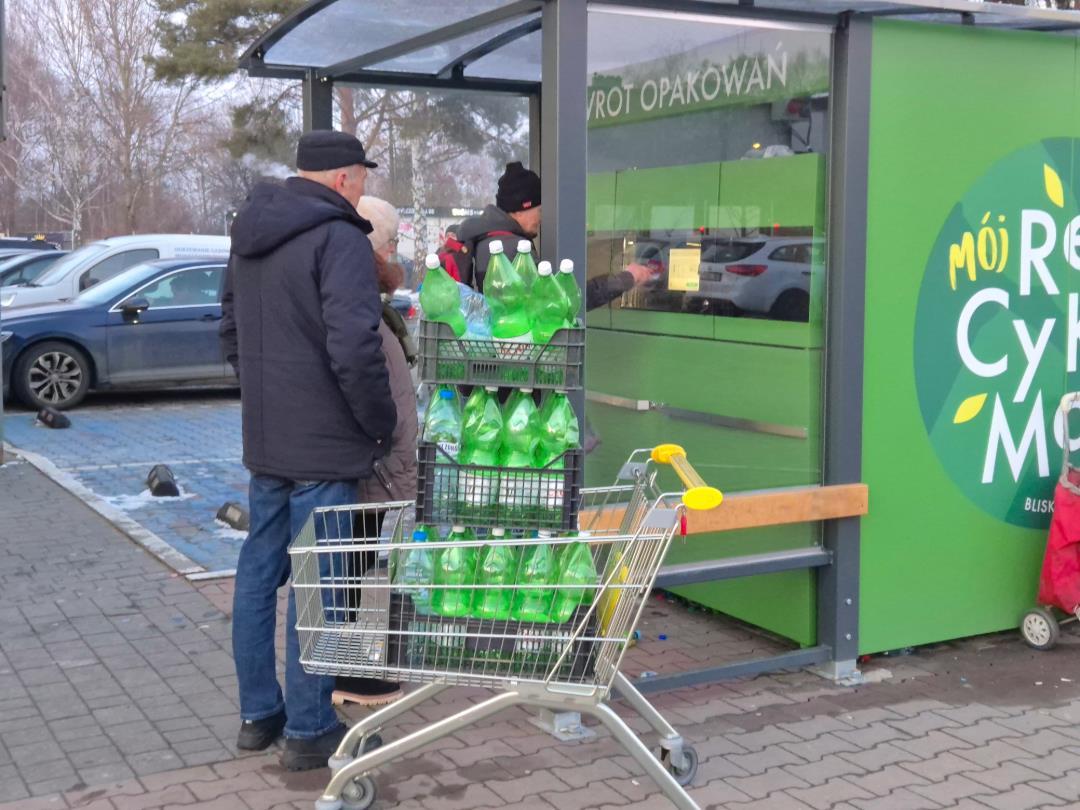
Several African countries have now implemented or are developing EPR legislation for packaging. Most notably, South Africa has had EPR since 2021 for all producers and importers of packaging. This was emphasized in South Africa’s National Waste Management Strategy (NWMS) 2026, which aims to accelerate the transition to a circular economy, reduce landfill dependence, and enforce mandatory EPR. It also introduced a Deposit Return System (DRS) for certain EPR products.
Also significant in this regard is Kenya, whose EPR programme came into force in 2022 under the Sustainable Waste Management Act managed by the National Environment Management Authoriry (NEMA). Under this, producers are required among other things to join a PRO of Individual Compliance Scheme, provide estimates of their annual volume of products and packaging, and submit annual reports to NEMA.
Other countries, including Nigeria, Ghana, Mauritius, Tunisia, and Egypt, are in various stages of establishing or implementing similar EPR frameworks, particularly focusing on plastic waste.
According to Filipe Vieira de Castro, as in Latin America circular packaging systems are largely informal but the impetus behind EPR is growing
“What we are seeing in Africa is early and very clear intent, but with limited systems that actually have fully-fledged EPR in place as yet. Often waste-pickers will employ informal platforms such as WhatsApp groups, posting to say ‘I have all this material – is there a recycler for me?’
“We’ve seen a lot of bans in Africa on things like single-use plastics, but we’re transitioning towards more fee-based producer funding because these bans don’t necessarily result in effective systems. It is only South Africa that has a fully established EPR system in place but there is growing pressure both internationally and within these countries to formalize these systems.”
And in addition, says Filipe, the relatively young nature of Africa’s recycling systems also represents an opportunity to build a truly fit-for-purpose EPR infrastructure.
“When you build a system from the ground up you’re able to build it to your liking and in a way that you hope is extremely effective. South Africa is a unique example of a country in which producers built up their own EPR system. Before 2000, a producer-led group decided to create a system to reuse and recycle the valuable material they had and build a closed-look system. We have seen therefore that some of these producer groups are very specific. Some are working on PE only, some are only focused on metals, others glass. The common thread is the integration of the informal sector.
“And if we then zoom out ot the rest of Africa, it’s that material security that could really drive participation in EPR in future.”
Australasia
There has been much reporting recently of the Australian government’s long-awaited revision of its national packaging regulations. As regards EPR, until now, Australia has been operating under a voluntary, co-regulatory producer responsibility model led by the Australian Packaging Covenant Organization (APCO). However, as of December 2025 APCO announced through its FY26–27 Business Plan and Statement of Intent that the country has started on a three-year pathway towards a formalized, mandatory EPR scheme.
The framework aims to reduce waste and enhance circular economy principles through strict design standards, mandatory reporting, and improved consumer information. This three-year roadmap includes three key priorities: preparing for an industry-led EPR scheme, strengthening and simplifying packaging design and compliance, and building capabilities needed for a more regulated packaging environment.
As part of this APCO is working to tackle the universal challenge of flexible packaging recycling through a partnership with Soft Plastics Stewardship Australia (SPSA). The two organization have signed a letter of intent to support an industry-led EPR approach for soft plastics.
Furthermore, state governments are not necessarily waiting for the regulation to be formalized. New South Wales has implemented its Product Lifecycle Responsibility Act 2025, phasing out hard-to-recycle plastics, making tethered caps on beverage containers mandatory by 2030 and introducing labelling for away-from-home packaging.
Western Australia has extended its bans to included moulded EPS packaging while South Australia has implemented a world-fist ban on small pre-filled containers – notably, the fish-shaped soy sauce bottles that have been a subject of discussion for some time now.
For industry representatives, such as Kellie Northwood of the Visual Media Association, concrete regulation on these issues cannot come soon enough. But to understand the challenges involved in creating harmonized EPR legislation in Australia, she says, you have to understand its geography. “Australia is a huge country with a desert in the middle which creates challenges with transporting goods, particularly food and pharma products, from the populated regions on each end of the country.”
In addition to this, state governments currently implement legislation that is different to that of the federal government.
“New Zealand has some legislation around waste minimization, although it is not specific to packaging. However, it is a little more sophisticated in its approach as it has looked to individual industry associations – plastics, fibre-based and metals – to come to government with their recommendations rather than throwing it all into one basket. What we need is unification across both countries.”
The industry, says Kellie, is in “a fight for our lives. Manufacturers in our country are very big employers and it’s not that we don’t want to be sustainable, but that the regulations aren’t correct. We are also arguing that not all sectors are created equal and that needs to be considered when EPRs are developed. We need to be very specific to each material and sector, and apply the best sustainable targets for each.”
For example, given Australia’s geographical position, Kellie cautions that. “The majority of our members are fibre-based packaging producers and for them, achieving a 100% recycled content target would be extremely challenging. Australia is on about a 15- to 20-week allocation time from order to get the PCR from Europe or China. We will lose mills if we go down that pathway.”
Asia
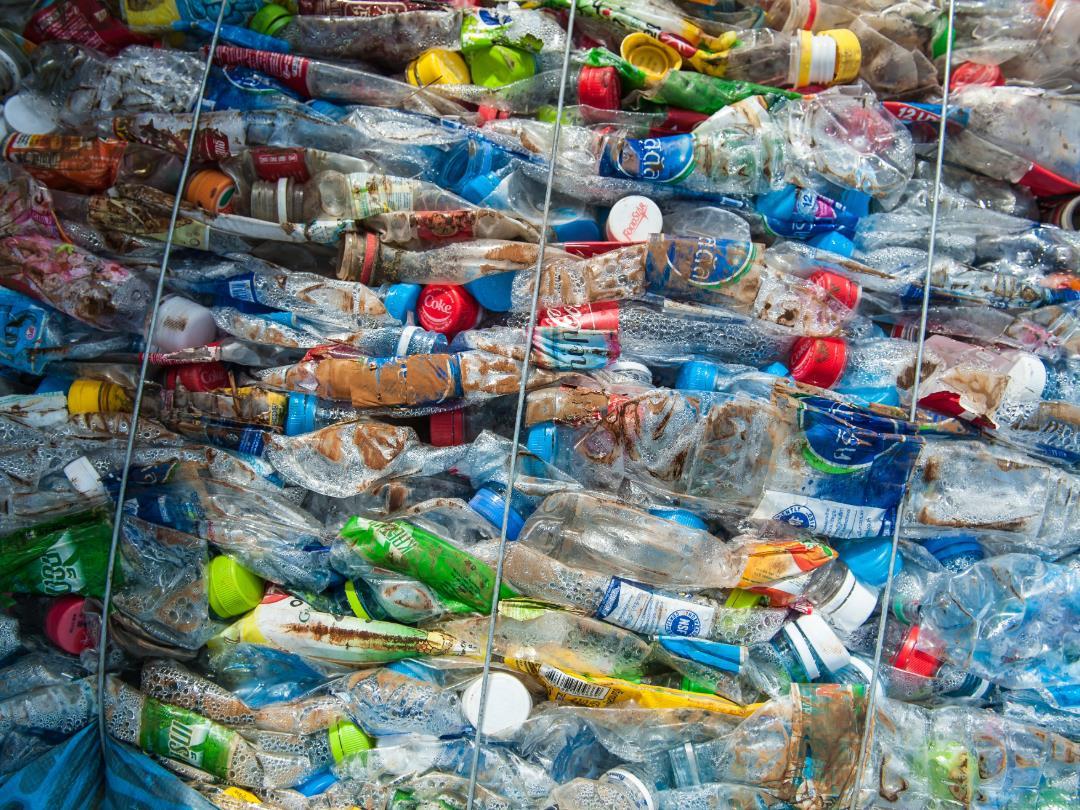
Several Asian countries have EPR legislation in place for packaging, with the most firmly established being Japan and South Korea. Vietnam and the Philippines also have mandatory EPR laws. China also now has legislation in place, while others, including Thailand, Singapore and Indonesia are phasing in their own regulations.
Japan, the frontrunner in terms of EPR in Asia, has set producer recycling targets under the Japan Containers and Packaging Recycling Association. Japan’s compulsory EPR dates back to 1995, with the establishment of the Act on the Promotion of Sorted Collection and Recycling of Container and Packaging. This initially obliged glass and PET bottle producers to recycle their post-consumer waste, but was subsequently expanded to include paper and other plastic containers.
South Korea – whose strong environmental performance we highlighted in a previous report – initiated EPR in 2003 with the ‘Act on the Promotion of Saving and Recycling of Resources’. Through this, producers are required to take responsibility for recycling over 24 items, including plastic packaging, glass, metal cans, tires, batteries, and electronics, with plastic toys added in 2026. Korea Environment Corporation is charged with overseeing the payment of recycling charges for non-compliant companies.
China’s still-evolving EPR legislation was initially led by the electronics industry. It was put into concrete form in 2016 through the EPR Implementation Plan, which aimed for a 50% recycling rate on key materials and a 20% utilization of PCR by 2025. Further targets on plastic pollution were introduced in 2020, now including growing fields such as e-commerce and takeaway packaging. Producers are now specifically charged with registering with state-approved PRCs, establishing waste recycling systems, ecological design, increasing the incorporation of PCR, unifying recycling efforts, and disclosing information on the above.
In India, EPR is regulated by various laws under the Ministry of Environment, Forest and Climate Change (MoEFCC) and the Central Pollution Control Board (CPCB). Most relevant for our purposes are: the 2016 Plastic Waste Management Rules, 2016 (Updated 2022), which producers and brand owners to recycle plastic waste and reduce single-use plastics; and the Packaging Waste Management Rules, which require FMCG companies, e-commerce businesses, and importers to manage their packaging waste effectively.
Finally, Vietnam’s Extended Producer Responsibility (EPR) legislation, mandated by the 2020 Law on Environmental Protection and Decree 08/2022/ND-CP, requires producers to manage product life cycles through recycling and waste treatment. Mandatory recycling for packaging and products began in 2024, with penalties for non-compliance. Companies must submit annual recycling reports via a national portal.
Conclusion
The above examples demonstrate the varied stages of EPR uptake throughout the world, and the region-specific challenges that dictate how these are implemented. But we can also see that there are some common, essential threads that make up a successful EPR programme.
Firstly, clear reporting and data requirements, with concrete definitions, are essential. Producers should provide detailed data broken down according to pack types and amounts. These requirements should be clearly set out across regions.
As is always the case with any industry-wide shift, collaboration along the value chain is also vital. All participating governments, producer responsibility organizations and producers should work together to ensure successful implementation, as the example of the PPWR shows.
Modulated fees and penalties are another key component, with fees adjusted so that less recyclable packaging incurs higher costs. We have seen how successful European models charge higher fees for hard-to-recycle materials: in Germany, for example, non-compliance with packaging EPR can result in fines of up to €200,000 per violation.
This encourages a move from problematic waste to more sustainable alternatives. It’s also important to have clear penalties for non-compliance and implement national registers to producers to keep track of this.
In Europe, encouraging competition between producer responsibility organizations has also shown to be a good way to increase recycling performance and lower operational costs. For this reason, a number of separate PROs may be preferable to a single organization holding the monopoly.
Finally, a successful EPR scheme needs strong recycling and collection infrastructure if producers are to meet their obligations. A certain amount of funds should therefore be invested directly into improving and maintaining these to maximize recovery rates.
The bottom line is, wherever producers are in the world, EPR is coming. Even where compliance is still not yet mandatory, brands that invest now in improving packaging design and data quality will be in a stronger position when this does happen. Failure to do so could result in higher single outlays, a lack of material availability and ultimately being at a competitive disadvantage.
Our advice to brands would be to:
- Invest in an accurate, detailed data platform
- Simplify your packaging portfolio and invest in eco-design
- Engage early with the relevant PROs and compliance schemes for your region.
If you liked this story, you might also enjoy:
The ultimate guide to packaging innovation in 2026
Packaging and Packaging Waste Regulation: what to know in 2026
Everything you need to know about global packaging sustainability regulation
Sponsored stories

How ATS-Tanner’s banding solutions align with the new PPWR
ATS-Tanner’s banding solutions aim to reduce packaging waste, provide a practical alternative to plastic and improve recyclability. In

How Rollon’s linear systems provide reliability for tertiary packaging
Rollon believes tertiary packaging machinery must perform without fail, showcased by its recent partnership with AMP Automation to develop palletizing

Discover what’s new at London Packaging Week
Packaging has never carried greater commercial responsibility. It influences how consumers perceive brands, how products perform in increasingly competitive markets

Paperworld Middle East partners with FSC to champion responsible sourcing across the region’s paper and stationery industry
Paperworld Middle East, the region’s leading trade show for paper and stationery products, taking place from 13–15 October

Made for Life: How Sappi reveals what trees make possible
What connects an experienced papermaker, the creators of cactus-based leather, the people conserving forests for future generations, and a

The advantages of all-electric adhesive dispensing in modern packaging
Packaging manufacturers are under constant pressure to increase output, reduce operating costs, improve sustainability, and maintain consistent product quality. One

YUTO won 12 international packaging design awards across three global competitions
Driven by the global sustainability trend, the EU PPWR mandates packaging reduction, recyclable design, and restrictions on single-use packaging.

How rPS Food aims to bring circularity to polystyrene packaging
In this edition of the Spotlight, Coexpan (part of Grupo Lantero) details how its rPS Food enables up to 100%
Read next

Your chance to decide the winner of our 2026 Readers’ Award
The nomination period for Packaging Europe’s 2026 Readers’ Award has ended, the finalists have been selected, and now it’

Südpack unveils mono-PP pouch solution for yoghurt drink market
Südpack has launched a recyclable, mono-material polypropylene (PP) flexible pouch aimed at the drinkable yoghurt market. The company identifies

Nemera launches bi-dose nasal spray solution
Drug delivery device company Nemera has announced its DuoSpray bi-dose nasal spray platform, a ‘non-invasive, needle free’ administration