

In recent years, e-commerce has exploded in popularity. Its packaging has developed alongside it, with companies starting to cut down on unnecessary material and automate their packaging processes. Diana Neto, E-Commerce Business Development Manager for Europe at H.B. Fuller, unpacks these proceedings further in this edition of our ‘In Conversation With…’ series.
It goes without saying that the COVID-19 pandemic played a part in the recent boom in online shopping. How would you say e-commerce packaging has changed since then?
Since then, with the rise in online sales and growing environmental awareness—driven by regulations as well as consumer demand—packaging has become more sustainable, whether through the materials used or by being sized to fit the items packaged. Automated processes also play a crucial role in e-commerce packaging now.
The upcoming Packaging and Packaging Waste Regulation (PPWR) is undoubtedly changing the e-commerce landscape. In your experience, what influence has legislation had on e-commerce packaging?
The PPWR has irrefutably driven the shift towards more sustainable e-commerce packaging. Bans and restrictions, along with the need to design for recycling and achieve recycling targets, have accelerated the transition from plastic to paper packaging. We know that the lightweight plastic bags often used in online shopping, despite consumers’ wishes for a better end-of-life solution, are still not widely recyclable. In such cases, paper packaging—that can be made from recycled fibers and easily recyclable—is much more aligned with current regulations.
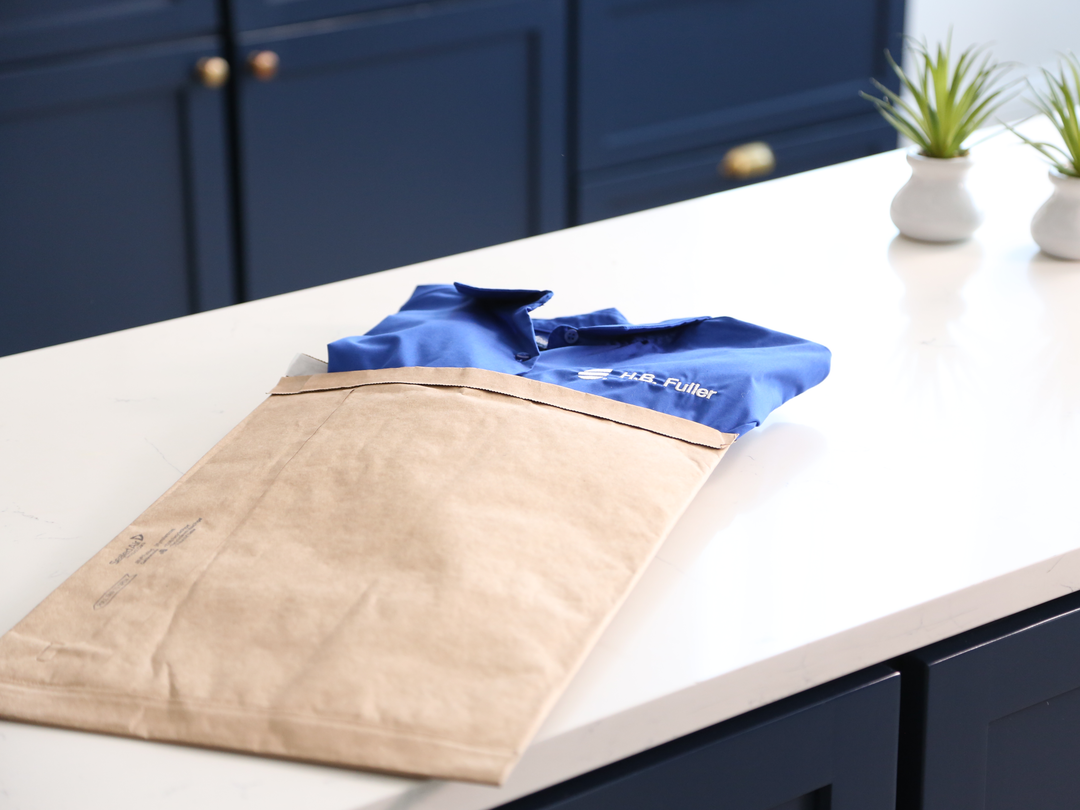
Furthermore, guidelines for packaging reduction and minimizing void space have also spurred the creation of fitted-to-size packaging and less use of fillers. Today, there are excellent alternatives available to replace traditional plastic fillers with more sustainable solutions. For instance, H.B. Fuller has developed a solution that prevents items from bouncing inside the packaging without the need for any void fillers. This solution also supports the automated process, reduces energy consumption and has successfully passed FBA recycling test methods.
Right-sizing is a growing trend in the e-commerce sector, especially in light of upcoming packaging legislation. What would you say are the benefits of online retailers right sizing their packaging?
Absolutely, this growing trend not only demonstrates greater environmental respect by reducing the quantity of materials used for packaging, but it also lowers CO2 emissions by allowing more items to be shipped within the same transport. Beyond the obvious environmental benefits, it also represents cost savings for e-tailers and enhances brand perception among consumers who are keen to reduce the environmental impact of their purchasing choices.
Are there any drawbacks or challenges in the right-sizing process?
Indeed, protecting fragile contents, packaging multiple items or oddly shaped formats in the same package, and calculating the empty space ratio are some of the challenges that will need to be addressed in this process.

Automation is playing a big role in e-commerce developments at the moment. What can automate solutions do that non-automated e-commerce processes can’t?
Fitting to size is likely one of its main advantages, although there are already some premade packaging options on the market that can be adjusted to size. Automated packaging also enables the use of eco-friendly (adhesive) solutions that help reduce energy consumption, minimize packaging materials, and, of course, shorten delivery lead times.
What further progress would you like to see from automation when it comes to e-commerce?
Packaging and automated packaging are becoming increasingly ‘intelligent’ with the use of new technologies for tracking, tracing, and sorting for recycling. In the future, it would be valuable to have these features support the reuse of e-commerce packaging.
To learn more about H.B. Fuller’s contributions to the e-commerce sector and what its expert consultations can do for you, click here.
Sponsored stories

How ATS-Tanner’s banding solutions align with the new PPWR
ATS-Tanner’s banding solutions aim to reduce packaging waste, provide a practical alternative to plastic and improve recyclability. In

How Rollon’s linear systems provide reliability for tertiary packaging
Rollon believes tertiary packaging machinery must perform without fail, showcased by its recent partnership with AMP Automation to develop palletizing

Discover what’s new at London Packaging Week
Packaging has never carried greater commercial responsibility. It influences how consumers perceive brands, how products perform in increasingly competitive markets

Paperworld Middle East partners with FSC to champion responsible sourcing across the region’s paper and stationery industry
Paperworld Middle East, the region’s leading trade show for paper and stationery products, taking place from 13–15 October

Made for Life: How Sappi reveals what trees make possible
What connects an experienced papermaker, the creators of cactus-based leather, the people conserving forests for future generations, and a

The advantages of all-electric adhesive dispensing in modern packaging
Packaging manufacturers are under constant pressure to increase output, reduce operating costs, improve sustainability, and maintain consistent product quality. One

YUTO won 12 international packaging design awards across three global competitions
Driven by the global sustainability trend, the EU PPWR mandates packaging reduction, recyclable design, and restrictions on single-use packaging.

How rPS Food aims to bring circularity to polystyrene packaging
In this edition of the Spotlight, Coexpan (part of Grupo Lantero) details how its rPS Food enables up to 100%
Read next

Your chance to decide the winner of our 2026 Readers’ Award
The nomination period for Packaging Europe’s 2026 Readers’ Award has ended, the finalists have been selected, and now it’

Nemera launches bi-dose nasal spray solution
Drug delivery device company Nemera has announced its DuoSpray bi-dose nasal spray platform, a ‘non-invasive, needle free’ administration

Coveris develops mono-material sleeve with 30% less material for Dr Beckmann
Coveris has unveiled its mono-material sleeve solution developed for Dr Beckmann, said to use around 30% less material than