

While the wine and spirits sector has retained a preference for glass packaging over the years, interest is growing around alternative packaging materials as consumer perceptions of sustainability and innovation shift. Many of these emerging solutions claim to offer a lighter weight container, enhanced transport efficiencies, and reduced carbon footprint compared to traditional glass packaging.
In this edition of The Brief, we explore alternative material trends in the wine and spirits packaging segment, ranging from the ongoing development of paper-based bottles to new approaches to familiar beverage formats like PET and aluminium.
The paper bottle consortiums
The paper-based bottle is novel across the beverage industry and has dominated recent debates about the viability of material substitutions. The two largest consortiums for paper-based bottle research, development, and production – Paboco and Pulpex – currently offer early generation solutions.
Paboco’s paper bottle project started in 2010 with Danish company EcoXpac and was kickstarted by the addition of the Carlsberg Group to the fledgling consortium in 2015. Now led through a joint venture by Billerudkorsnäs and ALPLA, the consortium includes brands like Absolut, Coca-Cola, L’Oréal, and P&G.
In 2021, Absolut became the first spirits brand to be housed in Paboco’s first-generation paper bottle, made from 57% paper with a plastic mouthpiece and internal barrier. According to Paboco and Absolut, the first-generation bottle is recyclable in some paper streams, but the plastic is not recycled unless the bottle is returned to its place of purchase for separation. At the time, Louise Werner, director of future packaging at The Absolut Company, called the bottle a “steppingstone” with the plastic barrier identified as a key target for future development.
Carlsberg, one of the earliest investors in paper bottle technology, has since announced plans to begin consumer trials for the Generation 2.0 Fibre Bottle from Paboco, which features a plant-based PEF polymer lining developed by Avantium. The PEF lining represents around 45% of the total bottle material, while the wood fibre outer shell makes up the remaining 55%. The next-generation bottle containing Carlsberg larger is currently being distributed to some local consumers and stakeholders through select festivals, flagship events, and targeted product samplings.
“By 2025, Paboco will reportedly expand production capacity and run its production plant fully on renewable electricity.”
Going forward, Paboco says it will consolidate feedback from the ongoing Carlsberg consumer trial and use this as the basis for future generations of the paper-based bottle. By 2025, Paboco will reportedly expand production capacity and run its production plant fully on renewable electricity. This would make the Generation 2.0 Fibre Bottle’s total kg of CO2e per hl around 22% compared to a one-way glass bottle’s 75% figure, according to a third-party-verified Life Cycle Assessment (LCA) conducted by Carlsberg. At present, the Generation 2.0 Fibre Bottle, which has yet to be scaled, apparently offers a total kg of CO2e per hl of around 50%.
Another development is the consortium’s collaboration with Blue Ocean Closures, which could see Paboco bottles with a reportedly recyclable and biodegradable paper cap rolled out as early as 2023. However, this generation of the bottle is set to retain its plastic barrier while Paboco continues to explore bio-based internal coating options. Paboco also specified in its announcement of the new closure that it would be introduced for cosmetics, home care, and still drinks applications. Therefore, it’s not yet clear whether future generations of the Paboco Paper Bottle will be suitable for spirits or attempt to bottle wine, a product that has yet to be explored by the consortium.
Slightly later to the game, Pulpex launched in 2020 with Diageo, one of the consortium’s flagship members, unveiling a concept for what it claimed was the world’s first plastic-free, paper-based spirits bottle. Diageo’s Johnnie Walker whiskey brand was initially meant to be rolled out in the Pulpex bottle in 2021, but the commercial launch has yet to take place.
Pulpex says it uses a proprietary internal spray-on coating that offers the necessary barrier properties (although the bottles are not yet suitable for carbonated or hot-fill products), while the bottle is made from sustainably sourced pulp and fully recyclable in existing waste streams. The Pulpex bottle allegedly has a carbon footprint that is 90% lower than glass and 30% lower than PET based on a LCA “performed in the context of the full product being manufactured,” according to the consortium’s website.
Like Paboco, Pulpex is supported by its own roster of global brands including Unilever, PepsiCo, The Estée Lauder Companies, and Kraft Heinz, among others. Additionally, the consortium’s collaboration with BASF is leading the development of barrier properties with the aim of maintaining the bottle’s 100% PET- and HDPE-free status. Pulpex recently announced plans to create a prototype paper-based bottle for HEINZ Tomato Ketchup, but how the consortium will further develop its concept for spirits – or whether it will expand into wines at all – remains up in the air with the delayed Johnnie Walker release.
Other paper bottle contenders
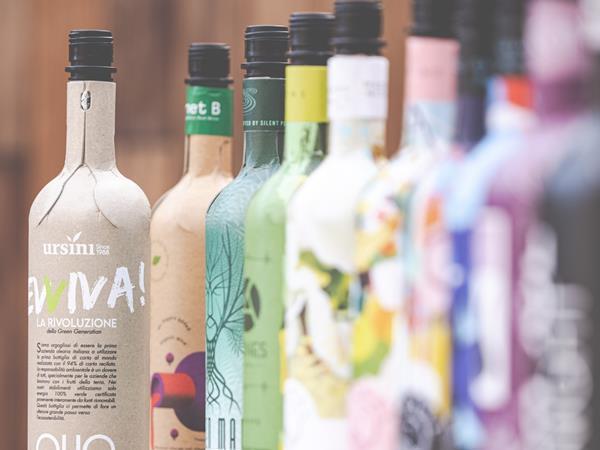
One paper bottle format that has been used explicitly for wine and spirits is Frugalpac’s Frugal Bottle, which first launched in 2020. Frugalpac uses a different structure to the paper bottle consortiums, more similar to bag-in-box solutions: an outer shell made from 94% recycled paperboard with a flexible plastic bag inside that contains the liquid.
After use, Frugalpac recommends separating the paperboard from the plastic, and the outer bottle features a ‘press to split’ function that aims to make this process easy for consumers. The paperboard can reportedly be recycled via kerbside collection. The company claims that it has certification to an EU standard to prove that the plastic liner is recyclable but acknowledges that recycling infrastructure in places including the UK does not yet support this.
According to a LCA commissioned by Frugalpac and conducted by Intertek in June 2020, the Frugal Bottle’s carbon footprint of 91.9g CO2e is 84% lower than an imported glass bottle, 34% lower than a bottle made entirely from recycled plastic, and four times smaller than a lightweight glass bottle made in the UK. The same LCA reportedly found that the Frugal Bottle sill has a carbon footprint up to six times lower than a glass bottle even in the case that the pouch doesn’t get recycled. The company says it has yet to find another material that meets the requirements of the pouch and can also be recycled.
The first wine to be sold in the Frugal Bottle was Cantina Goccia’s 3Q; the bottle has now been used by brands including When in Rome, which recently made the bottles available via the online grocery delivery service Ocado. More recently, Greenall’s announced that its Original London Dry Gin would be launched in the Frugal Bottle. The paper bottles will be distributed online first and then on shelves by UK retailer Sainsbury’s from October this year, with a full EMEA rollout slated for the latter half of 2022. However, Greenall’s Original London Dry Gin will also continue to be sold in glass bottles.
Currently based in Ipswich, in the UK, Frugalpac is looking to make the Frugal Bottle available more widely. With the first sale of its Frugal Bottle Assembly Machine (FBAM-1) to Canadian packaging firm KinsBrae Packaging in June 2022, Malcom Waugh, CEO of Frugalpac, noted that “this partnership will allow us to have a mainland presence in North America, reducing the carbon footprint of our bottles even further”. The FBAM-1 is apparently capable of producing more than two and a half million Frugal Bottles per year.
In early 2022, HP Inc waded into the paper bottle market with its acquisition of Edinburgh-based Choose Packaging, the creator of a patented, plastic-free paper bottle casing reportedly made from recycled newspapers and lined with a plant-based waterproof liner. Existing clients of Choose Packaging include Accolade Wines, which owns over 50 brands, and Malibu Rum, part of Pernod Ricard’s global portfolio. Moody’s Investors Service has suggested that the steady reduction in newspaper printing could impact feedstock availability for applications such as moulded pulp, potentially influencing the expansion of Choose Packaging’s recycled newspaper-based bottle concept.
“Many of the purported sustainability benefits of paper-based bottles like Paboco and Pulpex’s rely on reaching a particular production capacity.”
The main challenge associated with all paper-based bottles is scale. At present, only the Frugalpac paper bottle is readily available to the everyday consumer, and only for select lines of select brands. Meanwhile, many of the purported sustainability benefits of paper-based bottles like Paboco and Pulpex’s rely on reaching a particular production capacity.
However, these consortiums don’t necessarily intend to offer paper-based bottles as an absolute substitution for glass. Simon Boas Hoffmeyer, director of sustainability at the Carlsberg Group, recently told Packaging Europe: “The Fibre Bottle will be an additional alternative for consumers, not a replacement. Given the recyclability of cans and reusability of refillable glass bottles (RGBs), and the large-scale recycling infrastructures that are in place for these, the Fibre Bottle will complement these as an additional option.”
PET: Familiar format, new frontier
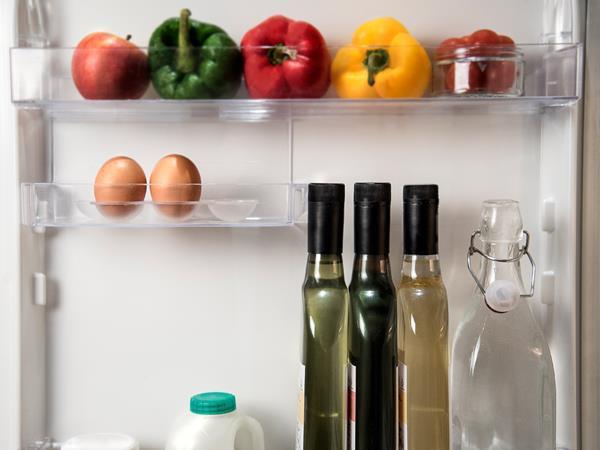
Other emerging packaging formats for the wine and spirits market involve fresh takes on formats that have been tried and tested on other beverage types. This includes Garçon Wines’ flat profile wine bottle made from recycled PET, which was a finalist in Packaging Europe’s Sustainability Awards 2018, nominated in the ‘Best Practice’ category.
“The flat profile of the bottles also means they are around 40% smaller than average glass bottles while containing the same amount of wine.”
Since then, Garçon has worked with Accolade Wines to make the latter’s Banrock Station Merlot and Chardonnay available in the flat, 100% rPET bottles, with the Co-op in the UK being the first retailer to stock them in 2020. In addition to being recyclable themselves, the use of 100% recycled PET in the bottles requires 75% less energy to produce and emits 79% less CO2 compared to virgin PET, the companies say. The 75cl bottles weigh in at 63g, which reportedly makes them 87% lighter than the average glass bottle; the flat profile of the bottles also means they are around 40% smaller than average glass bottles while containing the same amount of wine.
The intention of the flat, 100% rPET bottle is to reduce CO2 emissions across the supply chain by enhancing transport efficiency. This year, Garçon Wines established the Packamama brand as a spin-off specifically focused on developing its so-called ‘eco-bottles’, and has since launched in Australia with Accolade Wines and Taylors Wines.
While announcing the collaboration, the companies stated that twice as many of the flat profile bottles can fit into a standard wine case compared to a traditional Bordeaux wine bottle. They also calculated that an annual reduction of 250,000 km of road freight could be made with the flat bottle format if Accolade Wines and Taylors Wines made the switch across their entire portfolio. The ‘eco-bottles’ are initially set to be distributed in Australia by the retailer Coles.
Advancements in aluminium
Aluminium containers, meanwhile, are more often associated with beers and ciders, but this is also a growing segment for wines. Revelshine, for example, offers its Californian wine in 500ml aluminium bottles – around two thirds the size of a typical wine bottle and representing about three standard pours of wine – that it claims are 15 times lighter than glass. Both the cap and bottle can be recycled, according to Revelshine, with what it identifies as a “biodegradable insert” inside the bottle not needing to be removed during this process.
The Revelshine aluminium bottle is designed to be more easily transported by consumers on-the-go due to its smaller, lighter, and less breakable structure – a similar benefit promoted by Packamama for its flat profile rPET bottle. In the context of the COVID-19 pandemic, the flexibility of these formats provides resilience for wine and spirits companies, allowing alcohol to be consumed more conveniently outside of the house or a restaurant where lockdowns may necessitate this or where consumers are not yet ready to return to indoor socialisation.
Both formats also respond to the significant expansion of e-commerce associated with the pandemic: Revelshine sells its wines online in quantities of 3, 6, 12, or 18, while Garçon Wines says it has optimised its bottles for home delivery, both with a focus on transport efficiency. As alternative distribution channels grow for wines and spirits, beverage packaging design is shifting to enhance shipping sustainability and accommodate consumer preferences.
”The canned wine market will expand at a compound annual growth rate (CAGR) of 13.2% up until 2028, with the COVID-19 pandemic giving this segment a boost.”
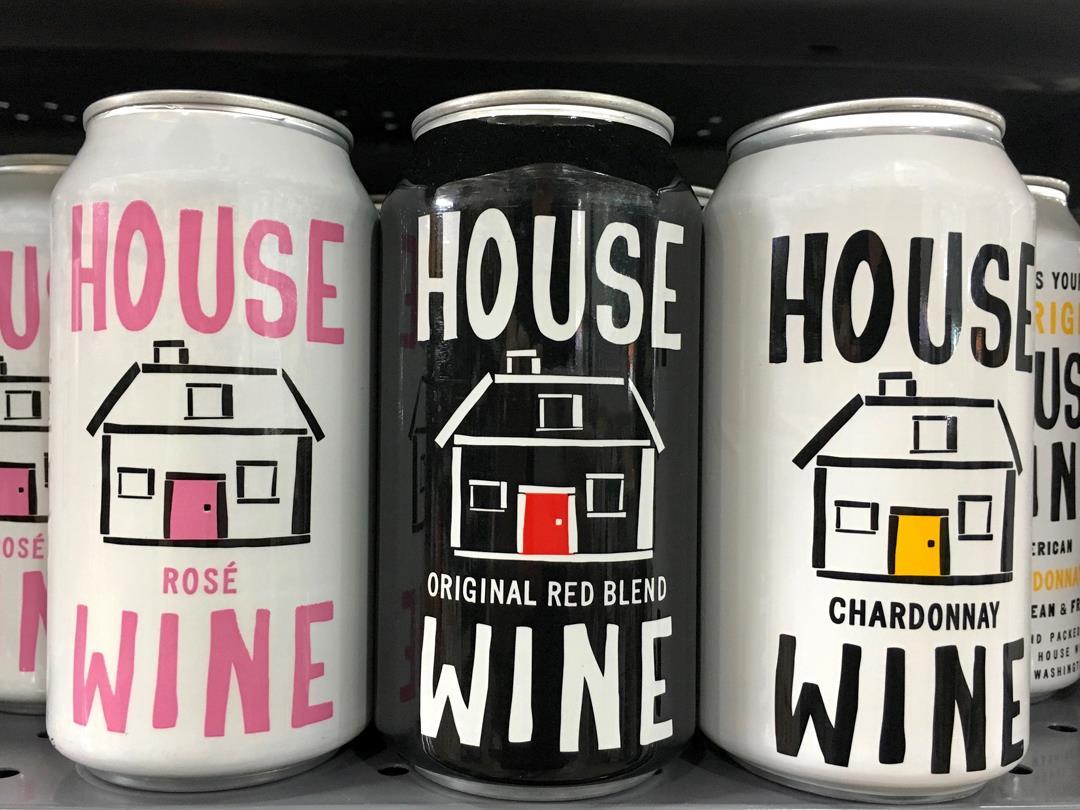
As for canned wine, this segment appears to be growing rapidly, with the Wine Spectator reporting that sales jumped from $2 million in 2012 to $183.6 million for the 12-month period ending in July 2020. Grand View Research expects that the canned wine market will expand at a compound annual growth rate (CAGR) of 13.2% up until 2028, with the COVID-19 pandemic giving this segment a boost.
Canned wines are also seeing more sales across the year, rather than just during the summer months when outdoor activities are more popular. ISWR suggests that this trend is being driven by Millennials, with this demographic apparently seeking out unique packaging formats that are more convenient and less expensive than glass, and also allow for trialling a brand before committing to a larger bottle size. Additionally, cans provide an edge compared to paper and PET bottles when it comes to recyclability, with European Aluminium claiming that the recycling rate for aluminium cans is 75% in Europe.
Some brands are incorporating more than one unconventional format into their portfolios, with When in Rome – a brand that also uses the Frugalpac paper bottle – offering a multipack of its bestselling wines in cans. Signalling the increasing visibility of canned wines, Anheuser-Busch’s Babe canned wine brand, which launched in the UK in summer 2020, was the official sponsor of the 2019 NFL season. Metal Packaging Europe says that “the European market for canned [wine] is just warming up” compared to the US, but an example from the region includes French wineries group Boisset La Famille Des Grands Vins’ acquisition the rosé brand Moncigale in 2021 with the intention to expand its “alternative packaging solutions such as cans”.
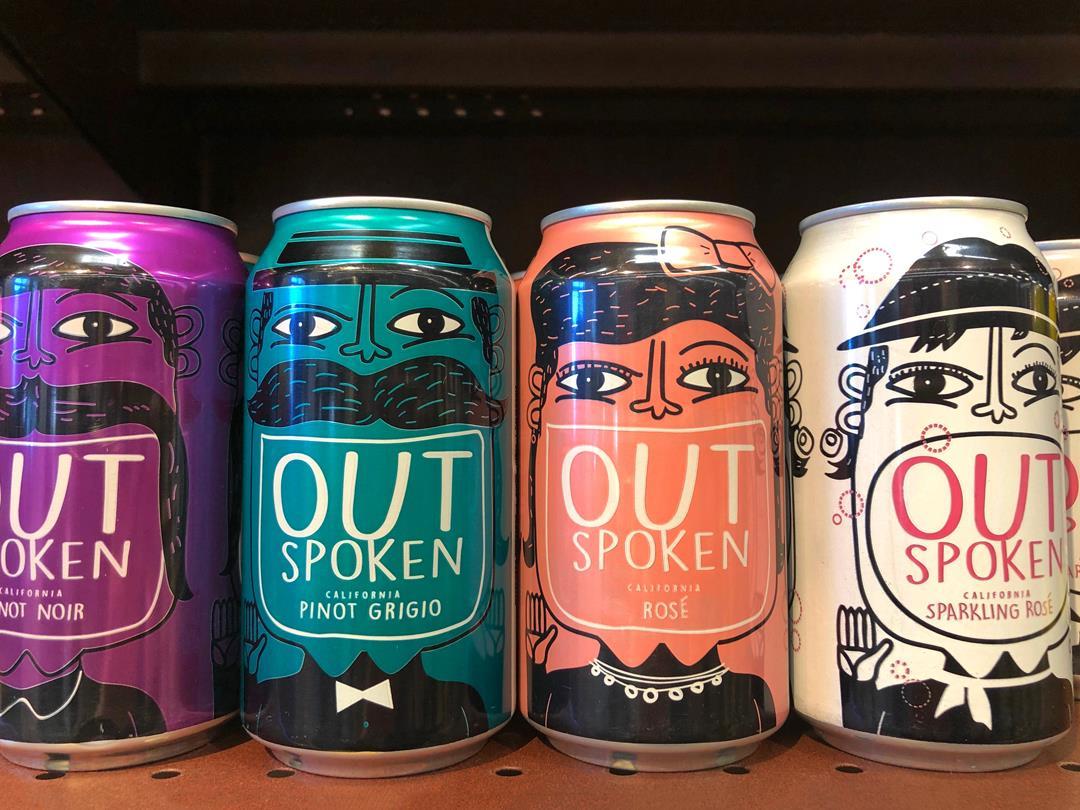
Developing regulatory measures could have some impact on the upward trend of canned wines. In the US, where canned wines are rapidly growing in popularity, the Alcohol and Tobacco Tax and Trade Bureau is reportedly considering relaxing the rule that 250ml cans must be sold in four-packs for wine, which may open more opportunities for brands to sell individual containers of canned wines.
However, there’s also the issue of bisphenol-A (BPA), a chemical commonly used in the epoxy resins that provide coatings for cans, which can migrate into beverages in trace amounts and is linked with some health concerns. The European Food Safety Authority (EFSA) is currently re-evaluating the tolerable daily intake (TDI) of BPA, while McKinsey also expects tightening regulation on BPA in the US. This may require brands with, or looking to introduce, canned wine portfolios to search for BPA-free solutions as this segment expands – which McKinsey says should be done proactively, in advance of the regulations being implemented.
With glass being such an established material for wine packaging, there is some industry and consumer resistance to alternatives related to quality. In a paper published last year, researchers from the University of Florida and Coastal Carolina University collated data from a range of studies on the impact of packing type on wine flavour.
The research found that the inert properties of glass mean it has superior gas and vapour barrier protection, whereas PET was more susceptible to oxidation and aluminium comes with a greater risk of flavour taint. These factors could result in a shorter shelf life for these materials compared to glass, with less opportunity to ‘age’ the wine. Other research points to a multitude of contextual sensory experiences that can impact the taste of wine, many of which are highly subjective, beyond packaging type. Ultimately, the US researchers concluded that glass wine packaging is here to stay – but that exploring alternatives allows winemakers to tailor packaging to their unique requirements and generates competition.
Sponsored stories

How ATS-Tanner’s banding solutions align with the new PPWR
ATS-Tanner’s banding solutions aim to reduce packaging waste, provide a practical alternative to plastic and improve recyclability. In

How Rollon’s linear systems provide reliability for tertiary packaging
Rollon believes tertiary packaging machinery must perform without fail, showcased by its recent partnership with AMP Automation to develop palletizing

Discover what’s new at London Packaging Week
Packaging has never carried greater commercial responsibility. It influences how consumers perceive brands, how products perform in increasingly competitive markets

Paperworld Middle East partners with FSC to champion responsible sourcing across the region’s paper and stationery industry
Paperworld Middle East, the region’s leading trade show for paper and stationery products, taking place from 13–15 October

Made for Life: How Sappi reveals what trees make possible
What connects an experienced papermaker, the creators of cactus-based leather, the people conserving forests for future generations, and a

The advantages of all-electric adhesive dispensing in modern packaging
Packaging manufacturers are under constant pressure to increase output, reduce operating costs, improve sustainability, and maintain consistent product quality. One

YUTO won 12 international packaging design awards across three global competitions
Driven by the global sustainability trend, the EU PPWR mandates packaging reduction, recyclable design, and restrictions on single-use packaging.

How rPS Food aims to bring circularity to polystyrene packaging
In this edition of the Spotlight, Coexpan (part of Grupo Lantero) details how its rPS Food enables up to 100%
Read next


Nemera launches bi-dose nasal spray solution
Drug delivery device company Nemera has announced its DuoSpray bi-dose nasal spray platform, a ‘non-invasive, needle free’ administration

Coveris develops mono-material sleeve with 30% less material for Dr Beckmann
Coveris has unveiled its mono-material sleeve solution developed for Dr Beckmann, said to use around 30% less material than

Sustainability Awards 2026 Finalist Interview: Prevented Ocean Plastic’s project for food-safe recycled PP
Prevented Ocean Plastic is a finalist in this year’s Sustainability Awards with its project seeking to recycle polypropylene (PP)